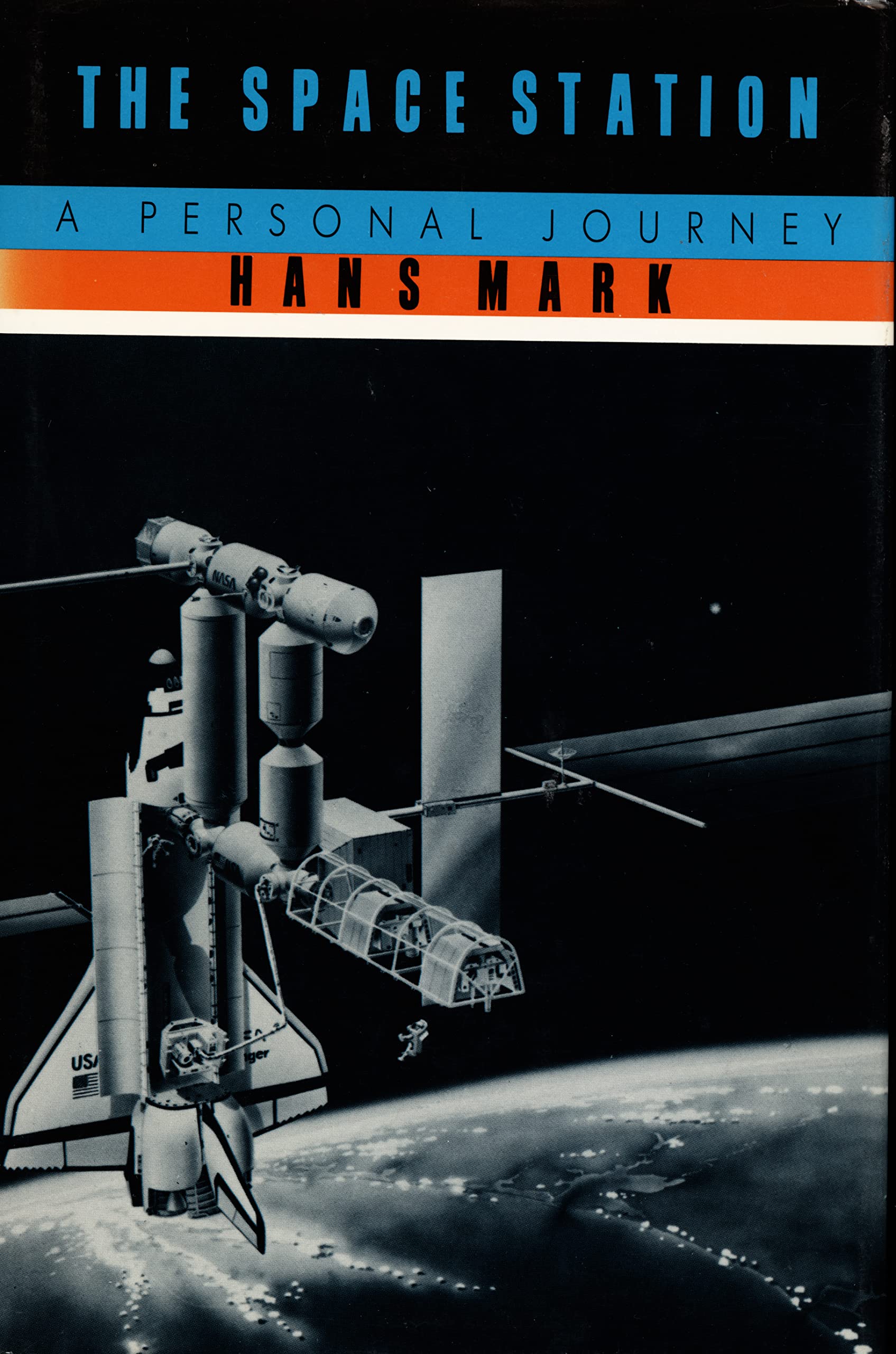



This insider's account, a penetrating view of science policy and politics during two presidencies, captures the euphoria that characterized the space program in the late seventies and early eighties and furnishes an invaluable perspective on the Challenger tragedy and the future of the United States in space. President Reagan's approval of $8 billion for the construction of a permanently manned orbiting space station climaxed one of the most important political and technological debates in the history of the U.S. program in space. In The Space Station the story of this debate is told by Hans mark, who had major roles in the development of the space shuttle from its beginnings in the sixties and who bore a primary responsibility for overseeing the space station project during the decisive years from 1981 to 1984. Mark's appointment to the post of deputy administrator of NASA capped a career devoted to the development and management of space technology—he served as director of NASA's Ames Research Center, then as under secretary and later secretary of the U.S. Air Force. Serving under both President Carter and President Reagan, mark is uniquely able to chronicle the intricate process by which the space shuttle became a reality and the space station an acknowledged goal of the American space effort. A scientist by training, Mark's account of his career in the space program is the story of a personal dream as well as the story of a vast public enterprise whose human side is only now being fully appreciated. "The narrative is great, anecdotal at times, colorful at times, but the phrase I would use to characterize it is 'simple elegance.' I think it is an excellent book."--Walter McDougal The Space Station A Personal Journey By Hans Mark Duke University Press Copyright © 1987 Duke University Press All rights reserved. ISBN: 978-0-8223-0727-3 Contents Preface, I Beginnings, II Nuclear Lessons, III Livermore, IV The Space Race Starts, V The Start at Ames and the Space Shuttle, VI The Development of the Shuttle, Colonies in Space, and Politics, VII The Air Force and Space, VIII Space Policy, Arms Control, and Organizational Problems, IX The Shuttle Program Has Problems, X The Election of President Reagan, XI The Effort Starts in Earnest, XII Space Policy and Edwards Air Force Base—July 4, 1982, XIII The Enterprise in Europe—May-June 1983, XIV The Final Push, XV The President Decides, XVI The Congressional Debate, XVII Another Beginning, XVIII Tragedy and Tomorrow, Appendixes, Appendix 1 Letter to Roy Jackson on Shuttle Technology, February 15, 1972, Appendix 2 Unclassified Version of PD-42, October 10, 1978, Appendix 3 "USAF's Three Top Priorities," by the Honorable Hans M. Mark, Secretary of the Air Force, Article from Air Force Magazine, September 1979, Appendix 4 Mark and Silveira, "Notes on Long Range Planning," August 1981, Appendix 5 Letter to Dr. James C. Fletcher Setting Up His Committee, September 18, 1981, Appendix 6 Reagan Administration Space Policy Statement, July 4, 1982, Appendix 7 Hans Mark's Draft of Suggested Remarks for President Reagan, July 4, 1982, Edwards Air Force Base, Appendix 8 Text of Remarks by the President on the Landing of the Space Shuttle Columbia, July 4, 1982, Edwards Air Force Base, Appendix 9 Terms of Reference for the Space Station Study, April 1983, Appendix 10 List of Participants and Agenda of Cabinet Council Meeting, December 1, 1983, Index, CHAPTER 1 Beginnings Books are important, and they can influence lives. I want to begin this story by talking about a book I received as a present on my twelfth birthday in 1941. It is a remarkable book about space travel that was written by an Englishman, P. E. Cleator, who was for many years a leader of the British Interplanetary Society. (Cleator served as the first president of the society, having been elected in October 1933.) The book was published in 1936 and is titled Rockets Through Space. (It also carries the subtitle The Dawn of Interplanetary Travel.) The book contains a good popular description of the state of the art in rocket technology in 1935 (the year the book was written), and it also includes a good technical summary of what could be done in terms of space travel once the large rockets that are envisioned in the work were built. In these sections, space stations (or outward stations as Cleator called them) and future trips to other planets were prominently mentioned. All of this was pretty heady stuff for a twelve year old. At first, of course, I did not really understand what the technical issues were, but I kept rereading the book over the years. Slowly it dawned on me that Cleator and his colleagues were on to something really important and that I wanted somehow to be a part of it. Much of the technical portion of Rockets Through Space deals with the early development of liquid-fueled rocket motors. As early as 1923, in his book, Die Rakete