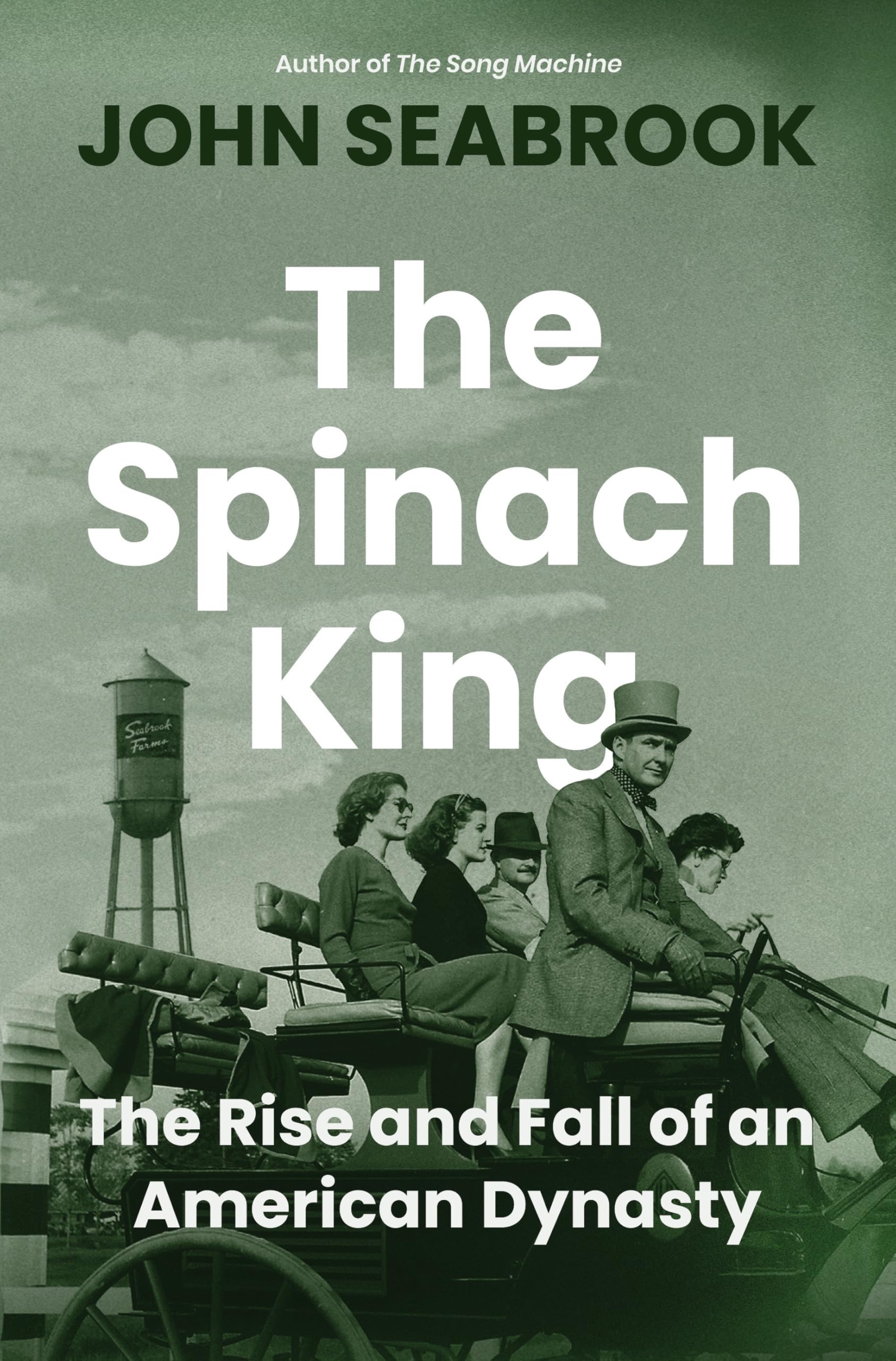



A New Yorker Best Book of 2025 • One of the New York Times 100 Notable Books of Year • One of Town & Country's Best Books of the year • One of The Christian Science Monitor's 10 best books of June 2025 The riveting saga of the Seabrook Family, by one of The New Yorker’ s most acclaimed storytellers. “Having left this material for his writer son, my father must have wanted the story told, even if he couldn’t bear to tell it himself.” So begins the story of a forgotten American dynasty, a farming family from the bean fields of southern New Jersey who became as wealthy and powerful as aristocrats―only to implode in a storm of lies. The patriarch, C. F. Seabrook, was hailed as the “Henry Ford of Agriculture.” His son Jack, a keen businessman, was poised to take over what Life called “the biggest vegetable factory on earth.” But the carefully cultivated facade―glamorous outings by horse-drawn carriage, hidden wine cellars, and movie star girlfriends―hid dark secrets that led to the implosion of the family business. At the heart of the narrative is a multi-generational succession battle. It’s a tale of family secrets and Swiss bank accounts, of half-truths, of hatred and passion―and lots and lots of liquor. The Seabrooks’ colorful legal and moral failings took place amid the trappings of extraordinary privilege. But the story of where that money came from is not so pretty They say behind every great fortune there is a great crime. At Seabrook Farms, the troubling American histories of race, immigration, and exploitation arise like weeds from the soil. Great Migration Black laborers struck against the company for better wages in the 1930s, and Japanese Americans helped found a “global village” on the farm after World War II. Revealing both C. F. and Jack Seabrook’s corruption, The Spinach King undermines the “great man” theory of industrial progress. It also shows how American farms evolved from Jeffersonian smallholdings to gigantic agribusinesses, and what such enormous firms do to the families whose fate is bound up in the land. A compulsively readable story of class and privilege, betrayal and revenge―three decades in the making― The Spinach King explores the author’s complicated family legacy and the dark corners of the American Dream. 30 illustrations "Keen, sophisticated and appealing …. Seabrook brings the ease and command of New Yorker-style reportage to bear on his own family. It’s a shocking but juicy story, one he tells by harnessing his gift for quietly observing details that lesser writers would miss and then deploying them with the energy of a man who has skin in the game …. Captivating reading." ― Cree LeFavour, New York Times Book Review "John Seabrook wryly details the rise and fall―and Oedipal struggles―of his family’s farming empire… This is a tremendous tale." ― John Gapper, Financial Times "Who knew that a family empire built on frozen vegetables could produce a tale worthy of Faulkner…. as rich a tale about a troubled dynasty―and father-son relationships―as you will read this year." ― Jim Kelly, Airmail " The Spinach King contains a Mylar Miracle-Pack of intrigue, with everything you’d expect from a long-submerged, intergenerational blue-blooded drama." ― Dan Piepenbring, Harper's Magazine "A great American tragedy … with shades of Shakespeare’s “King Lear.”" ― Heller McAlpin, Christian Science Monitor "“The Spinach King” makes for juicy (if at times gossipy) reading―who doesn’t enjoy seeing a house of cards fall?" ― Roger Lowenstein, Wall Street Journal "What happens when a fearless investigative reporter turns his sights on his own family? In John Seabrook’s case, the answer is magic." ― Stacy Schiff, Pulitzer Prize-winning author of The Revolutionary: Samuel Adams "As sweeping in its scope as a great novel, The Spinach King is . . . a rich story, populated with characters that will stay with you long after you finish reading." ― Susan Orlean, author of The Library Book " The Spinach King is an epic American tragedy, a powerful book about status, wealth, corruption, and succession that reveals much about how our ruling class still behaves today." ― Eric Schlosser, author of Command and Control "An intergenerational saga with drama to rival King Lear and enough social-climbing audacity to make a Kardashian blush. . . . This is the tale of a patriarch immolating on the flames of his own ambition and the rotten roots of a great American archetype: the self-made man." ― Jessica Bruder, author of Nomadland "John Seabrook’s patrimony was an agricultural empire, or at least the story of it. Like all empires, it was built by brute force. John Seabrook pulls no punches in detailing his forebears’ unsavory deeds." ― Russell Shorto, author of Taking Manhattan " Succession but make it spinach. With cameos from Zsa Zsa Gabor and the Ku Klux Klan . . . and an unhealthy serving of money, ambition, and betrayal." ― Nicola Twilley