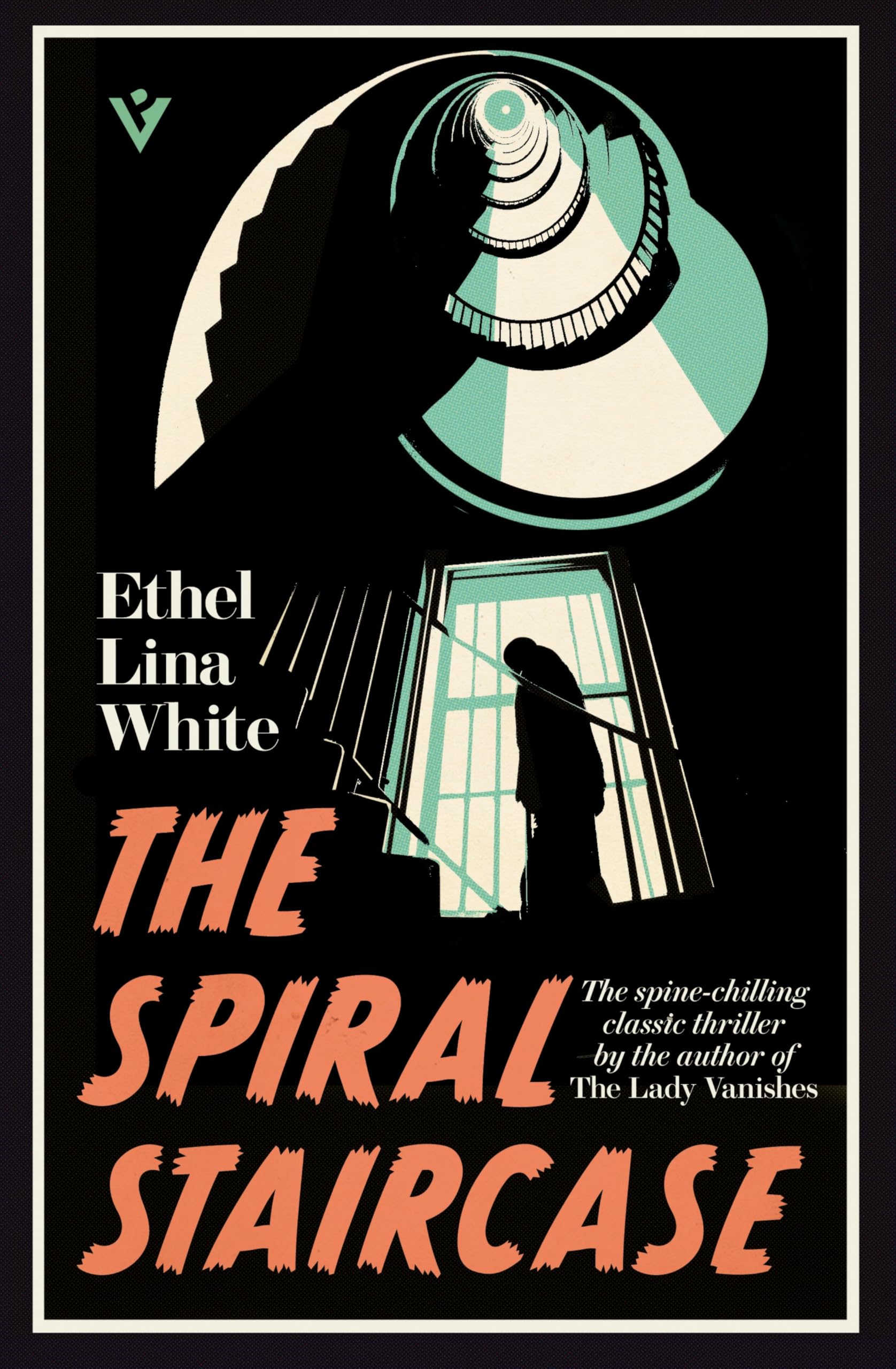



A chilling classic thriller from the 1930s in which a young woman is stalked about an isolated country house by a murderer “Astonishing and diabolical shock. . . Required reading” — New York Herald Tribune The Summit—a mansion buried deep in the countryside, on the Welsh Borders. Somewhere outside, a murderer lurks in the darkness. Four young women have already been killed, and each murder has been closer to the house than the last. . . Now a storm is coming. Professor Warren decides to batten down the hatches for the night—no one may come in or go out until morning. But what if the killer is already inside? This atmospheric classic brought Ethel Lina White to the attention of the world and went on to be adapted for the screen three times (1946, 1961, 1975). A creepy, gothic thriller, this is another sensational rediscovery of the classic crime genre. The author, Ethel Lina White, was one of the best-known crime writers of the 1930s and 40s, ranking alongside greats of the Golden Age such as Agatha Christie and Dorothy L. Sayers. Many of her thrillers were adapted for film, most famously The Lady Vanishes (originally titled The Wheel Spins ) which became one of Alfred Hitchcock's greatest triumphs as a director. Born in Abergavenny in 1876, Ethel Lina White was one of the best known crime writers of the 1930s and 40s, ranking alongside greats of the Golden Age such as Agatha Christie and Dorothy L. Sayers. Many of her thrillers were adapted for film, most famously The Lady Vanishes originally titled The Wheel Spins ) which became one of Alfred Hitchcock's greatest triumphs as a director. Originally published as Some Must Watch in 1933, The Spiral Staircase has since been adapted for the screen three times. Helen realised that she had walked too far just as daylight was beginning to fade. As she looked around her, she was struck by the desolation of the country. During her long walk, she had met no one, and had passed no cottage. The high-banked lanes, which blocked her view, were little better than steep mudslides. On either hand rose the hills – barren sepia mounds, blurred by a fine spit of rain. Over all hung a heavy sense of foreboding, as though the valley awaited some disaster. In the distance – too far away to be even a threat – rumbled faint, lumpy sounds of thunder. Fortunately Helen was a realist, used to facing hard economic facts and not prone to self-pity. Of soaring spirit, yet possessed of sound common sense, she believed that those thinly veiled glimpses of hell – heaviness of body and darkness of spirit – could be explained away by liver or atmosphere. Small and pale as a slip of crescent moon, she was only redeemed from insignificance by her bush of light-red springy hair. But, in spite of her unostentatious appearance, she throbbed with a passion for life, expressed in an expectancy of the future which made her welcome each fresh day and shred the interest from every hour and minute. As a child, she pestered strangers to tell her the time, not from a mere dull wish to know whether it was early or late, but from a genuine curiosity to see their watches. This curiosity persisted when she had to earn her own living under the roofs of fortunate people who possessed houses of their own. Her one dread was being out of work. She could estimate, from experience, the scores of replies which had probably been received as a result of the advertisement for a lady-help at Professor Warren’s country house; she guessed, as soon as she arrived at The Summit, that it was its very loneliness that had helped to remove her from the ranks of the unemployed. The house was tucked away in a corner, somewhere at the union of three counties, on the borderline between England and Wales. The nearest town was twenty-two miles away – the nearest village, twelve. No maid would stay at such a forsaken pocket – a pocket with a consequent hole in it – through which dribbled a steady stream of domestic labour. Mrs Oates, who, with her husband, helped to fill the breach, summed up the situation to Helen, when they met, by appointment, in the Ladies’ Waiting Room at Hereford station. ‘I told Miss Warren as she’d have to get a lady. No one else would put up with it.’ Helen agreed that ladies were a drug in the market. She had enjoyed some months of enforced leisure, and was only too grateful for the security of any home, after weeks of stringent economy – since ‘starvation’ is a word not found in a lady’s vocabulary. Apart from the essential loneliness of the locality, however, it was an excellent post, for she had not only a nice room and good food, but she took her meals with the family. The last fact counted, with her, for more than a gesture of consideration, since it gave her the chance to study her employers. She was lucky in being able to project herself into their lives, for she could rarely afford a seat at the cinema, and had to extract her entertainment from the raw material of life. Th