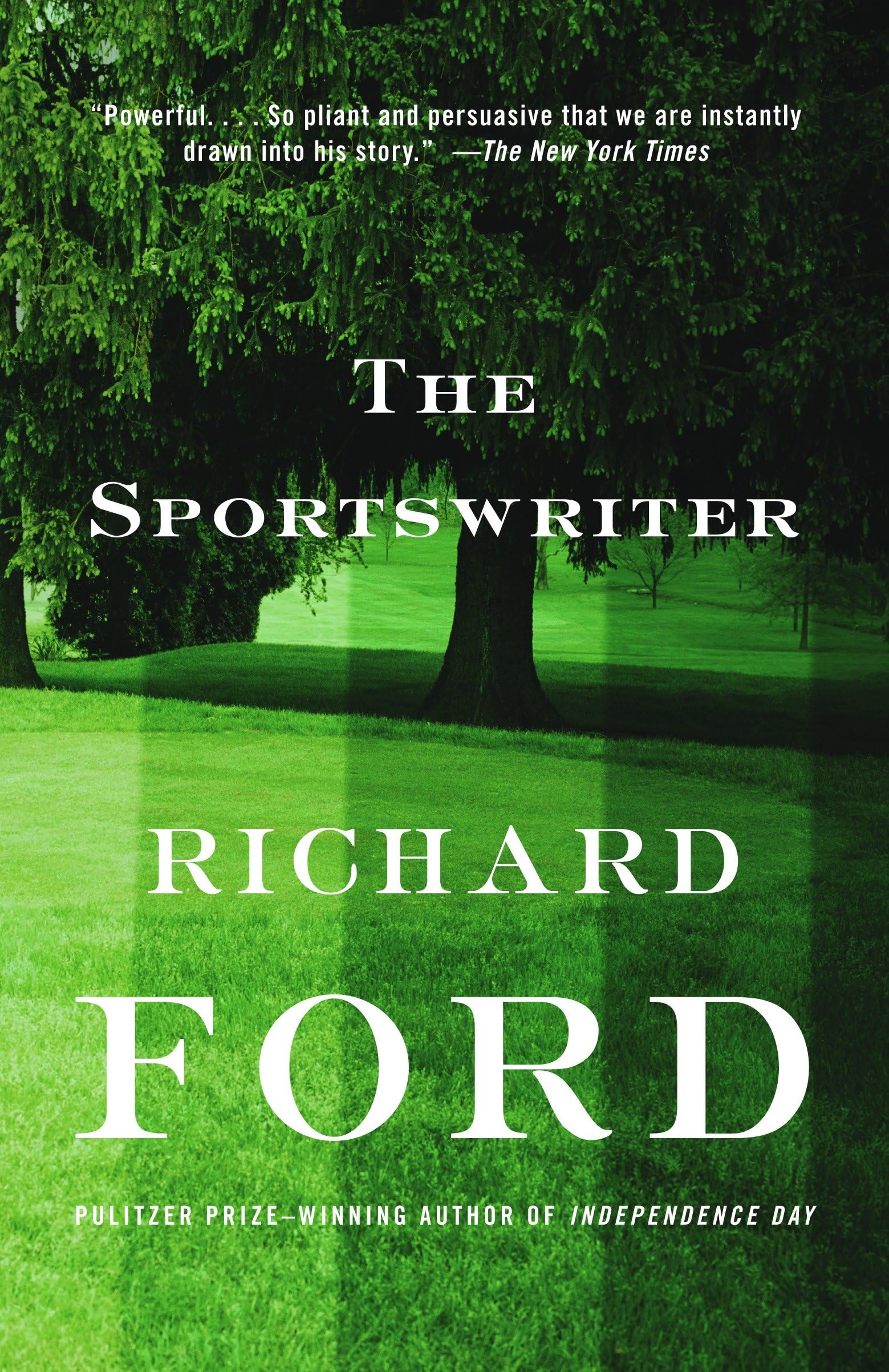



In this “powerful” blockbuster of a novel ( The New York Times ), the Pulitzer Prize-winning author of Independence Day introduces his most beloved character, failed novelist turned sportswriter Frank Bascombe, during an Easter weekend, as he moves through the great losses of his life. As a sportswriter, Frank Bascombe makes his living studying people—men, mostly—who live entirely within themselves. This is a condition that Frank himself aspires to. But at thirty-eight, he suffers from incurable dreaminess, occasional pounding of the heart, and the not-too-distant losses of a career, a son, and a marriage. In the course of the Easter week in which Ford's moving novel transpires, Bascombe will end up losing the remnants of his familiar life, though with his spirits soaring. It's hard to imagine a book illuminating the texture of everyday life more brilliantly, or capturing the truth of human emotions more honestly, than Ford does in his account of an alienated scribe in the New Jersey suburbs. Frank Bascombe, Ford's protagonist, clings to his almost villainous despair in a way that Walker Percy's men don't, but the book is heavily influenced by Ford's fellow southerner nonetheless. Read this and you're ready for Ford's Pulitzer Prize-winning sequel, Independence Day. "Powerful.... So pliant and persuasive that we are instantly drawn into his story." — The New York Times As a sportswriter, Frank Bascombe makes his living studying people--men, mostly--who live entirely within themselves. This is a condition that Frank himself aspires to. But at thirty-eight, he suffers from incurable dreaminess, occasional pounding of the heart, and the not-too-distant losses of a career, a son, and a marriage. In the course of the Easter week in which Ford's moving novel transpires, Bascombe will end up losing the remnants of his familiar life, though with his spirits soaring. As a sportswriter, Frank Bascombe makes his living studying people--men, mostly--who live entirely within themselves. This is a condition that Frank himself aspires to. But at thirty-eight, he suffers from incurable dreaminess, occasional pounding of the heart, and the not-too-distant losses of a career, a son, and a marriage. In the course of the Easter week in which Ford's moving novel transpires, Bascombe will end up losing the remnants of his familiar life, though with his spirits soaring. RICHARD FORD is the author of six novels and three collections of stories. He was awarded the Pulitzer Prize and the PEN/Faulkner Award for Independence Day and the PEN/Malamud Award for excellence in short fiction. Ford's best known titles are The Sportswriter , Independence Day , The Lay of the Land , and Let Me Be Frank with You. The Sportswriter By Richard Ford Vintage Books USA Copyright ©1995 Richard Ford All right reserved. ISBN: 9780679762102 Chapter One My name is Frank Bascombe. I am a sportswriter. For the past fourteen years I have lived here at 19 Hoving Road, Haddam, New Jersey, in a large Tudor house bought when a book of short stories I wrote sold to a movie producer for a lot of money, and seemed to set my wife and me and our three children--two of whom were not even born yet--up for a good life. Just exactly what that good life was--the one I expected--I cannot tell you now exactly, though I wouldn't say it has not come to pass, only that much has come in between. I am no longer married to X, for instance. The child we had when everything was starting has died, though there are two others, as I mentioned, who are alive and wonderful children. I wrote half of a short novel soon after we moved here from New York and then put it in the drawer, where it has been ever since, and from which I don't expect to retrieve it unless something I cannot now imagine happens. Twelve years ago, when I was twenty-six, and in the blind way of things then, I was offered a job as a sportswriter by the editor of a glossy New York sports magazine you have all heard of, because of a free-lance assignment I had written in a particular way he liked. And to my surprise and everyone else's I quit writing my novel and accepted. And since then I have worked at nothing but that job, with the exception of vacations, and one three-month period after my son died when I considered a new life and took a job as an instructor in a small private school in western Massachusetts where I ended up not liking things, and couldn't wait to leave and get back here to New Jersey and writing sports. My life over these twelve years has not been and isn't now a bad one at all. In most ways it's been great. And although the older I get the more things scare me, and the more apparent it is to me that bad things can and do happen to you, very little really worries me or keeps me up at night. I still believe in the possibilities of passion and romance. And I would not change much, if anything at all. I might not choose to get divorced. And my son, Ralph Basco