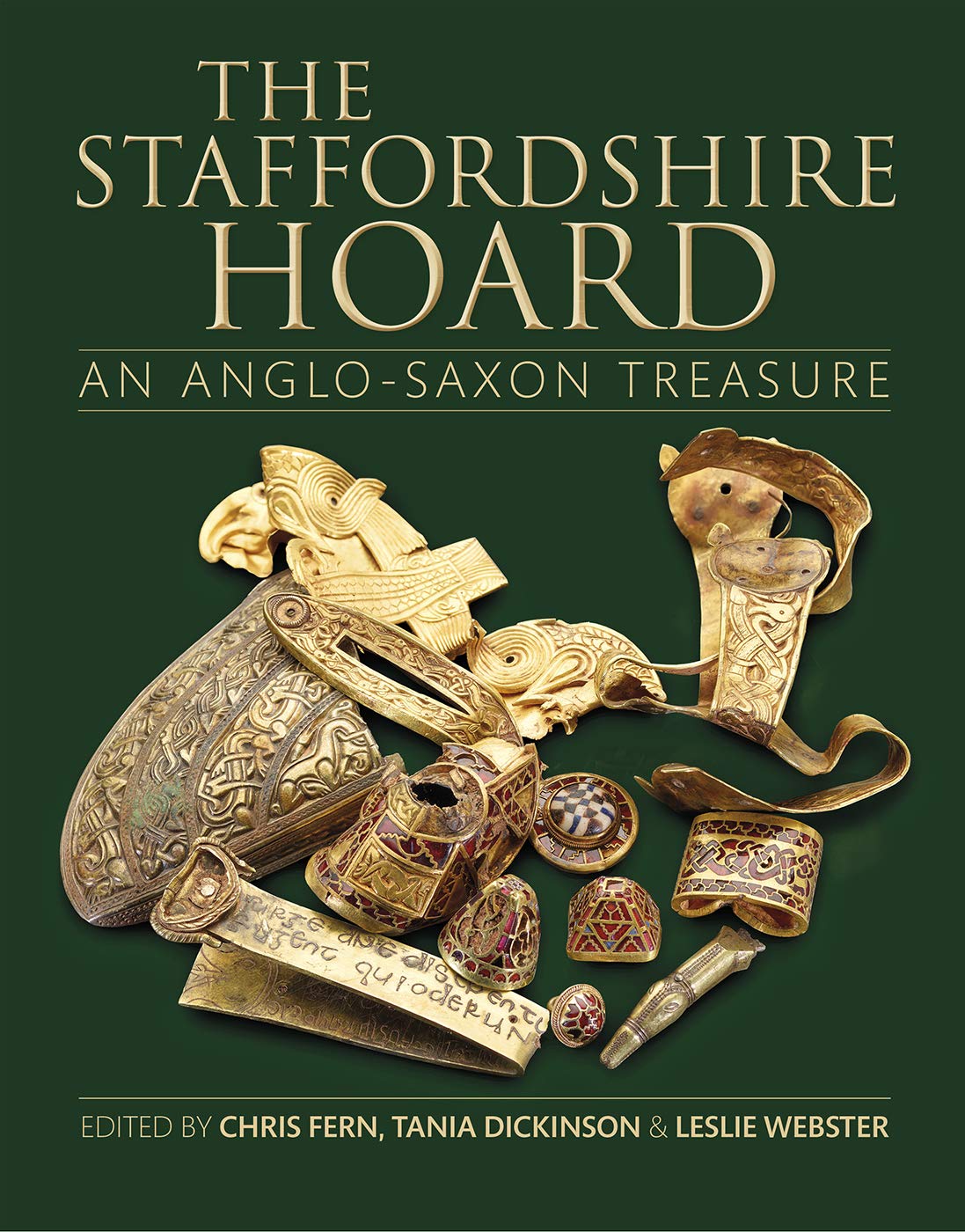
The Staffordshire Hoard: An Anglo-Saxon Treasure (Reports of the Research Committee of the Society of Antiquaries of London)
$59.24
by Chris Fern FSA



The Staffordshire Hoard: An Anglo-Saxon Treasure tells the story of the Hoard’s discovery, acquisition for the nation, and the six-year research project that pieced its fragments back together, identified its objects and explored their manufacture. Written by a team of specialists in Anglo-Saxon archaeology and history, and expert conservators with unparalleled access to the Hoard, the text is illustrated throughout with full-colour photographs, maps and explanatory drawings. Key chapters discuss the decoration and meaning of the Hoard’s intricate ornament, the techniques of Anglo-Saxon craftsmen, the religious and historical background, and hoarding practice in Britain and Europe, to place this most exceptional find in context. Finally, the text explores the impact that the find has had locally, nationally and internationally in the twenty-first century. Table of Contents List of figures List of tables List of online tables Acknowledgements Résumé Zusammenfassung Foreword Map 1 The major kingdoms of mainland Britain in the seventh century and battles mentioned in the text Map 2 Main places mentioned in the text Introduction Part One: The Hoard Chapter 1. From discovery to acquisition Fieldwork of 2009 and 2010 Fieldwork methodology Fieldwork results Aerial photography assessment Discussion Fieldwork in 2012 Acquisition, funding and project organisation The conservation programme Investigative conservation methodology Garnet cloisonné objects Filigree decorated objects Rejoining and reconstruction Die-impressed silver sheet Conclusion The reliability of the finds context Chapter 2. Characterising the objects Fittings from weaponry Pommels and sword-rings (cat. 1–84) Hilt-collars and hilt-rings (cat. 85–242) Hilt-plates and hilt-guards (cat. 243–409, 696–7) Hilt mounts and other small mounts (cat. 410–537) Fittings from weapon-harness (cat. 572–87) The typological and functional significance of the weapon fittings Conclusion Helmet parts, decorated silver sheet, reeded strip and edge binding Cast helmet parts with animal ornament (cat. 589–92) Silver helmet-band and decorated silver sheet (cat. 593–604 and 606) Reeded strip (cat. 609–13) Edge binding (cat. 614–15) n The form, social context and date of the helmet Large mounts not from weaponry and harness-mount 698 Sets of mounts in garnet cloisonné (cat. 542–66) Mount with fish and birds (cat. 538) Set of silver mounts with niello (cat. 567–71) Harness-mount with interlace (cat. 698) Discussion of the large mounts and harness-mount 698 Christian objects Great gold cross (cat. 539) Socketed-base and pins (cat. 607/8 and 676) Inscribed strip (cat. 540) Head-dress mount (cat. 541) Cross pendant (cat. 588) The Christian objects, function and significance Miscellanea Chapter 3. Workshop practice Analysing the resource Materials Gold Silver, copper alloy and other metals Garnets Glass Unidentified inlay Organics and pastes Other materials Manufacture Casting Sheet and foil Soldering Surface-enrichment of gold Gilding Die-impressing on sheet and foil Reeded strip Incising and punching Niello Filigree Cloisonné and other lapidary work ‘Assembly’ marks and other marks Chapter 4. The lives of objects: wear, modification, repair and damage Wear Modification and repair Damage Conclusion Chapter 5. Styles of display and revelation Style and substance Animal ornament in the Hoard Ornament of the helmet and die-impressed sheet Animal ornament Figural ornament Interlace and knots Scrollwork Early Insular style Geometric ornament and symbols Conclusion Chapter 6. Date and origin Dating the Hoard Hoard Phase 1: sixth-century silver fittings from weapons Hoard Phase 2 (gold): Anglo-Saxon early Style II, contemporaneous styles and objects, c 570–c 630 Hoard Phase 3 (gold): Anglo-Saxon late Style II, and contemporaneous styles and objects, c 610–c 650 Hoard Phase 4 (silver with gold mounts): Early Insular style objects, c 630–c 660 Summary Origins Mercia Kent, East Anglia or Greater Northumbria Conclusion Part Two: The Broader Context Chapter 7. The historical context: local, regional and national The historical background Barbara Yorke Early medieval Britain in the seventh century The early Mercian kings Religion in early Mercia The findspot of the Staffordshire assemblage and the history of Mercia Conclusion The Church and warfare: the religious and cultural background to the Hoard The contemporary context Christian and pagan culture in the early seventh century Anglian connections Conclusion Chapter 8. The archaeological context: matters of material and social significance John Hines The early Anglo-Saxon period: graves and grave goods Social hierarchy and its visibility Resources and their use: the contemporary value of the Hoard The archaeology of early Mercia Chapter 9. Hoards and hoarding Introduction Hoarding in lat