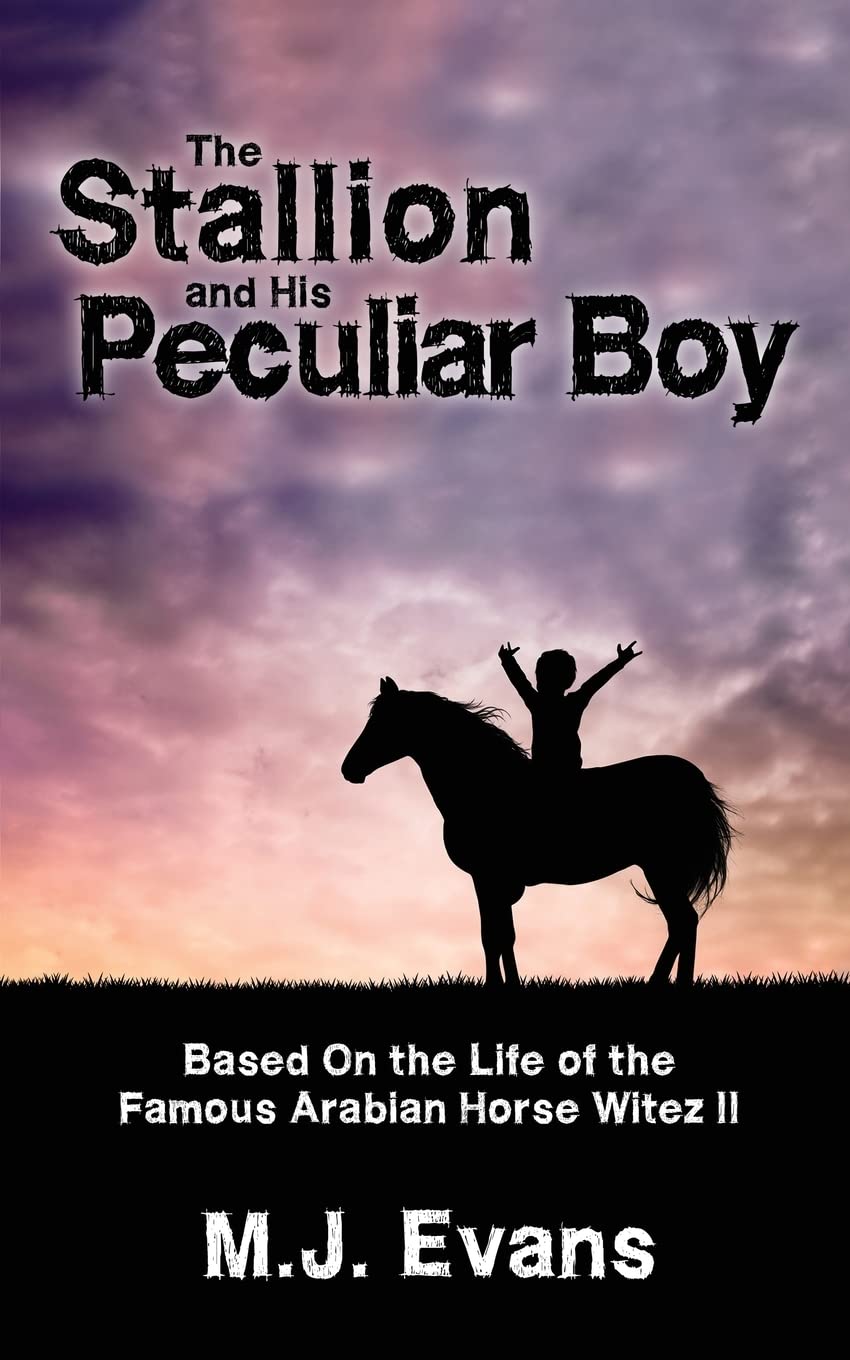
The Stallion and His Peculiar Boy: Based on the Life of the Famous Arabian Horse Witez II (Horses in History)
$12.95
by M.J. Evans



Inspired by a true story, The Stallion and His Peculiar Boy will touch your heart as no other horse story has before. World War II is raging. Hitler is hiding away the world's most beautiful purebred horses in a little village in Czechoslovakia. Lipizzaners, Thoroughbreds, and the prize Polish Arabians are being used in his experiments to create the perfect war horse. A peculiar twelve-year-old boy from the village named Teodor becomes the groom for one of those special horses - Witez II, one of the most famous Arabian stallions of all time. Witez helps the boy face his challenges and find his voice at a time when little is known about the condition now called "Autism." The Stallion and His Peculiar Boy blends the suspense of a World War II military rescue operation with the subsequent challenges of resettlement in a new land. Click "Buy Now" on the right to begin the adventure! The Stallion and His Peculiar Boy Readers won't expect The Stallion and His Peculiar Boy to be more than a horse story, but its setting during World War II (and the lesser-known fact that the Nazis relied on a horse breeding program to supply them with the mounts they used to carry out their European campaigns) lends it the value of a historical novel and the allure of a story that leisure reading horse fans will relish. The tale centers on the life of Witez, a Polish horse stolen by the Nazis and brought to Czechoslovakia for their breeding program. A local non-communicative, autistic village boy, eleven-year-old Teodor, is assigned to be the horse's groom. And then the magic begins. M.J. Evans portrays not just an unusual piece of World War II history but probes the sentiments about autism and mental conditions during an era where little was understood about either. Evans carefully portrays the sentiments and perceptions of the autistic boy who becomes tasked with an extraordinary job: "Teodor watched the tiny world go by, a world into which he had been born but had experienced very little. He neither desired, nor was given the opportunity, to interact with it." Much as Teodor finds himself unexpectedly responsible for and fostering a large animal's re-entry into a different world, so he himself is carried, by this relationship, into new territory in a world which is transforming and reinventing itself around him. The post-war milieu which emerges is one in which Teodor and Witez both find an extraordinary place as they are rescued, sent to America, and become part of a bigger picture than either could have dreamed. The reflections on this relationship are very nicely presented and specific: "No one knew how hard the boy struggled to control his emotions with all the changes and upheaval he was facing. His very survival depended upon order and routine . . . of which little was to be found. He lost himself, or perhaps it would be better to say that he saved himself, in caring for Witez." The result is a powerful evolution that moves from Nazi-occupied Europe to America; from captive breeding programs to the show horse circuit; and from the confined, repressed world that Teodor is familiar with to a winning relationship that changes horse and boy alike. The exquisite blend of historical facts and intricate details about autism are wound into a novel replete with much attraction, making for a highly recommended pick that libraries should profile for any young reader interested in horses and the remarkable impact they can make in therapeutic situations. Dianne Donovan, Editor, BookWatch WISHING SHELF BOOK REVIEWS -United Kingdom I must begin by saying this is a wonderful historical novel for young adults. Written by the talented M J Evans, it follows a young, autistic boy called Teodor who is living in Czechoslovakia during the Second World War. When he´s given the job of caring for a magnificent horse called Witez, he not only develops in ways his mother thought impossible, he also finds a way of escaping the Nazis and getting the horse to America. There is a long list of things I enjoyed about this novel. Firstly, the historical aspects of the novel, particularly how Hitler attempted to breed the perfect war horse, were very interesting. The author seems to know her stuff and is talented at putting it over to the reader in a compelling way. Secondly, the protagonist, Teodor, develops so much in the story, and I thoroughly enjoyed following him on his suspense-filled journey. Thirdly, the way the boy works - and understands - the horse is mesmerizing, touching, and never overly sentimental. I´m delighted to recommend this novel to children/young adults aged 12 - 15. I think they will find Teodor´s story gripping, skillfully plotted, and excellently paced. They´ll also get an insight into the war, the officers and men Teodor meets on his travels, and, most importantly, how animals can often help children with autism to interact better with the world. All in all, this is a bit of a gem! A 'Wishing Shelf'