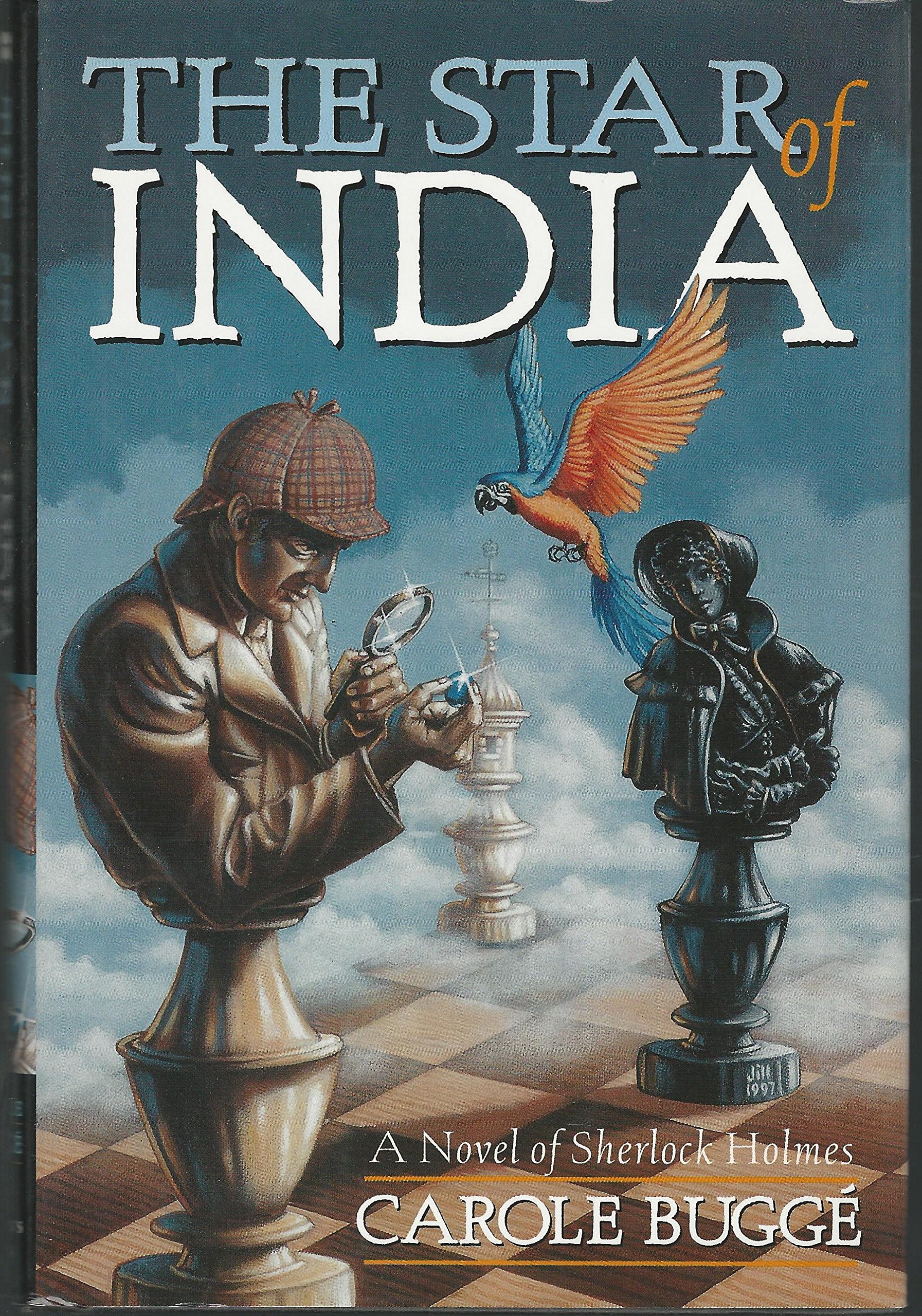



Dealing with a threat to one dear friend, the death of another, and a series of puzzling messages, Holmes reaches the only logical conclusion: he once again must face his archnemisis Professor Moriarty, a villain whom he had long believed to be dead. In an addition to the Sherlock Holmes saga that seems likely to succeed, Holmes displays his legendary powers of observation, and Watson unwittingly aids the bad guys. The story revolves around a beautiful woman and her expensive perfume, a missing fabled gemstone, and the return from certain death of Holmes's nemesis, Dr. Moriarty. First novelist Bugge captures the essence of Holmes as well as the spirit of the time. For all Sherlock fans. Copyright 1998 Reed Business Information, Inc. Sherlockians are in for another treat. Bugge's addition to the Baker Street canon opens with Watson now twice widowed and Holmes ill-suited as always to a life of relative calm and inactivity. Soon they are caught up in a plot involving a clandestine love affair and the disappearance, with international repercussions, of a priceless sapphire. Only one man could be responsible for such complex evildoing: the infamous Professor James Moriarty, of course, presumed dead but back once again to engage Holmes in a deadly battle of wits and nerve. Using the chess board as both metaphor and clue, Holmes' nemesis taunts and teases, leading the forces of good on a chase for the gem through London's grimmer scenes of lowlife and beyond. Readers will also relish Sherlock's brother Mycroft acting as something of a foil to his introspective brother when Sherlock grasps the philosophical brotherhood he has with Moriarty. Whitney Scott Sherlock Holmes is immortal, of course, and lately Carole Nelson Douglas has given Irene Adler a new lease on life as well. But who would've thought Professor Moriarty also survived his death-struggle with Holmes? (Kind of a cheat for the tourists visiting Reichenbach Falls, when you think about it.) And yet Holmes and his brother Mycroft are sure that none other than Moriarty is behind the diabolical plot that begins, for Holmes and Dr. Watson, when the two attend a recital at the Royal Albert Hall (the violinist Sarasate playing the ``Goldberg Variations'': one of first-novelist Bugg's few slips) and find themselves seated behind a young woman whose behavior Holmes finds as quietly remarkable as her perfume. Once Holmes recovers a pair of gloves that Violet Merriweather has left behind, he soon connects her to a life-or-death struggle between a pair of Indian potentates and to a plan by Moriarty to steal the fabled Star Sapphire of India. So far so good: If Sherlockians don't find the plot riveting, it certainly has the lineaments of a Holmes adventure. But although Holmes in this manifestation is admirably quick with a deduction, and Bugg makes a tolerable approach to catching Watson's voice, she hasn't the knack of invention needed to sustain such a long tale; most of the action here consists of Holmes rescuing his allies from the clutches of Moriarty, who seems more interested in playing out an elaborate chess game (surely the relic of later writers than Conan Doyle) with his nemesis than in concentrating on lucrative malefaction. A lovely read page by page, then, though it reminds you of Doyle's own problems sustaining a novel-length adventure. -- Copyright ©1997, Kirkus Associates, LP. All rights reserved.