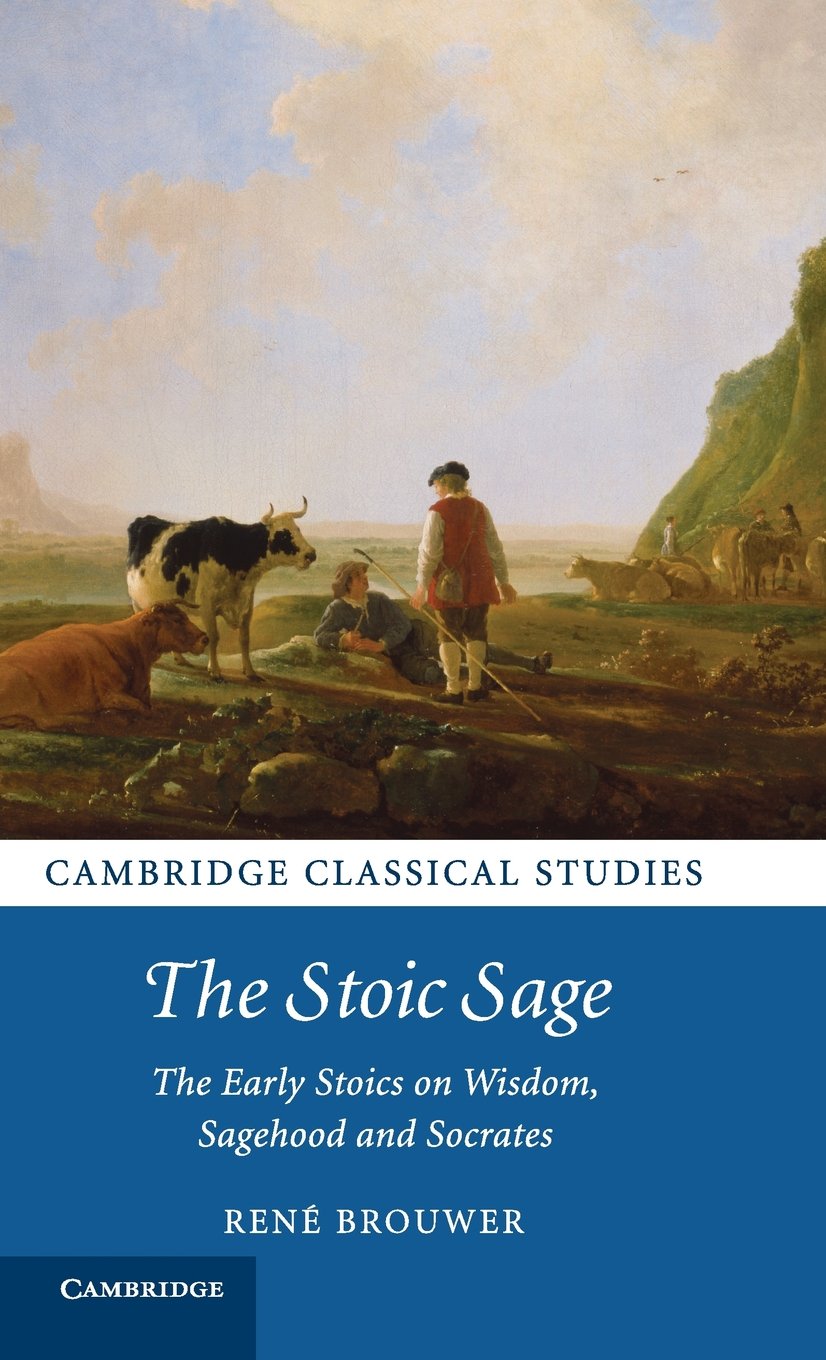
The Stoic Sage: The Early Stoics on Wisdom, Sagehood and Socrates (Cambridge Classical Studies)
$92.75
by René Brouwer



After Plato and Aristotle, the Stoics, from the third century BCE onwards, developed the third great classical conception of wisdom. This book offers a reconstruction of this pivotal notion in Stoicism, starting out from the two extant Stoic definitions, 'knowledge of human and divine matters' and 'fitting expertise'. It focuses not only on the question of what they understood by wisdom, but also on how wisdom can be achieved, how difficult it is to become a sage, and how this difficulty can be explained. The answers to these questions are based on a fresh investigation of the evidence, with all central texts offered in the original Greek or Latin, as well as in translation. The Stoic Sage can thus also serve as a source book on Stoic wisdom, which should be invaluable to specialists and to anyone interested in one of the cornerstones of the Graeco-Roman classical tradition. "[This book] offers many insights, and its main conclusions point, suggestively and fruitfully, to useful directions for further research." Jacob Klein, Notre Dame Philosophical Reviews The first ever book-length study of the influential Stoic concept of wisdom. René Brouwer is a lecturer at Universiteit Utrecht, The Netherlands, where he teaches on law and philosophy in the Faculty of Law. He works on theory of law and topics in ancient philosophy, with a special focus on Stoicism, its origins and reception, and the tradition of natural law.