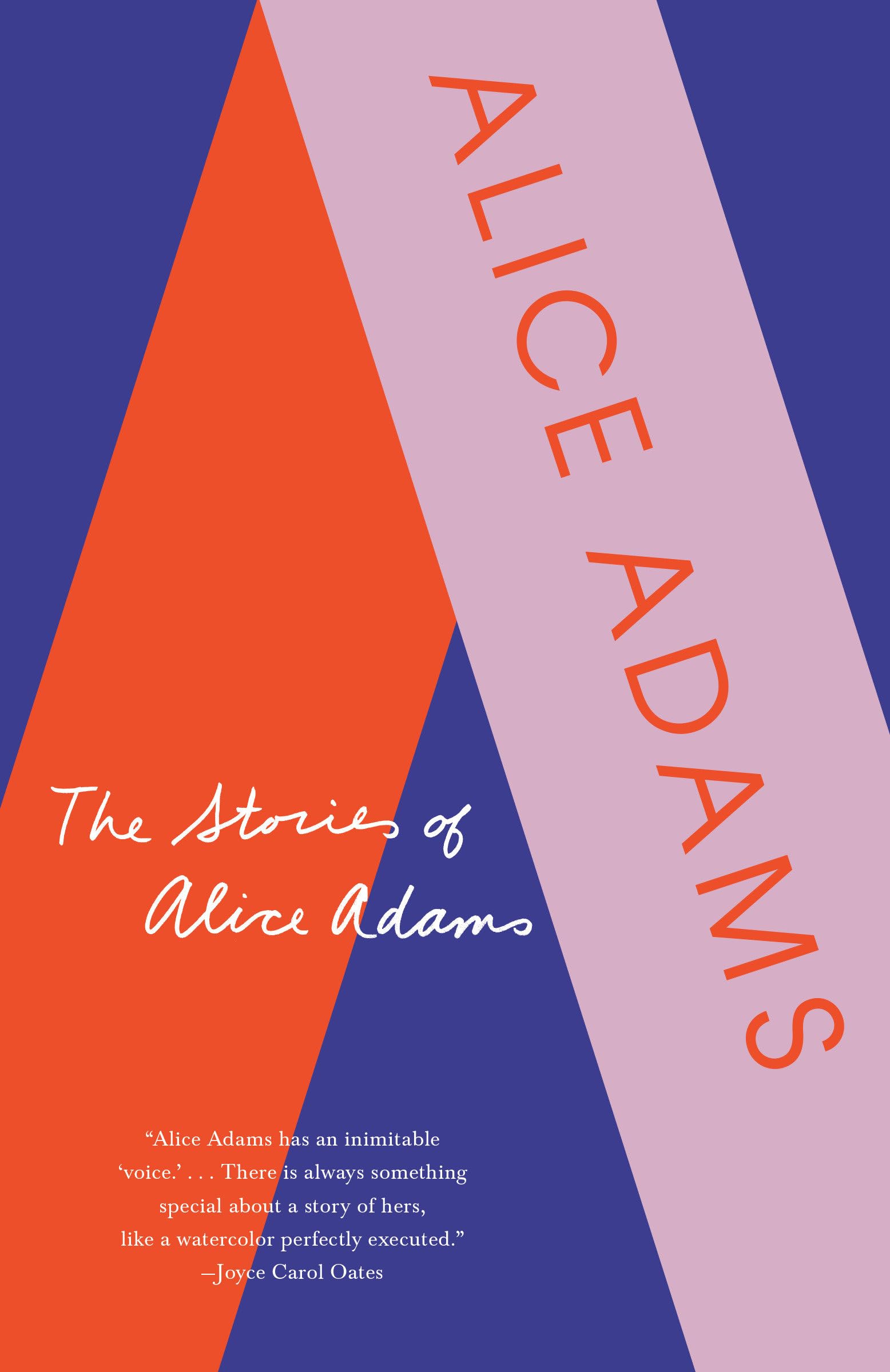



With a foreword by Victoria Wilson, Alice Adams’s longtime editor. Famous for illuminating the hidden workings of human relationships, Alice Adams's work was a staple in The New Yorker and a mainstay of the O. Henry Award collections. The Stories of Alice Adams gathers fifty-three of her most celebrated pieces into one career-defining collection. In "Verlie I Say Unto You," the unexpected death of Verlie Jones's lover reveals the unsettling truth about her employers--that, though they "couldn't get along without" Verlie, their maid of ten years, she is nothing more than a stranger to them. In "Berkeley House," a disenfranchised daughter anguished over the sale of her childhood home, discovers that it does not hold the key to her happiness, and perhaps never did. In "Greyhound People," a woman repeatedly and purposely takes the wrong bus from work after meeting its warm and disarmingly candid cast of passengers. In story after story, insight joins with grace to show us the truth about the lives of people around us. A moving and elegant collection and the capstone to a brilliant career. "Alice Adams has an inimitable 'voice"— quick, deft, brilliantly evocative and specific. There is always something special about a story of hers, like a watercolor perfectly executed." —Joyce Carol Oates "No other writer in recent memory has called to mind quite so clearly the work of F. Scott Fitzgerald." — The Washington Post "These are old-fashioned stories, artfully simple in structure, rich in precise language, and consistently moving . . . Stories that recall such past masters as Flannery O'Connor and Katherine Mansfield.” –Jim Baker, Newsweek “Readers already in love with Adams will be pleased to re-encounter—and those new to her pleased to discover—the seemingly offhand openings that carry the reader deep into the story, the swift characterizations, the effortless shifts in point of view and, of course, the almost casual but dazzling sentences.” — Publisher’s Weekly "[A] master of the genre." — Los Angeles Times “Alice Adams turns dreams and moments, the stuff of memories, inside out and makes of them beautiful, haunting, bittersweet tales.” — Publishers Weekly “Her stories generate a unique kind of suspense, at once comic and sinister, between desire and the reticences that create and thwart it. She is an altogether exceptional writer.” —Richard Poirier “Sophisticated, charming, often nostalgic, and so artfully written that half the time you don’t know that you are reading one of the best writers around.” — Boston Globe “Nobody writes better about falling in love than Alice Adams . . . How can one person know so much? —Beverly Lowry, New York Times Book Review ALICE ADAMS was born in Virginia and raised in North Carolina, and graduated from Radcliffe College. The recipient of an Award in Literature from the American Academy and Institute of Arts and Letters, she received grants from the National Endowment for the Arts and the Guggenheim Foundation. She was the author of five collections of short stories and ten novels, among them Listening to Billie , Superior Women, Second Chances , and A Southern Exposure . She lived in San Francisco until her death in 1999. VERLIE I SAY UNTO YOU Every morning of all the years of the thirties, at around seven, Verlie Jones begins her long and laborious walk to the Todds' house, two miles uphill. She works for the Todds--their maid. Her own house, where she lives with her four children, is a slatted floorless cabin, in a grove of enormous sheltering oaks. It is just down a gravelly road from the bending highway, and that steep small road is the first thing she has to climb, starting out early in the morning. Arrived at the highway she stops and sighs, and looks around and then starts out. Walking steadily but not in any hurry, beside the winding white concrete. First there are fields of broomstraw on either side of the road, stretching back to the woods, thick, clustered dark pines and cedars, trees whose lower limbs are cluttered with underbrush. Then the land gradually rises until on one side there is a steep red clay bank, going up to the woods; on the other side a wide cornfield, rich furrows dotted over in spring with tiny wild flowers, all colors--in the winter dry and rutted, sometimes frosted over, frost as shiny as splintered glass. Then the creek. Before she comes to the small concrete bridge, she can see the heavier growth at the edge of the fields, green, edging the water. On the creek's steep banks, below the bridge, are huge peeling poplars, ghostly, old. She stands there looking down at the water (the bridge is halfway to the Todds'). The water is thick and swollen, rushing, full of twigs and leaf trash and swirling logs in the spring. Trickling and almost dried out when summer is over, in the early fall. Past the bridge is the filling station, where they sell loaves of bread and cookies and soap, al