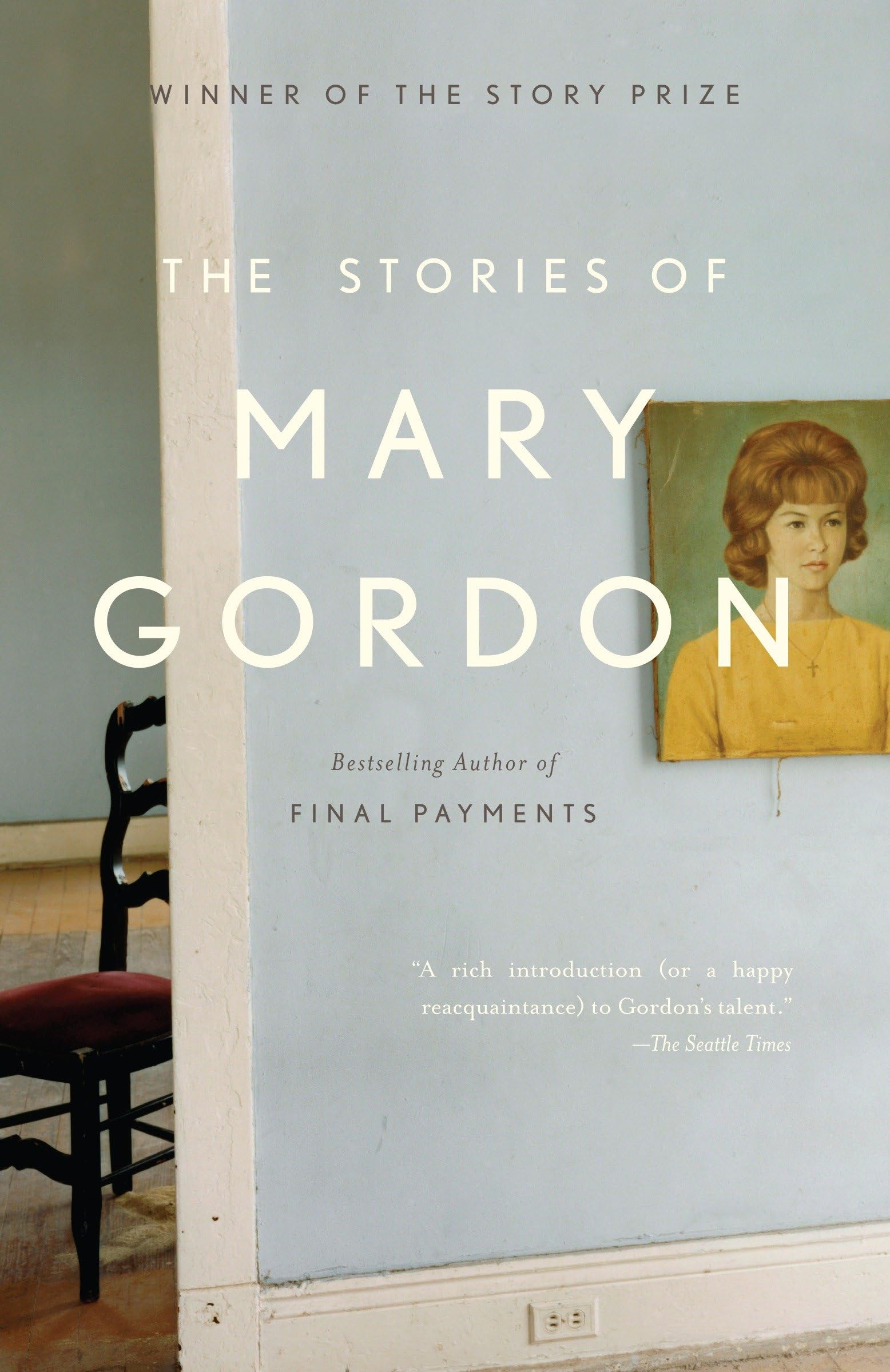



The stories of Mary Gordon return us to the pleasure of this writer's craft and to her monumental talent as an observer of character and of the ever-fading American Dream. These pieces encompass the pre- and postwar Irish American family life she circles in the early Temporary Shelter series, as well as a wealth of new fiction that brings her contemporary characters into middle age; it is their turn to face bodily decline, mortality, and the more complex anxieties of modern life. With their powerful insights into how we make do, both socially and privately, these stories are a treasure of American fiction. “A rich introduction (or a happy re-acquaintance) to Gordon's talent.” — The Seattle Times “These characters are splendid in their ridiculous humanity. . . . Gordon's new stories are deeper and more relaxed, but all provide a mesmeric read . . . you'll want to inhale and savor at the same time.” — Entertainment Weekly “Breathtaking. . . . Voluptuous.” — Los Angeles Times “Carefully drawn and gracefully written, [Gordon's] stories combine the intimacy of memoir with the shape and narrative energy of fiction. . . .Vivid and richly imagined." — Chicago Sun-Times Mary Gordon is the author of the novels Spending , The Company of Women , The Rest of Life , Final Payments,The Other Side , and Pearl , as well as the memoir The Shadow Man . She has received a Lila Wallace—Reader's Digest Award, a Guggenheim Fellowship, and the 1997 O. Henry Award for best story. She teaches at Barnard College and lives in New York City. City Life Peter had always been more than thoughtful in not pressing her about her past, and Beatrice was sure it was a reason for her choice of him. Most men, coming of age in a time that extolled openness and disclosure, would have thought themselves remiss in questioning her so little. Perhaps because he was a New Englander–one of four sons in a family that had been stable for generations–perhaps because he was a mathematician, perhaps because both the sight of her and her way of living had pleased him from the first and continued to please him, he had been satisfied with what she was willing to tell. “My parents are dead. We lived in western New York State, near Rochester. I am an only child. I have no family left.” She preferred saying “I have no family left”–creating with her words an absence, a darkness, rather than to say what had been there, what she had ruthlessly left, with a ruthlessness that would have shocked anyone who knew her later. She had left them so thoroughly that she really didn’t know if they were still living. When she tried to locate them, with her marriage and her children and the warm weight of her domestic safety at her back, there was no trace of them. It had shocked and frightened her how completely they had failed to leave a trace. This was the sort of thing most people didn’t think of: how possible it was for people like her parents to impress themselves so little on the surface, the many surfaces of the world, that they would leave it or inhabit it with the same lack of a mark. They were horrors, her parents, the sort people wanted to avert their eyes from, that people felt it was healthful to avert their eyes from. They had let their lives slip very far, further than anyone Beatrice now knew could even begin to imagine. But it had always been like that: a slippage so continuous that there was simultaneously a sense of slippage and of already having slipped. It was terribly clear to her. She was brought up in filth. Most people, Beatrice knew, believed that filth was temporary, one of those things, unlike disease or insanity or social hatred–that didn’t root itself in but was an affair of surfaces, therefore dislodgeable by effort, will, and the meagerest brand of intelligence. That was, Beatrice knew, because people didn’t understand filth. They mistook its historical ordinariness for simplicity. They didn’t understand the way it could invade and settle, take over, dominate, and for good, until it became, inevitably, the only true thing about a place and the only lives that could be lived there. Dust, grime, the grease of foods, the residues of bodies, the smells that lived in the air, palpable, malign, unidentifiable, impossible to differentiate: an ugly population of refugees from an unknowable location, permanent, stubborn, knife-faced settlers who had right of occupancy–the place was theirs now–and would never leave. Beatrice’s parents had money for food, and the rent must have been paid to someone. They had always lived in the one house: her mother, her father, and herself. Who could have owned it? Who would have put money down for such a place? One-story, nearly windowless, the outside walls made of soft shingle in the semblance of pinkish gray brick. It must have been built from the first entirely without love, with the most cynical understanding, Beatrice had always thought, of the human need for shelter and the dollar value that it could bri