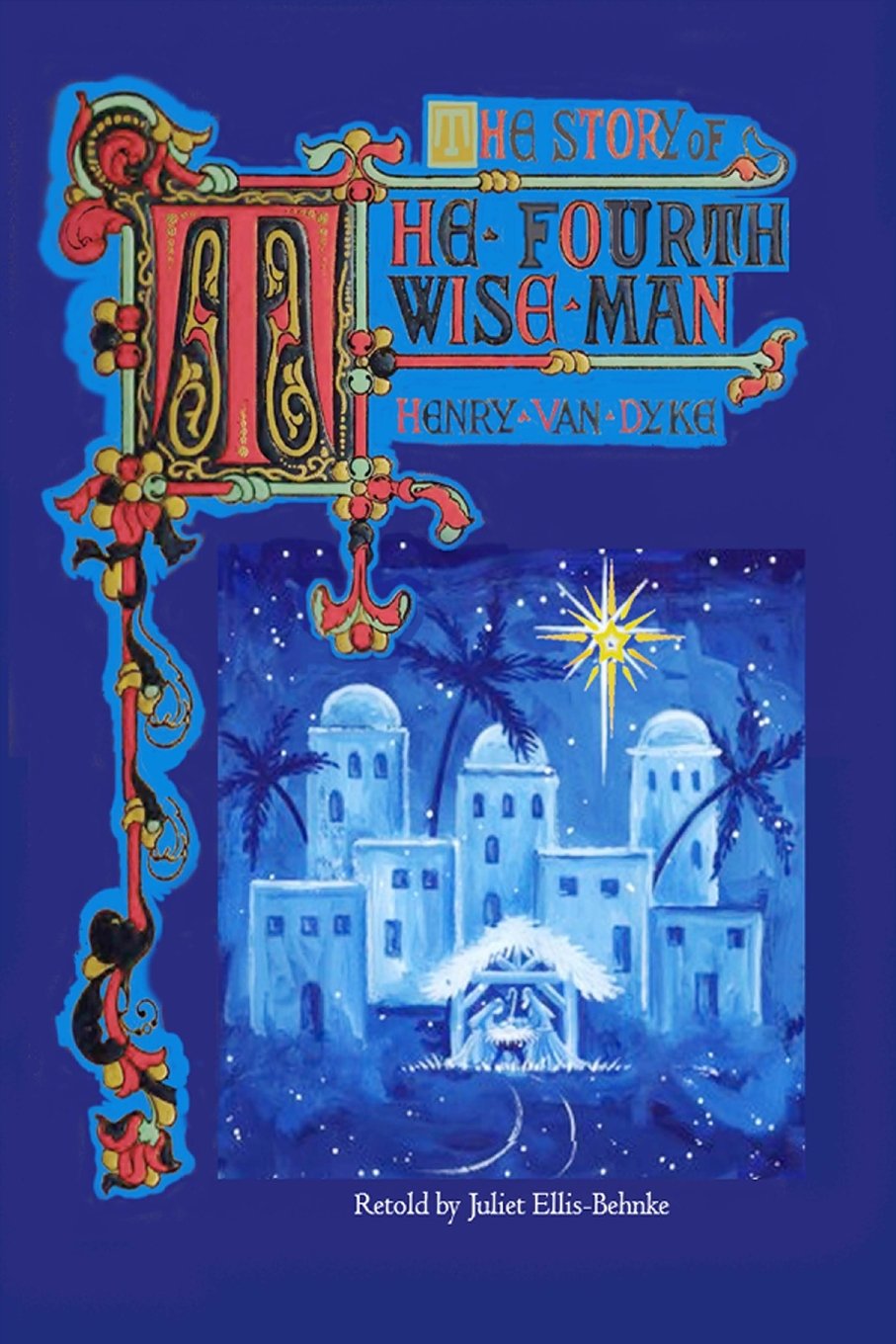



You know the story of the Three Wise Men of the East, and how they traveled from far away to offer their gifts at the manger-cradle in Bethlehem. But have you ever heard the story of the Fourth Wise Man, who also saw the star rising and set out to follow it, yet did not arrive with the other Magi? The story expands the account of the Biblical Magi, recounted in the Gospel of Matthew. It tells about a "fourth" wise man, a priest of the Magi named Artaban, from Persia. Like the other Magi, he sees signs in the heavens that a King had been born among the Jews. Like them, he sets out to see the newborn ruler, carrying treasures to give as gifts to the child - a sapphire, a ruby, and a "pearl of great price." However, he stops along the way to help a dying man, which makes him late to meet with the caravan of the other three Wise Men. He then begins his journey alone, but arrives in Bethlehem three days late, too late to see the child, whose parents have fled to Egypt. Henry van Dyke (1852-1933) was born in Germantown, Pennsylvania, in the United States. He graduated from Princeton University in 1873 and from Princeton Theological Seminary, 1877 and served as a professor of English literature at Princeton between 1899 and 1923. In 1908-09 Dr. van Dyke was an American lecturer at the University of Paris. By appointment of President Wilson, a friend and former classmate of van Dyke, he became Minister to the Netherlands and Luxembourg in 1913. He was elected to the American Academy of Arts and Letters and received many other honors. He chaired the committee that wrote the first Presbyterian printed liturgy, The Book of Common Worship of 1906. He wrote the lyrics to the popular hymn, "Joyful, Joyful We Adore Thee" (1907), sung to the tune of Beethoven's "Ode to Joy." The following quote is attributed to van Dyke, "Time is too slow for those who wait, too swift for those who fear, too long for those who grieve, too short for those who rejoice, but for those who love - time is eternity."