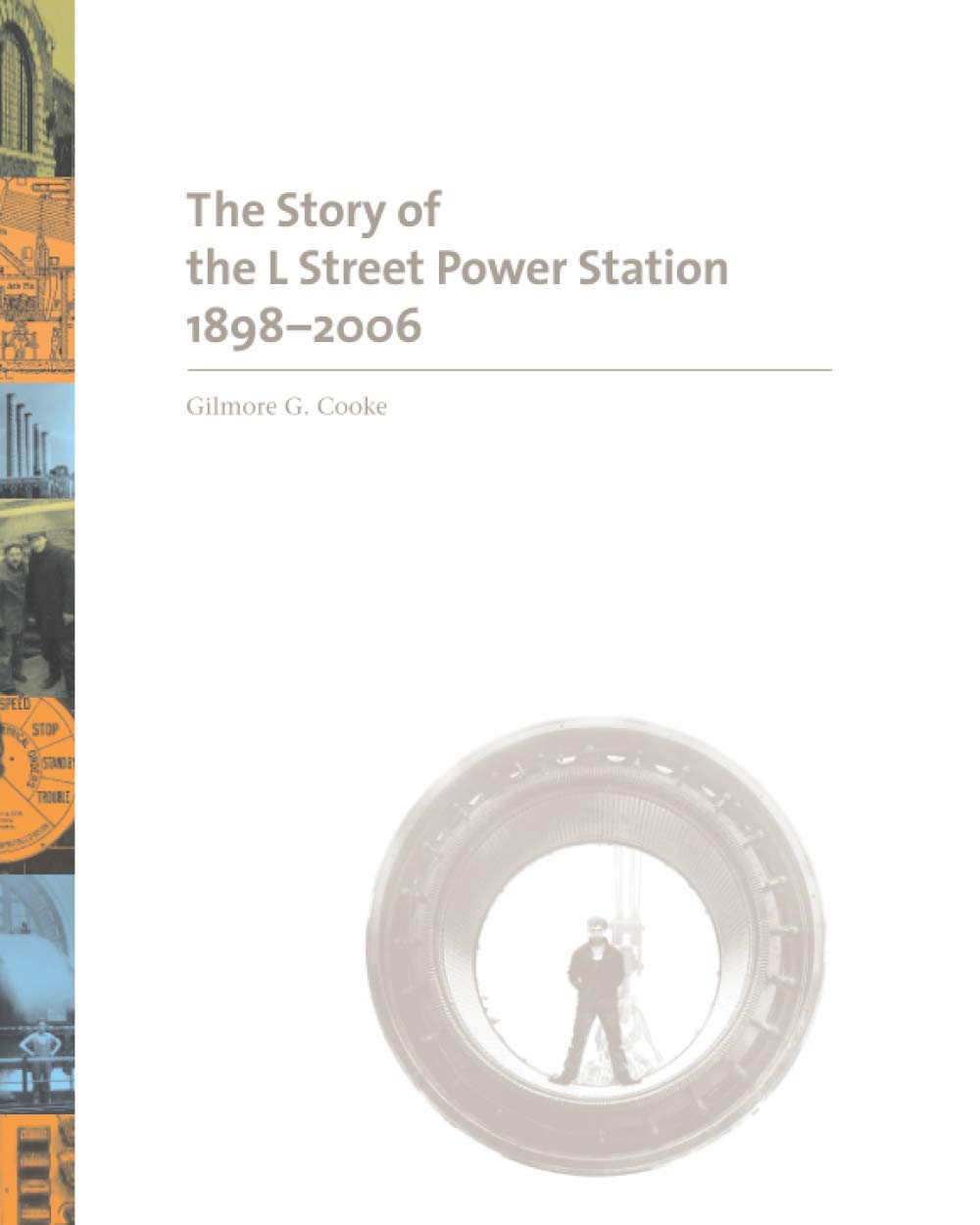



In the 1890s, the Boston Electric Light Company vacated its electric generating station on Gilbert Place in Boston to make room for a major new railroad terminal. A new, replacement generating station was constructed on L Street in South Boston. This site offered ready access to Boston Harbor with its plentiful supply of condenser cooling water and mooring sites for colliers delivering coal to fuel the new generating station. The L Street Power Station first went into service in 1898. In 1902, the Boston Electric Light Company was acquired by the Edison Electric Illuminating Company of Boston (EEI), later becoming known as the Boston Edison Company. The 1898 power station incorporated then state-of-the-art steam boilers and reciprocating prime movers. Since that date, the station has often been expanded, upgraded, and redeveloped. The then revolutionary Curtis vertical steam turbines were introduced in a major expansion beginning in 1903. A further expansion beginning in 1916 utilized horizontal steam turbines. After being the first utility in the United States to use 1,200-psi high pressure steam boilers and turbines in the early 1920s at its Weymouth generating station, EEI used advanced high pressure steam equipment in a major 1939 L Street Power Station expansion. Also, the late 1930s saw the installation of flue gas scrubbers and electrostatic stack precipitators, two early forms of pollution control, at the L Street Power Station. The most recent major redevelopment and modernization of the L Street site took place during the 1960s with the construction of the New Boston Generating Station. The first of two 380-MW (maximum claimed capability) generating units went into service in 1965, and the second unit entered service in 1967. With the completion of the second unit, the station became the largest generating station in the six-state surrounding area. Originally fueled by number 6 fuel oil as its primary fuel, the New Boston Generating Station now uses natural gas as its fuel. Throughout its long history, the L Street Power Station has used and has often pioneered the use of the newest and best technologies. As a result, its evolution over more than a century demonstrates and parallels the development and evolution of the entire United States steam electric power generation industry. The author has produced a comprehensive and intricately detailed history of the remarkable L Street Power Station. The book is divided into five parts, each devoted to a particular period of major expansion or redevelopment at the site. Cooke covers important engineering, design, construction, operation, and staffing aspects of each major phase in the history of the site. The book is richly and thoughtfully illustrated with 76 black and white and 36 color photographs as well as 34 engineering drawings, diagrams, elevations, and charts. The images include pictures of early and later construction activities, views of the elaborate architectural style typical of industrial buildings of an earlier age, boiler house and turbine room scenes, and photographs of a number of the present staff members at the New Boston Generating Station. This book will appeal especially to those interested in the history of technology, to power generation engineers and related professionals, and to those seeking information specifically on the L Street Power Station or more generally on the evolution of the United States power generation industry. The L Street property was recently acquired by Hilco Redevelopment Partners, LLC. Hilco is planning to redevelop and repurpose the property while restoring and preserving the heritage value of the site.