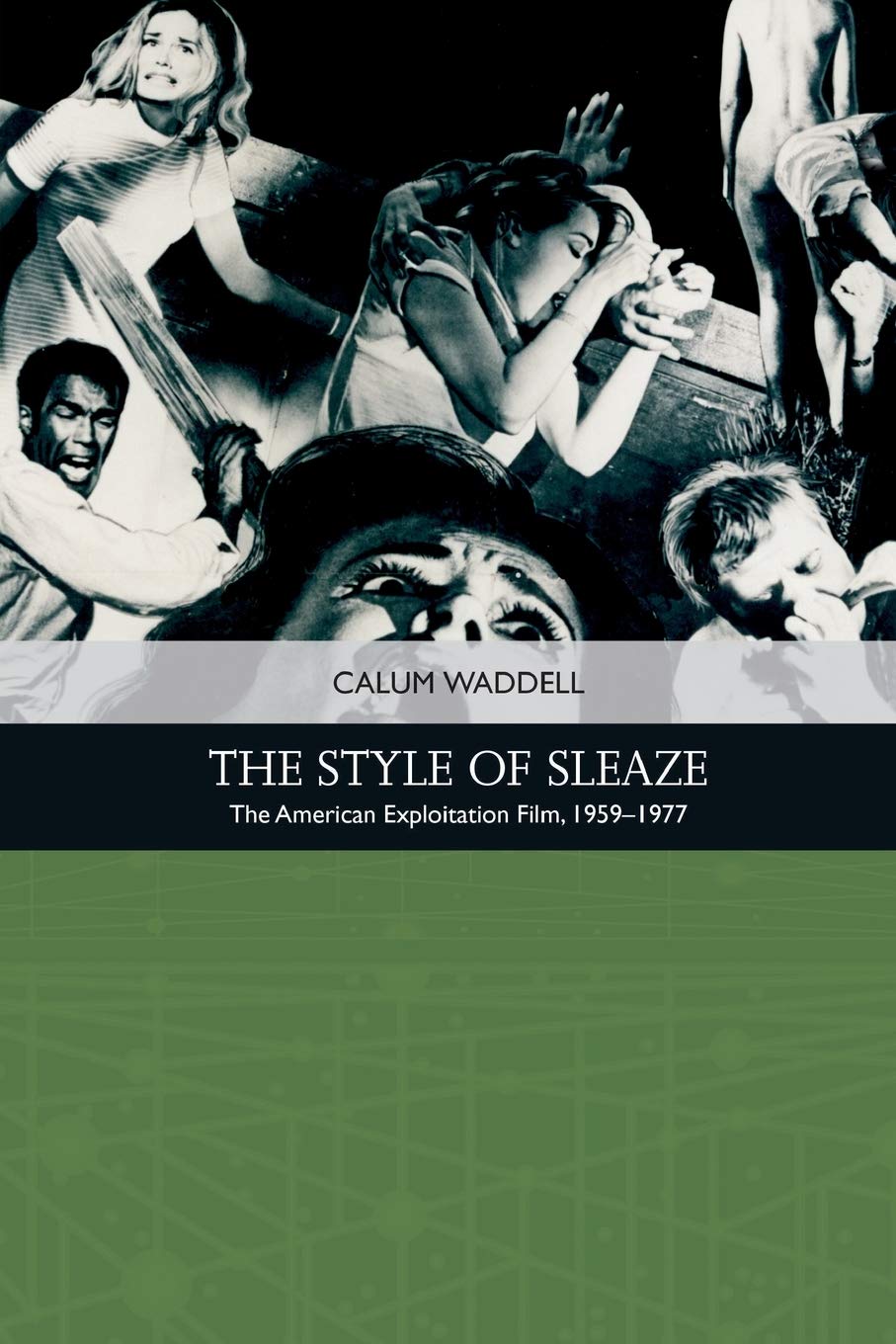
The Style of Sleaze: The American Exploitation Film, 1959 - 1977 (Traditions in American Cinema)
$15.46
by Calum Waddell



What is an exploitation film? The Style of Sleaze reasons that the aesthetic and thematic approach of the key texts within three distinct exploitation demarcations – blaxploitation, horror and sexploitation – indicate a concurrent evolution of filmmaking that could be seen as an identifiable cinematic movement. Offering a fresh perspective on studies of marginal cinema, The Style of Sleaze maintains that defining exploitation cinema as a vaguely attributed 'excess' is unhelpful, and instead concludes that this period in American film history produced a number of the most transgressive, and yet morally complex, motion pictures ever made. In its focus on the taboo-breaking and transgressive elements of 1970s exploitation cinema, The Style of Sleaze is set to be as important a publication in this area as Eric Schaefer's Bold! Daring! Shocking! True! A recognition to the importance of further study into the wonderful world of American "trash" cinema. -- Mikel J. Koven, University of Worcester Examines the American exploitation film - blaxploitation, exploitation-horror and sexploitation - between 1959-1977 In its focus on the taboo-breaking and transgressive elements of 1970s exploitation cinema, it is set to be as important a publication in this area as Eric Schaefer's Bold! Daring! Shocking! True! A recognition to the importance of further study into the wonderful world of American trash cinema. Mikel J. Koven, University of WorcesterWhat is an exploitation film? The Style of Sleaze reasons that the aesthetic and thematic approach of the key texts within three distinct exploitation demarcations - blaxploitation, horror and sexploitation - indicate a concurrent evolution of filmmaking that could be seen as an identifiable cinematic movement. Offering a fresh perspective on studies of marginal cinema, the book maintains that defining exploitation cinema as a vaguely attributed excess is unhelpful, and instead concludes that this period in American film history produced a number of the most transgressive, and yet morally complex, motion pictures ever made.Calum Waddell gained his PhD at the University of Aberdeen.Cover image: poster art for Night of the Living Dead (1968) © Continental Distributing Inc./PhotofestCover design:[EUP logo]edinburghuniversitypress.comISBN 978-1-4744-0925-4Barcode ‘In its focus on the taboo-breaking and transgressive elements of 1970s exploitation cinema, it is set to be as important a publication in this area as Eric Schaefer's ”Bold! Daring! Shocking! True!” A recognition to the importance of further study into the wonderful world of American “trash” cinema.’Mikel J. Koven, University of WorcesterWhat is an exploitation film? The Style of Sleaze reasons that the aesthetic and thematic approach of the key texts within three distinct exploitation demarcations - blaxploitation, horror and sexploitation - indicate a concurrent evolution of filmmaking that could be seen as an identifiable cinematic movement. Offering a fresh perspective on studies of marginal cinema, the book maintains that defining exploitation cinema as a vaguely attributed ‘excess’ is unhelpful, and instead concludes that this period in American film history produced a number of the most transgressive, and yet morally complex, motion pictures ever made.Calum Waddell gained his PhD at the University of Aberdeen.Cover image: poster art for Night of the Living Dead (1968) © Continental Distributing Inc./PhotofestCover design:[EUP logo]edinburghuniversitypress.comISBN 978-1-4744-0925-4Barcode Calum Waddell is a lecturer at the University of Aberdeen, where he also received his PhD. His previous work includes The Style of Sleaze, The American Exploitation Film (2018), Images of Apartheid: Filmmaking on the Fringe in the Old South Africa (2021), South African Horror Cinema (2025), and the edited collection The Films of Wes Craven (2023). He has occasionally worked on producing bonus content and documentary work for Blu-ray labels and documented the “gory glory” days of grindhouse cinema with his feature-length nostalgia-trip 42nd Street Memories (2015).