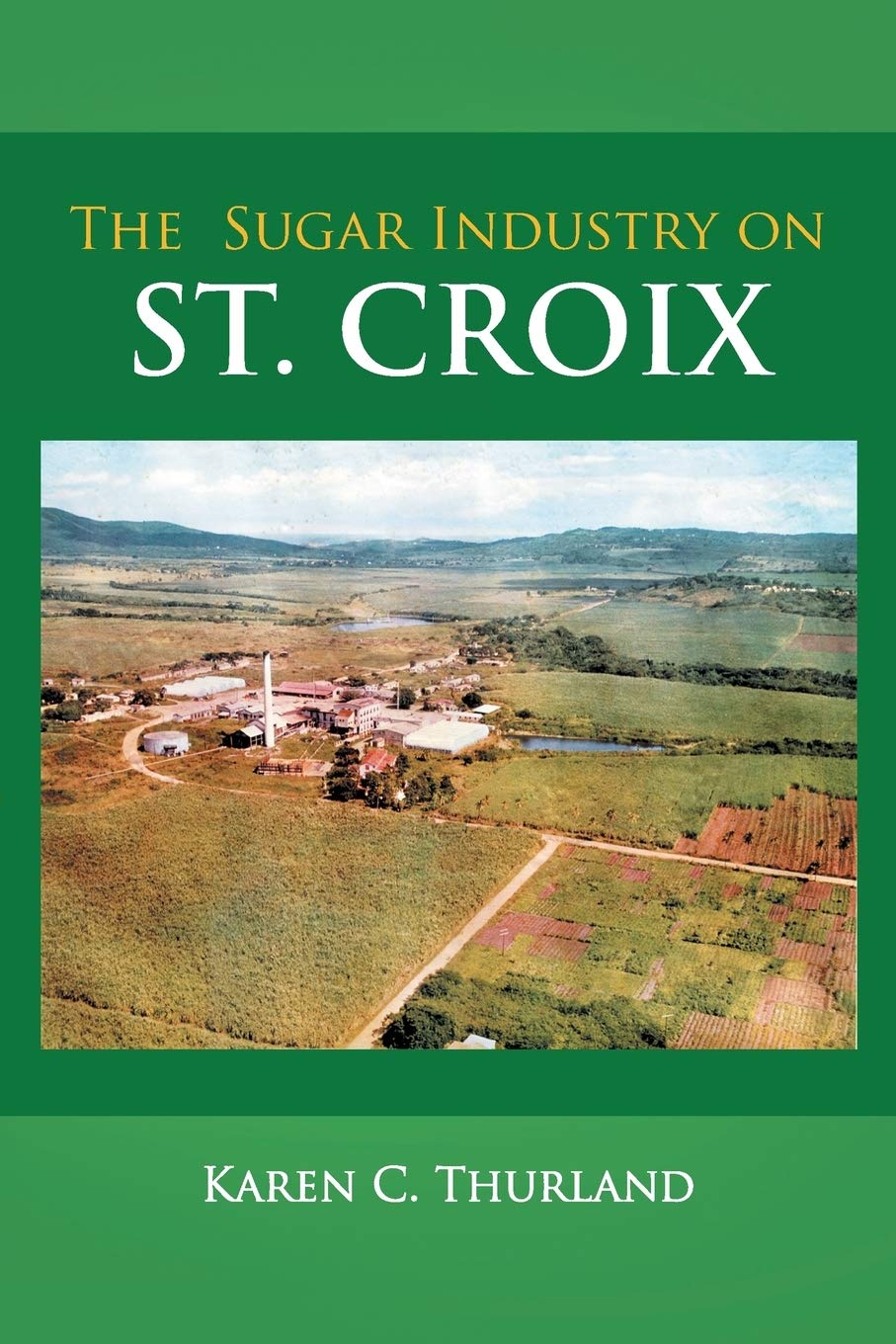



St. Croix, U.S. Virgin Islands, a Caribbean island, had a sugar industry that spanned from its earliest settlement years until the middle of the twentieth century. Sugar was the economic determinant that influenced the social and cultural fiber of the island. The Sugar Industry on St. Croix, a historical reader, concentrates primarily on the twentieth century when the sugar industry was on its decline and eventually terminated. The book has an historical overview that describes the economics of sugar cultivation, attempts at diversification of crops, the Virgin Islands Company, homesteading, the Virgin Islands Corporation, and the termination of the sugar industry on the island. The book also contains first-hand accounts from people who participated in the industry and recall their experiences in the planting and harvesting of sugar cane, working in the sugar factory or for the Virgin Islands Corporation, a view of the role of women in the industry, and the challenges of life in an agricultural community. The photographs provide a view of agricultural life, the gauge railways, homesteaders, and also of the people involved in sugar production. The Sugar Industry on St. Croix By Karen C. Thurland AuthorHouse Copyright © 2014 Karen C. Thurland All rights reserved. ISBN: 978-1-4520-5224-3 Contents Introduction, 1, Historical Overview, 9, Edgar M. Iles – Sugar Cane Farmer, 93, Edwardo George – Cane Cutter, 103, Georgiana Clarke – Cook for VICORP Camps, 111, Agapito Ramos – Cane Cutter, 115, Rosendo Rivera Gomez – Cane Loader, 123, Sam "Old Timer" Garnett – Cane Cutter, 129, James "J J" Joseph – Cane Cutter, 139, Women in the Sugar Industry, 145, George Henry – Truck Driver for Diamond Distillery, 155, Fritz Tutein – Engineer at Bethlehem Factory, 165, Vincent Doward – Electrician at Bethlehem, 173, Hortense Milligan Rowe – Accountant at VICORP, 183, Lauritz Blackwood – IBM Supervisor at VICORP, 207, Lemuel Smithen – Sugar Cane Farmer, 213, Glossary, 223, References, 231, About the Author, 235, CHAPTER 1 Historical Overview The Caribbean island of St. Croix has a history that is bittersweet when an examination of the impact of sugar cane on the island and its people is undertaken. It is a story of economic fluctuations and a life of hardships for the workers who were involved in sugar cultivation and its harvest. Sugar cane cultivation and its production has been the predominant influential factor on the history, economics, and cultural heritage of the island of St. Croix from the beginning of its settlement by the Danish West Indies and Guinea Company in 1733 until the end of the sugar era in 1966. The island was organized into nine quarters: Eastend A & B, Company, Queen, King, Prince, Northside A & B, and Westend. Plantations were established with the primary purpose of cultivating sugar cane and producing sugar, molasses, and rum for export. Sugar cane is indigenous to Asia and the East Indies, but it was introduced to the Caribbean by the Spanish and became a major crop throughout the islands. Sugar was processed on Spanish, English, Dutch and French islands throughout the Caribbean archipelago. The French planted tobacco, cotton and sugar on St. Croix during their settlement of the island from 1650 until 1695. The Danish government was late in its arrival to the Caribbean when the Danish West India and Guinea Company in 1671 got a charter or contract to settle and trade in the West Indies. The Company settled on St. Thomas the following year and years later, in 1717, on St. John. St. Croix was added in 1733 when the Company purchased the island from the French government. Once the land was cleared for cultivation, sugar cane became the main cash crop. The growing and harvesting of sugar cane was a labor-intensive enterprise, and thousands of Africans were enslaved and brought to St. Croix to work in the cane fields. The importation of Africans became part of the triangular trade between Europe, Africa, the Caribbean, and the United States. St. Croix became a major sugar producing island for the Danish West Indian and Guinea Company, and in 1755 the island was taken over by the Danish Crown. This period from 1755 to 1820 marks the beginning of the Golden Days of St. Croix when sugar or "white gold" made several planters wealthy, and elaborate estate great houses and town houses were constructed throughout the island. Sugar was in demand in Europe and the United States, and St. Croix exported sugar and molasses to both continents. Dr. Eric Williams in his book, From Columbus to Castro: The History of the Caribbean, 1492-1969, developed a comparison table of sugar exports from the Caribbean; St. Croix during her period of prosperity exported far more sugar than the islands of Antigua, Barbados, and St. Kitts. St. Croix in 1812 exported approximately 20,535 tons of sugar while in the same period Antigua exported 8,032 tons, Barbados 8,837 tons, and St. Kitts