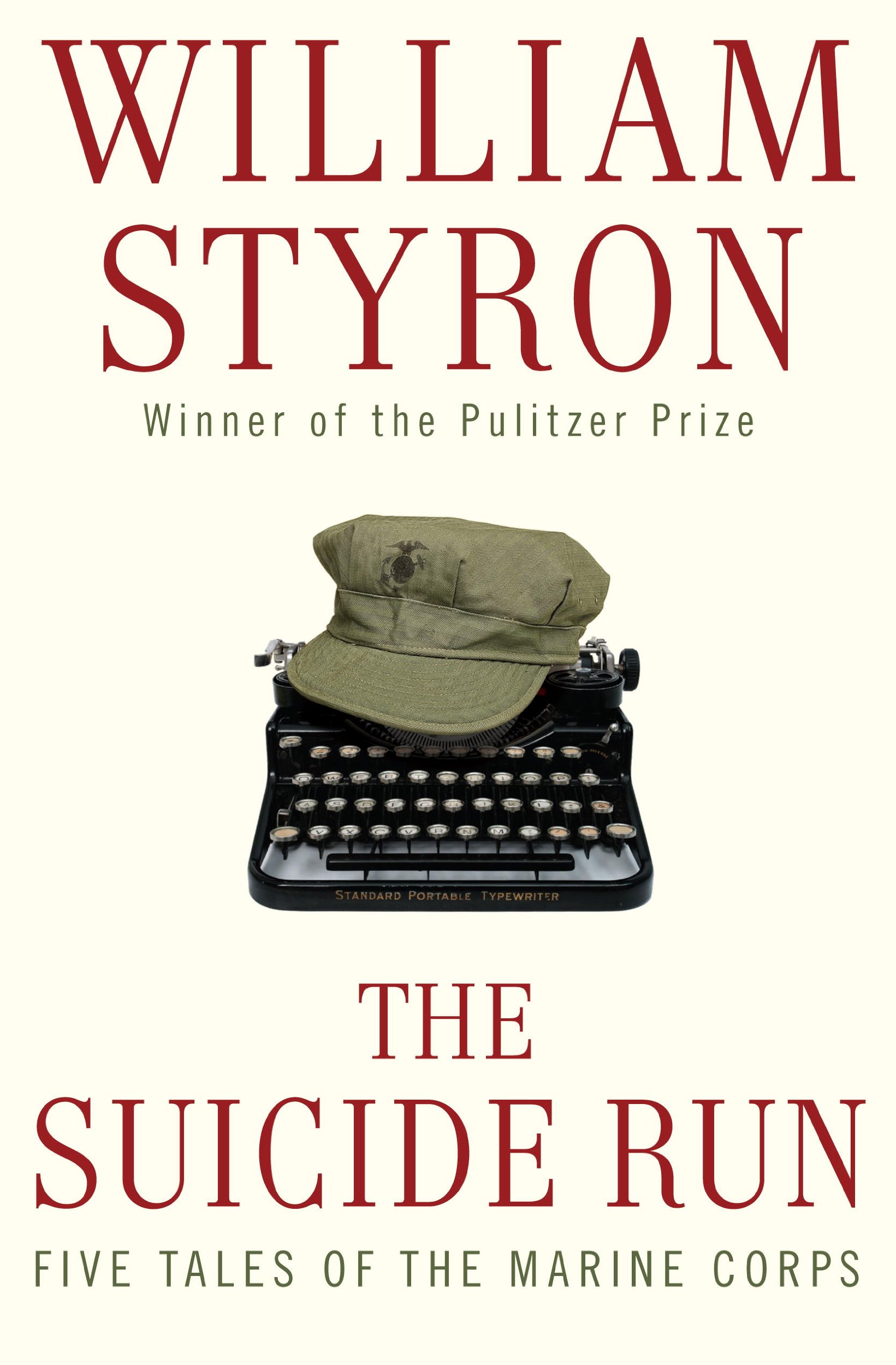



Before writing his memoir of madness, Darkness Visible , William Styron was best known for his ambitious works of fiction–including The Confessions of Nat Turner and Sophie’s Choice . Styron also created personal but no less powerful tales based on his real-life experiences as a U.S. Marine. The Suicide Run collects five of these meticulously rendered narratives. One of them– “Elobey, Annobón, and Corisco” –is published here for the first time. In “Blankenship,” written in 1953, Styron draws on his stint as a guard at a stateside military prison at the end of World War II. “Marriott, the Marine” and “The Suicide Run” –which Styron composed in the early 1970s as part of an intended novel that he set aside to write Sophie’s Choice –depict the surreal experience of being conscripted a second time, after World War II, to serve in the Korean War. “My Father’s House” captures the isolation and frustration of a soldier trying to become a civilian again. In “Elobey, Annobón, and Corisco,” written late in Styron’s life, a soldier attempts to exorcise the dread of an approaching battle by daydreaming about far-off islands, visited vicariously through his childhood stamp collection. Perhaps the last volume from one of literature’s greatest voices, The Suicide Run brings to life the drama, inhumanity, absurdity, and heroism that forever changed the men who served in the Marine Corps. Lest we forget, William Styron (1925–2006) was a major American writer, author of such profound novels as Lie Down in Darkness (1951), The Confessions of Nat Turner (1967), and Sophie’s Choice (1979). Sadly, he is little read these days. Perhaps this collection of lesser Styron material will stir interest in his earlier works.These five pieces of fiction, referred to as “narrations” (including two previously unpublished), explore Styron’s own experiences as a U.S. Marine. The collection, then, is a taste of his talent and one of his major subject-interests. Straddling fiction and memoir, they work out different contexts of the overall theme of the draw of military life, which obviously enticed Styron himself. For larger serious fiction collections. --Brad Hooper "Short fiction from a Southern master of the sweeping, ambitiously themed, epic novel.. . . Taken as a whole, these fragments illuminate their author's obsessions and make the reader wish Styron had completed at least two more novels. Essential reading for the writer's fans; a revelatory footnote for others."— Kirkus Reviews "Styron's prose is as assured as ever and his knack for character is masterful."— Publishers Weekly "Styron has always been drawn to moral and emotional complexity, and in these three stories we see him at work skillfully exploring that rich and provocative terrain again."— Library Journal William Styron (1925-2006) , a native of the Virginia Tidewater, was a graduate of Duke University and a veteran of the U.S. Marine Corps. His books include Lie Down in Darkness, The Long March, Set This House on Fire, The Confessions of Nat Turner, Sophie’s Choice, This Quiet Dust, Darkness Visible , and A Tidewater Morning . He was awarded the Pulitzer Prize for Fiction, the Howells Medal, the American Book Award, the Légion d’Honneur, and the Witness to Justice Award from the Auschwitz Jewish Center Foundation. With his wife, the poet and activist Rose Styron, he lived for most of his adult life in Roxbury, Connecticut, and in Vineyard Haven, Massachusetts, where he is buried. Blankenship Amid the smelly stretch of riptides and treacherous currents formed by the confluence of the upper East River and Long Island Sound stands a small low-lying island. Surmounted for most of its length by ancient prison buildings, it is an island hardly distinguishable, in its time-exhausted drabness, from those dozen or so other islands occupied by prisons and hospitals which give to the New York waterways such a bleak look of municipal necessity and—for some reason especially at twilight—that air of melancholy and erosion of the spirit. Yet something here compels a second glance. Something makes this island seem even excessively ugly, and a meaner and shabbier eyesore. Perhaps this is because of the island’s situation; for a prison island it just seems to be in too nice a place. It commands a fine wide view of the blue Sound to the east and the white houses on the mainland nearby—houses which, though situated in the Bronx, are so neat and scrubbed and summery-looking as to make New York City seem as remote as Nantucket. One passing by the island might more logically envision a pretty park here, or groves of trees, or a harbor for sailboats, than this squalid acre of prison buildings. Yet perhaps it’s the buildings themselves which make the place look more than ordinarily grim and depressing—so that the cleanly utilitarian, white marble structures on the other of the city’s islands seem, by comparison, almost beguiling sanctuaries. These date back nearly a centu