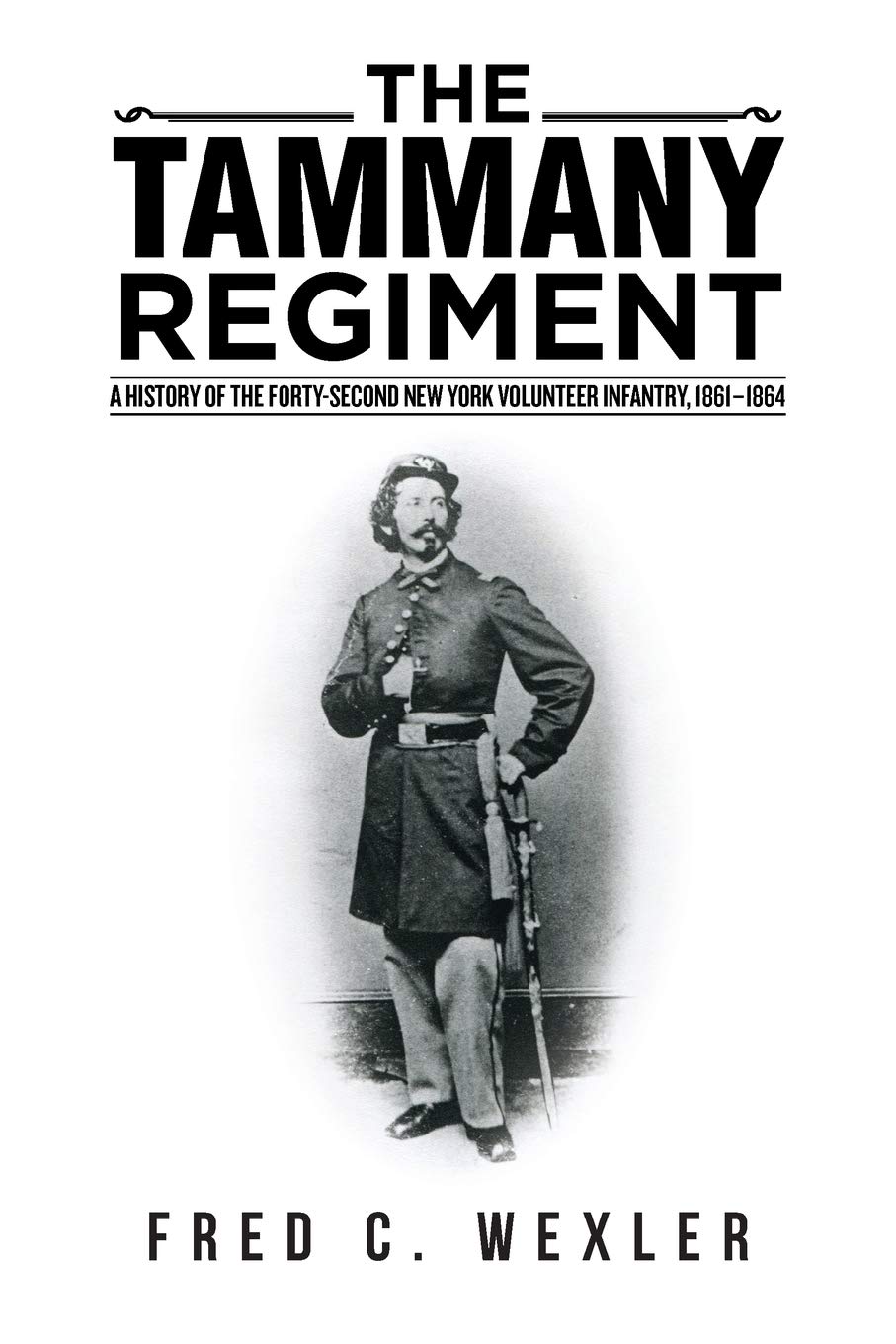



As the Union mobilized to meet the military challenges of the Civil War, the people of New York volunteered in large numbers to meet the quotas set by President Lincoln. Tammany Hall used all of its political power to recruit men, mostly Irish immigrants, to form the regiment that would bear its name throughout most of the fiercest fighting of the war-from the bluffs outside Leesburg, the West Woods of Antietam, and the streets of Fredericksburg to Pickett's Charge at Gettysburg and the chaos that was Petersburg. Of the more than one thousand men who started with the regiment in 1861, less than one hundred would remain in 1864. The Tammany Regiment: A History of the Forty-Second New York Volunteer Infantry is more than the history of a group of men fighting to preserve a way of life. It is a story of a powerful political machine. It is a story about how the Fenian Movement to free Ireland from England affected the men in the trenches. It is a story of how families survived the challenges of war and how they dealt with the tumultuous news they received about their loved ones. Draw closer to many of the men in the Tammany Regiment, and share their thoughts and fears as they faced three years of unbelievable hardship. Did they do what was right? Could they have done more? Were they treated fairly? One thing is for sure-they will now be remembered! The Tammany Regiment A History of the Forty-Second New York Volunteer Infantry, 1861–1864 By Fred C. Wexler iUniverse Copyright © 2016 Fred C. Wexler All rights reserved. ISBN: 978-1-4917-8770-0 Contents Introduction, ix, Chapter One: Formation of the Regiment, 1, Chapter Two: Washington D.c. to Ball's Bluff, 15, Chapter Three: The Battle of Ball's Bluff, 31, Chapter Four: The Ball's Bluff Prisoners, 67, Chapter Five: Winter 1861-2, 81, Chapter Six: Arrival on the Peninsula, 105, Chapter Seven: Fair Oaks-Seven Pines, 125, Chapter Eight: Seven Days Battles, 137, Chapter Nine: Harrison's Landing Withdrawal from the Peninsula, 159, Chapter Ten: Prelude to Antietam, 173, Chapter Eleven: Antietam, 181, Chapter Twelve: Movement to Fredericksburg, 197, Chapter Thirteen: Fredericksburg, 207, Chapter Fourteen: Winter 1863, 227, Chapter Fifteen: Chancellorsville Second Fredericksburg, 245, Chapter Sixteen: Gettysburg, 259, Chapter Seventeen: Bristoe Station Mine Run, 273, Chapter Eighteen: Winter 1864, 293, Chapter Nineteen: Battle of the Wilderness, 313, Chapter Twenty: Battle of Spotsylvania Court House, 321, Chapter Twenty-One: Battle of Cold Harbor, 349, Chapter Twenty-Two: Jerusalem Plank Road Weldon Railroad, 359, Bibliography, 391, CHAPTER 1 Formation of the Regiment It was at a special meeting of the Democratic Republican General Committee in New York on Friday evening, April 26, 1861 that a committee of five men was appointed to draft resolutions expressing the sentiments of the city and Tammany Hall, relative to the troubled state of the country. In the resolutions they prepared they set the stage for the creation of the Tammany Regiment. The fifth resolution drafted read: "Resolved: That the democracy of this city are heartily united, with all of the citizens, as one man, to uphold the Constitution, enforce the laws, maintain the Union, defend the Flag and protect the Capitol of these United States in the full and firm belief that the preservation of our national unity is the only security for the rights, liberties and power of our own people, and the greatest hope of oppressed humanity throughout the world." It is not the intent of this book to go deeply into the history or the individuals of Tammany Hall. Such an endeavor could fill volumes. Many works have been published outlining the good and the bad of Tammany Hall and all readers are urged to seek out sufficient information to satisfy their personal interests. On occasion, I will point out an issue or allude to an individual in New York politics, but I expect that there are endless scenarios that could be developed behind specific events well beyond those I might raise. The beginnings of the Tammany Society, a forerunner of Tammany Hall, go back to the Columbian Order of New York City around 1789. Many of the customs of the society were based on Indian traditions and the name came from the Indian Chief Tamanend (there are many spellings) who on April 23, 1683 is reported to have struck a land deal with William Penn in Bucks County, PA. In 1776, Colonel George Morgan of New Jersey was sent by Congress to confer with the Delaware Indians. They gave him the name Tamanend in honor of their old chief. During the Revolutionary War he became known as "St. Tamany, the Patron Saint of America". The officers of the society were thirteen "Sachems", one from each of the thirteen tribes paired to each of the thirteen original colonies. From this group a "Grand Sachem" was selected as the head of