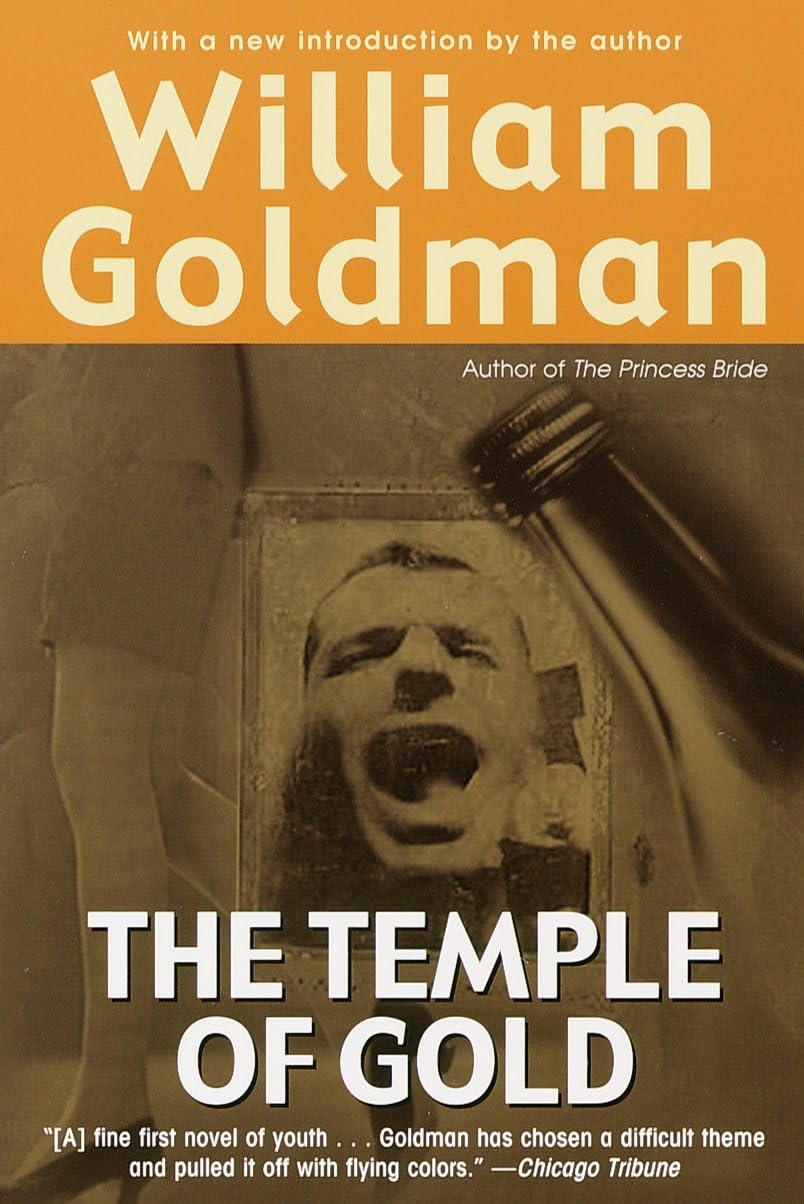



Acclaimed for such Academy Award—winning screenplays as Butch Cassidy and the Sundance Kid and such thrillers as Marathon Man , not to mention the bestselling classic The Princess Bride , William Goldman stands as one of the most beloved writers in America. But long before these triumphs, he caused a sensation with his brilliant first novel, a powerful story of reckless youth that was hailed as a worthy rival to The Catcher in the Rye . THE TEMPLE OF GOLD Ray Trevitt is coming of age in the American midwest of the late 1950s. Handsome, restless, eager to live life and to find his place in the world, Ray hurtles headlong through a young man’s rite of passage–searching for answers and somewhere to belong. What he discovers is that within friendships and love affairs, army tours and married life, victory and tragedy, lie the experiences that will shape his destiny, scar his soul, and ultimately teach him profound lessons he never expected. "[A] fine first novel of youth . . . Goldman has chosen a difficult theme and pulled it off with flying colors." -Chicago Tribune Acclaimed for such Academy Award winning screenplays as Butch Cassidy and the Sundance Kid and such thrillers as Marathon Man , not to mention the bestselling classic The Princess Bride , William Goldman stands as one of the most beloved writers in America. But long before these triumphs, he caused a sensation with his brilliant first novel, a powerful story of reckless youth that was hailed as a worthy rival to The Catcher in the Rye . THE TEMPLE OF GOLD Ray Trevitt is coming of age in the American midwest of the late 1950s. Handsome, restless, eager to live life and to find his place in the world, Ray hurtles headlong through a young man s rite of passage searching for answers and somewhere to belong. What he discovers is that within friendships and love affairs, army tours and married life, victory and tragedy, lie the experiences that will shape his destiny, scar hi "Acclaimed for such Academy Award--winning screenplays as Butch" Cassidy and the Sundance Kid" and such thrillers as Marathon Man," not to mention the bestselling classic The Princess Bride," William Goldman stands as one of the most beloved writers in America. But long before these triumphs, he caused a sensation with his brilliant first novel, a powerful story of reckless youth that was hailed as a worthy rival to The Catcher in the Rye." THE TEMPLE OF GOLD Ray Trevitt is coming of age in the American midwest of the late 1950s. Handsome, restless, eager to live life and to find his place in the world, Ray hurtles headlong through a young man's rite of passage-searching for answers and somewhere to belong. What he discovers is that within friendships and love affairs, army tours and married life, victory and tragedy, lie the experiences that will shape his destiny, scar his soul, and ultimately teach him profound lessons he never expected. William Goldman is an Academy Award–winning author of screenplays, plays, memoirs, and novels. His first novel, The Temple of Gold (1957), was followed by the script for the Broadway army comedy Blood, Sweat and Stanley Poole (1961). He went on to write the screenplays for many acclaimed films, including Butch Cassidy and the Sundance Kid (1969) and All the President’s Men (1976), for which he won two Academy Awards. He adapted his own novels for the hit movies Marathon Man (1976) and The Princess Bride (1987). The Family My father was a stuffy man. That is not meant as criticism but rather to be the truth. It is the word that best fit him. Stuffy. He always wore dark suits and ugly ties, and was forever pursing his lips and wrinkling up his forehead before he said anything. “Is that you?” my mother would call when he came home. Then he’d purse his lips and there would go his forehead and after a while he’d say: “Yes, my dear.” He always called her that—“my dear”; never her real name, which was Katherine. And I was always Raymond. It’s easiest to begin with my father rather than my mother or Grandmother Rae for the simple reason that I knew less about him than the others. We lived side by side in the same house for many years, but I never really got to know him. That again isn’t meant to be criticism; it was just the way things worked out. Because, in the first place, he was a lot older than I was, being forty when I was born. And he was not the kind who enjoyed walking along the beach or playing catch out in the back yard by the ravine. He was a scholar, and I guess a good one, for he was far and away the most famous person at Athens College in Athens, Illinois, which is where he taught all his life. He got famous because he was an important figure in the Euripides revival that took place in the earlier part of this, the twentieth century, which should go a long way toward explaining how I happened to get stuck with the middle name I unfortunately possess. I suppose he had visions of me becoming a Gr