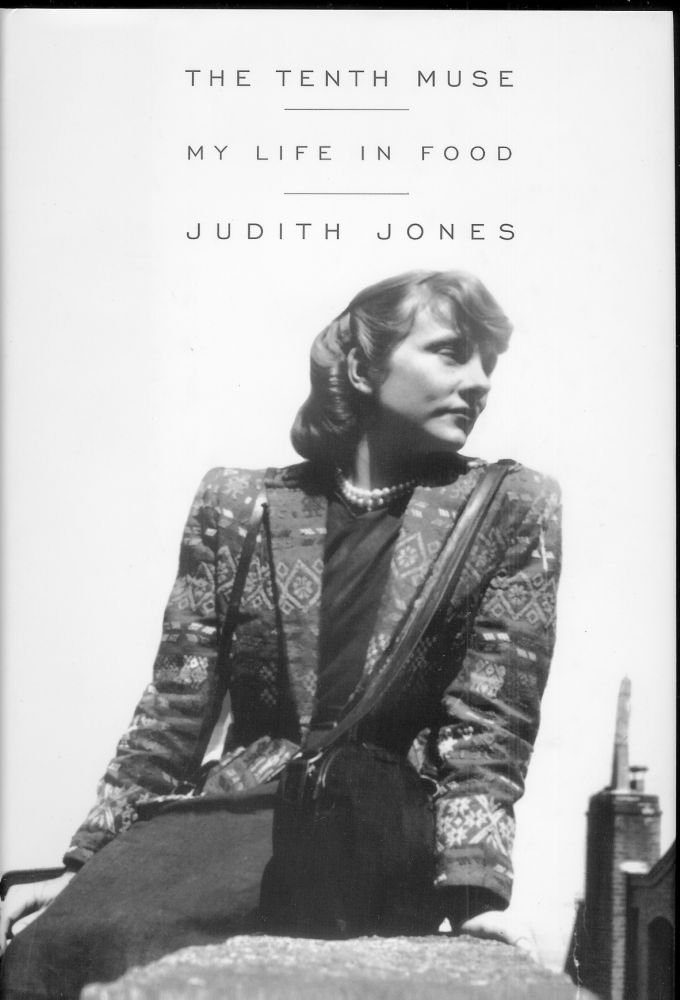



From the legendary editor who helped shape modern cookbook publishing—one of the food world’s most admired figures—an evocative and inspiring memoir. Living in Paris after World War II, Judith Jones broke free of the bland American food she had been raised on and reveled in everyday French culinary delights. On returning to the States—hoping to bring some joie de cuisine to America—she published Julia Child’s Mastering the Art of French Cooking. The rest is publishing and gastronomic history. A new world now opened up to Jones: discovering, with her husband, Evan, the delights of American food; working with the tireless Julia; absorbing the wisdom of James Beard; understanding food as memory through the writings of Claudia Roden and Madhur Jaffrey; demystifying the techniques of Chinese cookery with Irene Kuo; absorbing the Italian way through the warmth of Lidia Bastianich; and working with Edna Lewis, Marion Cunningham, Joan Nathan, and other groundbreaking cooks. Jones considers matters of taste (can it be acquired?). She discusses the vagaries of vegetable gardening in the Northeast Kingdom of Vermont and the joys of foraging in the woods and meadows. And she writes about M.F.K. Fisher: as mentor, friend, and the source of luminous insight into the arts of eating, living, and aging. Embellished with fifty recipes—each with its own story and special tips—this is an absolutely charming memoir by a woman who was present at the creation of the American food revolution and played a seminal role in shaping it. Judith Jones, now a senior editor and vice president at Knopf, has long been a major force in the cookbook world. Her foodie fans might not know that she also played a role in bringing Anne Frank: The Diary of a Young Girl to America or that she has edited literary stars like John Updike and Anne Tyler. Two reviewers faulted Joness style, but none denied her interesting and influential career. Indeed, if it werent for Jones, American consumers might have a hard time purchasing such basics as fresh garlic. Therein lies the challenge in interpreting the critics reviews: the critics were all so busy admiring Joness life that they didnt have as much to say about the book itself. Though Jones is a major power in the publishing word, this memoir is not as wide-ranging as, say, Michael Kordas Another Life . She tells delightful stories, but she sticks to the food, and her readers this time around should be mainly those who are inclined to do the same. Copyright © 2004 Phillips & Nelson Media, Inc. Advance Praise for Judith Jones’s The Tenth Muse “An entire generation of women (including me) learned to cook from Julia Childs’ books. And for that we have Judith Jones to thank. Judith was the first to champion Julia’s brilliant career, as well as many others who have changed the world of food. This, Judith’s personal adventure, is a truly wonderful story.” –Ina Garten “Judith Jones's lovely memoir shows us that this petite giant, blessed with a voracious sense of adventure and timing, an erudite palate, a marksman's eye for talent–and an abundance of good taste–was there at every step of our country's culinary revolution, finding, coaching, editing, and promoting the players who made it happen.” –Danny Meyer “Judith Jones has written a love letter to food–charming, wise and irresistibly tasty.”–Peter Mayle “In this quiet, spare memoir, set against the shifting landscape of modern cookery in America, Jones reveals herself to be every bit as evangelical about good food and honest cooking as her authors . . . Jones’s belief in the primordial importance of cooking well is ultimately inspiring, and it fires up these pages as it has fired her life.” - Publishers Weekly Judith Jones is senior editor and vice president at Alfred A. Knopf, where she has worked since 1957. She is the coauthor with Evan Jones of three books: The Book of Bread; Knead It, Punch It, Bake It! (for children); and The Book of New New England Cookery . She also collaborated with Angus Cameron on The L. L. Bean Game and Fish Cookbook . Recently, she has contributed to Vogue, Saveur, and Gourmet magazines. In 2006, she was awarded the James Beard Foundation Lifetime Achievement Award. She lives in New York City and Vermont. Bread Pudding SERVES: 4 to 6 At a country inn in Wales, I had one of those taste-memory moments that made me realize how a simple pudding of eggs, bread, and milk could in a flash call up a flood of memory so acute that for an instant I was right back in childhood. The baked dish was brought in, wrapped in a white linen napkin, the way Edie would have served it, and as it was spooned onto the plate I had my first whiff. Then, when I took a taste, the hot raisins bursting in my mouth, the sensation was so powerful that the tears rolled down my cheeks (adding a little salty flavor). NOTE: I discovered from Edna Lewis how much better crushed sugar cubes are than plain granulated sugar a