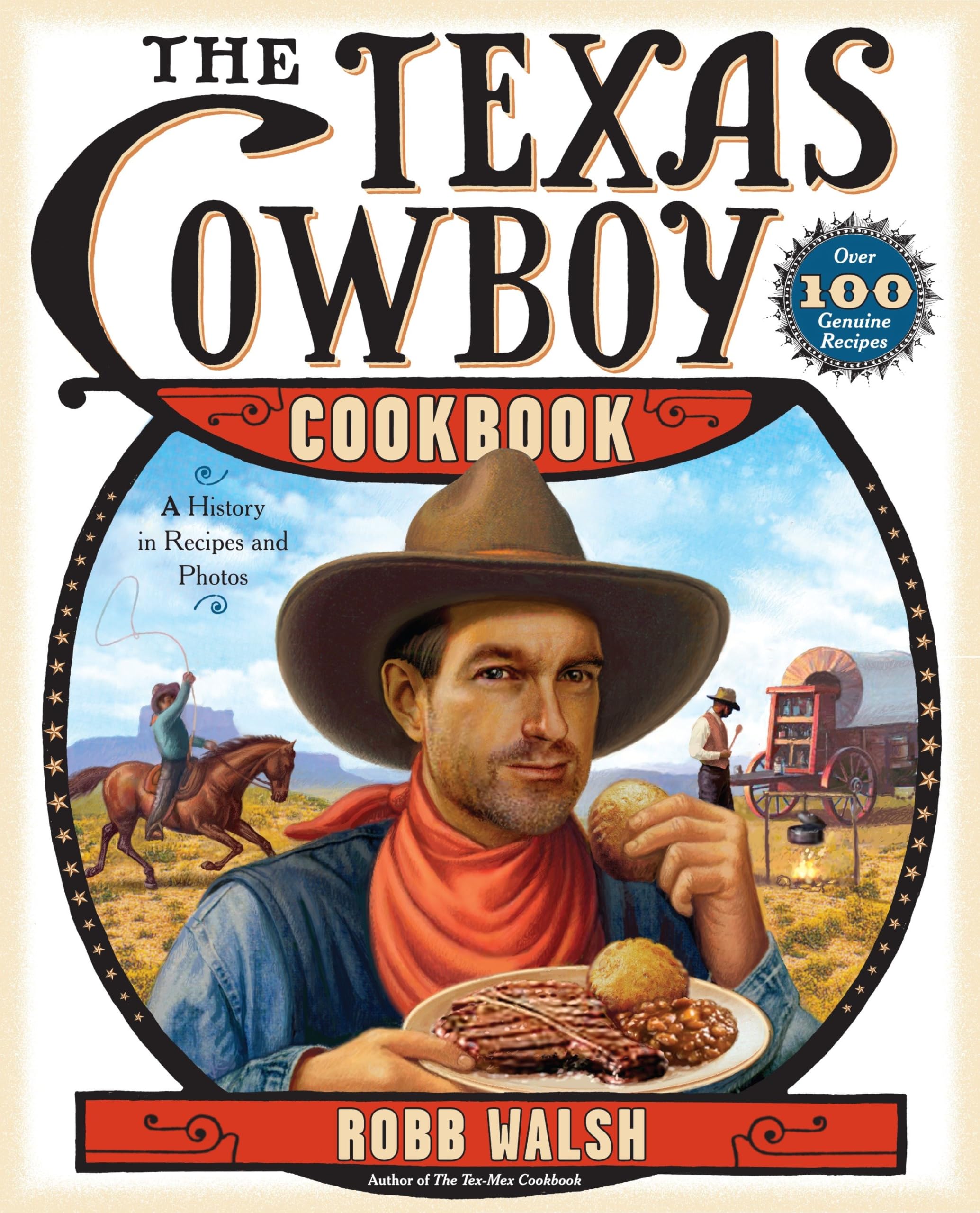



Texas cowboys are the stuff of legend — immortalized in ruggedly picturesque images from Madison Avenue to Hollywood. Cowboy cooking has the same romanticized mythology, with the same oversimplified reputation (think campfire coffee, cowboy steaks, and ranch dressing). In reality, the food of the Texas cattle raisers came from a wide variety of ethnicities and spans four centuries. Robb Walsh digs deep into the culinary culture of the Texas cowpunchers, beginning with the Mexican vaqueros and their chile-based cuisine. Walsh gives overdue credit to the largely unsung black cowboys (one in four cowboys was black, and many of those were cooks). Cowgirls also played a role, and there is even a chapter on Urban Cowboys and an interview with the owner of Gilley’s, setting for the John Travolta--Debra Winger film. Here are a mouthwatering variety of recipes that include campfire and chuckwagon favorites as well as the sophisticated creations of the New Cowboy Cuisine: • Meats and poultry: sirloin guisada, cinnamon chicken, coffee-rubbed tenderloin • Stews and one-pot meals: chili, gumbo, fideo con carne • Sides: scalloped potatoes, onion rings, pole beans, field peas • Desserts and breads: peach cobbler, sourdough biscuits, old-fashioned preserves Through over a hundred evocative photos and a hundred recipes, historical sources, and the words of the cowboys (and cowgirls) themselves, the food lore of the Lone Star cowboy is brought vividly to life. “The Texas cowboy is so central to American culture that even cowboys themselves buy into the mythology. Instead of settling for the usual chuckwagon tales, Robb Walsh has sorted out the facts with a clear eye and passed along the myths with a warm heart. He also serves up lots of the surprisingly tasty fare that Texas cowboys--black and white, Anglo and Hispanic, male and female--really cooked. The result is a cookbook that widens horizons.” —John Thorne, author of Outlaw Cook and Serious Pig “A Western saga of a cookbook with wild and delicious stories, photos, and recipes. It feels like a collaboration by John Wayne, Larry McMurtry, and Emiliano Zapata.” —Davia Nelson & Nikki Silva, NPR's Kitchen Sisters ROBB WALSH is the author of four previous Texas cookbooks, including The Tex-Mex Cookbook. He also reviews restaurants for the Houston Press . He lives in Houston, Texas. Chapter 1 The Texas Cowboy Myth Picture a bunch of cowboys sitting around a campfire eating from tin plates and drinking black coffee from tin cups. Beside them is the iconic horse-drawn kitchen called the chuck wagon, stocked with everything they will need to eat for servearl months. THis is the image of cowboy cooking that became a part of the history of Texas and the Old West. Modern scholars have pointed out that much of what we mistake for history is actually part of “the myth of the West,” a jungle of fact and fantasy derived from pulp fiction, Wild West shows, television weterns, and cowboy–and–Indian movies. The reexamination of cowboy history currently taking place in Texas colleges and universitites is giving us some startling new views of cowboy culture. Of course, there really were chuck wagons in the Old West. There really were gunfights at high noon and poker games played in saloons with swinging doors, too. It’s just that these well–dramatized clichés were actually only a small part of a much more complex story. After the Civil War, Texas was, in fact, a defeated slave state with a sizable minority population and a serious problem with the Comanches. But thanks to dime novels and Wild West shows, the rest of America thought of the Lione Star State as one big Wild West town populated entirely by white, pistol–packing cowboys. The image of the Texas cowboy and cowboy cooking that is forever locked in the public imagination comes from the twenty–year heyday of the trail drives, between 1866 and 1886. The cowboys who rode the trail were a tough breed. They included former Confederate soldiers, freed slaves, and Hispanic vaqueros—men without a lot of other prospects at the end of the Civil War. For as little as a dollar a day, they were willing to risk the trip through Indian territory, protecting a herd of cattle. Wild cattle that were free for the taking in the South Texas brush country could be sold for thirty or forty dollars a head in Abilene, Kansas, and other railhead towns that served the beef–starved northern markets. In a few decades, millions of longhorns were driven from Texas across the prairies. Scenes from this short–lived “cattle–rush” era—including the stampede, the Indian attack, the singing cowboy, and dinner around the chuck wagon—became clichés as they were endlessly repeated in cowboy dime novels, and lter in cowboy movies and comic books. Picante sauce This is the ubiquitous Tex – Mex table sauce and tortilla chip dip; it also tastes great on eggs, tamales, and nachos. Roasting the vegetables adds depth to the flavor of the sauce. Soak