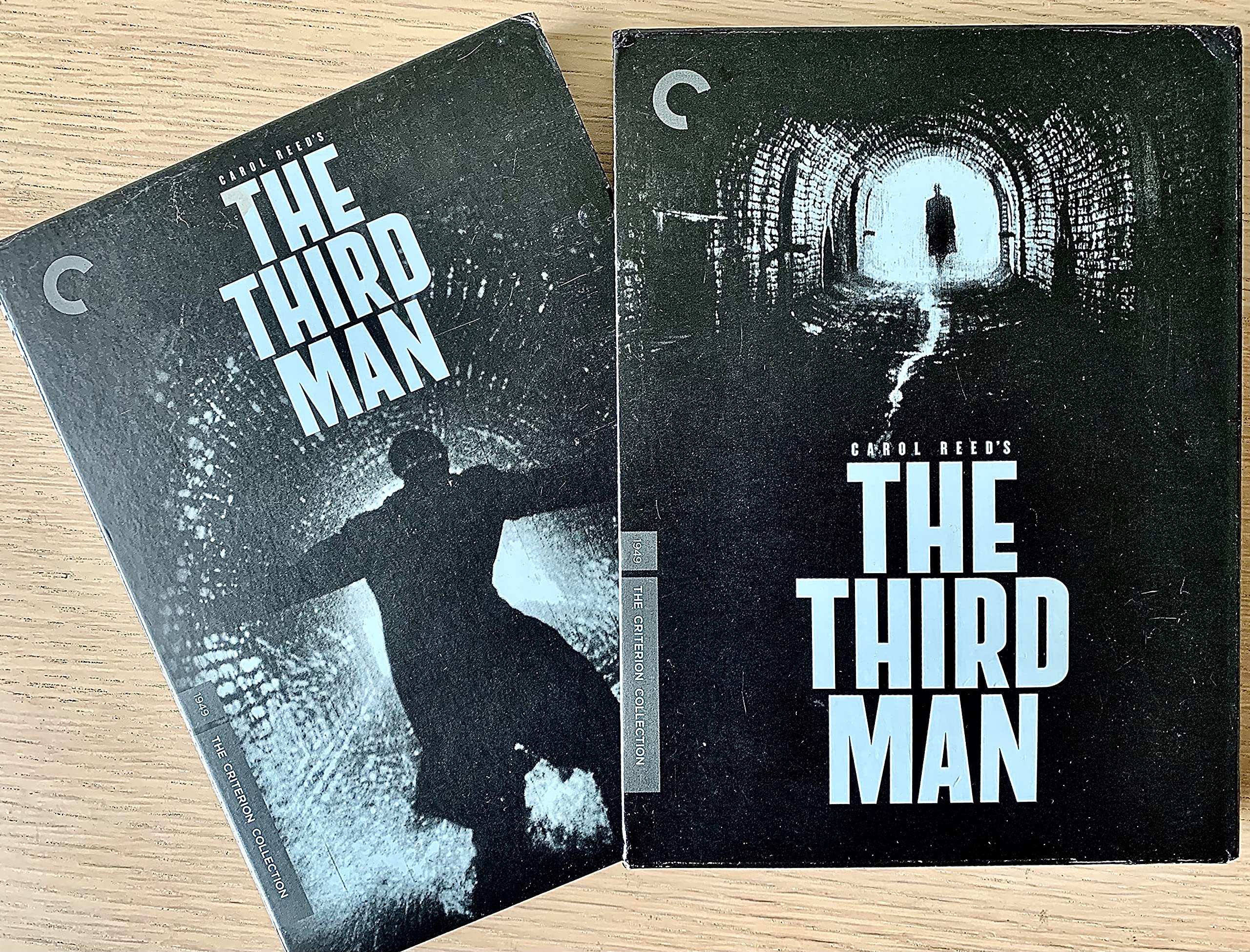



Cynical pulp novelist Holly Martins arrives in shadowy Vienna to investigate the mysterious death of his old friend, black-market opportunist Harry Lime, and thus begins an ever-thickening web of love, deception, and murder that adds up to one of cinemas most immortal treats, as well as one of its trickiest. Thanks to brilliant performances by Joseph Cotten, Alida Valli, and Orson Welles; Anton Karass timeless, evocative zither score; Graham Greenes razor-sharp dialogue; and Robert Kraskers haunting deep focus shots, off-kilter angles, and dramatic use of light and shadow, The Third Man, directed by the inimitable Carol Reed, only grows in stature as the years pass. There have been few better movies in the history of the planet than The Third Man , and fewer still as brilliantly directed from second to second. Orson Welles played the title role, and his legend has tended to engulf the film. But it was directed by Carol Reed and written--except for a Wellesian riff on the Borgias--by Graham Greene, and the credit for this masterpiece is properly theirs. Theirs and Joseph Cotten's; for awesome as Welles is, his Citizen Kane second banana is onscreen about six times as much, and Cotten uses every minute to create one of the most distinctive--if also forlorn--of modern heroes. You know the story. Holly Martins (Cotten), a writer of pulp Westerns and one of life's congenital third-raters, arrives in post-WWII Vienna only to learn that his old pal Harry Lime, the guy who sent him his plane ticket, is being buried. Everybody, from a cynical British cop named Calloway (Trevor Howard) to Harry's Continental knockout of a girlfriend (AlidaValli) and his sundry absurd/Euro-sinister business associates, feels that Holly should get on another plane and go home. He doesn't. Things come to light. Other deaths follow. The world lies in utter ruin. The Third Man completed a sublime hat trick--an international critical and popular smash following upon the success of Reed's Odd Man Out ('47) and The Fallen Idol ('48). Although other filmmakers had begun to use war-ravaged Europe as a great movie set, The Third Man is so vivid in its canny mix of gray semidocumentary and insanely angular, Expressionist/Surrealist chiaroscuro that it seems to have imagined not only the postwar thriller but also postwar Europe itself singlehandedly. What great movie moments: The throwaway details like a mourner who forgets to drop his wreath on a newly dug grave. The sly editing whereby thick-headed Sergeant Paine (Bernard Lee, once and future "M" to 007) goes on leafing through a magazine, knowing just the moment he must rise and subdue the nervy Yank who would take a punch at his boss. The way Anton Karas's legendary zither score seems to jangle in the very guy-lines of a bridge where, far below Robert Krasker's Oscar-winning camera, the Third Man calls a war council. The shadow of a dead man towering, big as Europe, over the nighttime streets of Vienna. --Richard T. Jameson Stills from The Third Man (Click for larger image) Even by Criterion's luxurious standards, this new 2 disc edition of the The Third Man is abundant and fascinating. The chatty and adoring commentary by director Steven Soderbergh ( The Limey ) and screenwriter Tony Gilroy ( The Bourne Identity ) perfectly complements the dry but impressively in-depth scholarly discussion by Dana Polan. The best of the three wildly different documentaries (all of them substantial) is a 1968 interview with Graham Greene, in which Greene himself refuses to be filmed; instead, as we hear Greene speaking, we watch atmospheric footage of people on trains or walking in cities. Add to this a radio version of the story (significantly abridged) and a radio tale of Harry Lime's earlier adventures, written and performed by Orson Welles, and the enormous cultural impact of The Third Man begins to crystalize. Still photographs of war-damaged Vienna enrich the movie's atmosphere and odd news footage of the city's sewer police is enticingly surreal. An American trailer for the movie laughably misrepresents it, while a British publicity kit offers goofy but ingenious marketing tips. Not everything is ideal--Peter Bogdanovich's introduction is pompous and self-absorbed and there's a fair amount of repetition (only so many anecdotes exist about any movie, even one as intricate as The Third Man )--but overall, Criterion has assembled a worthy tribute to a movie that, to quote Soderbergh, "is even better than people say it is." --Bret Fetzer Mint condition out of print criterion DVD still in plastic