


REESE’S BOOK CLUB PICK
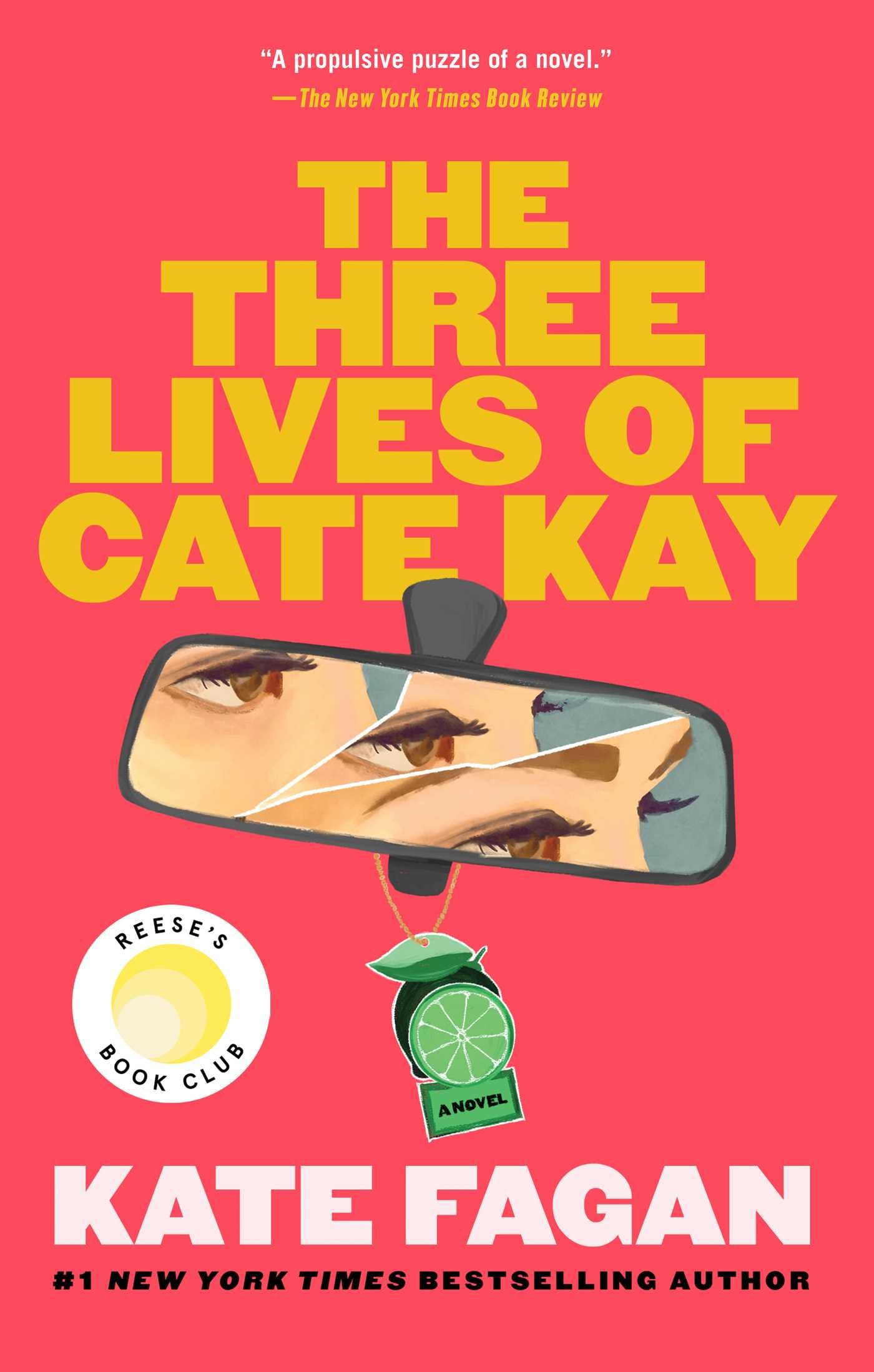
NATIONAL BESTSELLER Named a Best Book of 2025 by Time , NPR, Goodreads, and others. “[A] propulsive puzzle of a novel.” — The New York Times Book Review “This story swept me away with its big dreams, love, and unexpected twists.” —Reese Witherspoon In this electric, voice-driven debut novel, an elusive bestselling author decides to finally confess her true identity after years of hiding from her past. Cate Kay knows how to craft a story. As the creator of a bestselling book trilogy that struck box office gold as a film series, she’s one of the most successful authors of her generation. The thing is, Cate Kay doesn’t really exist. She’s never attended author events or granted any interviews. Her real identity had been a closely guarded secret, until now. As a young adult, she and her best friend Amanda fantasized escaping their difficult homes and moving to California to become movie stars. But the day before their grand adventure, a tragedy shattered their dreams and Cate has been on the run ever since, taking on different names and charting a new future. But after a shocking revelation, Cate understands that returning home is the only way she’ll be a whole person again. “An addictive page-turner infused with humor and heart, The Three Lives of Cate Kay balances the dishy allure of The Seven Husbands of Evelyn Hugo with the empathy of Slow Dance . A joy to read from first page to last” (Melissa Albert, New York Times bestselling author). Kate Fagan is an Emmy Award–winning journalist and the #1 New York Times bestselling author of What Made Maddy Run , which was a semi-finalist for the PEN/ESPN Award for literary sports writing. She is also the author of three additional nonfiction titles, a former professional basketball player, and spent seven years as a journalist at ESPN. Kate currently lives in Charleston with her wife, Kathryn Budig, and their dog, Ragnar. Chapter 1: Anne Marie Callahan CHAPTER 1 ANNE MARIE CALLAHAN 1991 Bolton Landing My earliest memory is wearing my favorite shirt for an entire month of summer without my mom noticing. I was going into fourth grade and my mom figured since I was now in the public school system, she could leave me alone if needed. There was even a socially acceptable term for it—a latchkey kid. We lived in an apartment building that was once a motel. The kitchen consisted of a toaster oven and microwave, and Mom worked cleaning rooms at the Chateau, this fancy resort on the shore of Lake George. This was upstate New York, very upstate, with a complicated mix of blue-collar locals and vacationing urban elite. My mom and I, as you’ve probably guessed, were the former. My mom had lots of formers. Former jobs, former friends, former boyfriends, a former husband, who was also my dad but had never been anything of the kind. Apparently, he’d wanted to make her an honest woman (eye roll), but then a few months after I was born decided he didn’t want honesty that bad. The shirt, my Tom and Jerry shirt, was white with a cartoon graphic on the front. I loved it. It fit so perfectly that I forgot I was wearing it, which was all I wanted from clothing—for it to disappear. When I wore other shirts, I was always tugging and rearranging, but not this one. Plus, I was wearing it the day this story started—the day I caught the sickness of wanting to eat the world. It was a summer day, so hot, humid. I was bored, and movement combated the languor of those endless afternoons, so I flipped the kickstand on my bike and pedaled to town, which was overrun with vacationers, as I knew it would be. Even as a kid I could spot city money. It was the way they held their car keys, like they were a sexy prop, and how they tenderly touched the edges of their sunglasses. I’d sit on the bench outside the ice cream shop and watch. That afternoon, the sky was mostly a crisp blue with an occasional fluffy white cloud. Like I imagine wallpaper of the sky would look. I was sitting on my bench when I looked up into an aqua sea. I visualized myself piercing through the blue, then through the ozone into outer space, then I imagined piercing outer space into—what? The thought triggered a moment of pure derealization—that’s what I might call it now—and my body filled with this odd sensation of the universe is all there is; there’s nothing outside the universe. This wasn’t a feeling of atheism; it wasn’t about heaven; the closest descriptor is uncanny, if uncanny was on steroids. I sat on the bench, unmoving, until the feeling disappeared, which didn’t take long. It’s not a feeling you can hold on to, nor one you can forget. When I rode home that afternoon, it felt like I’d swallowed a black hole and it demanded filling, somehow. My mom came home late that night. I was in my creaky twin bed beneath the window, wide-awake. I’d been listening intently for her while watching the raindrops on the glass; the beads of liquid kept m
NATIONAL BESTSELLER Named a Best Book of 2025 by Time , NPR, Goodreads, and others. “[A] propulsive puzzle of a novel.” — The New York Times Book Review “This story swept me away with its big dreams, love, and unexpected twists.” —Reese Witherspoon In this electric, voice-driven debut novel, an elusive bestselling author decides to finally confess her true identity after years of hiding from her past. Cate Kay knows how to craft a story. As the creator of a bestselling book trilogy that struck box office gold as a film series, she’s one of the most successful authors of her generation. The thing is, Cate Kay doesn’t really exist. She’s never attended author events or granted any interviews. Her real identity had been a closely guarded secret, until now. As a young adult, she and her best friend Amanda fantasized escaping their difficult homes and moving to California to become movie stars. But the day before their grand adventure, a tragedy shattered their dreams and Cate has been on the run ever since, taking on different names and charting a new future. But after a shocking revelation, Cate understands that returning home is the only way she’ll be a whole person again. “An addictive page-turner infused with humor and heart, The Three Lives of Cate Kay balances the dishy allure of The Seven Husbands of Evelyn Hugo with the empathy of Slow Dance . A joy to read from first page to last” (Melissa Albert, New York Times bestselling author). Kate Fagan is an Emmy Award–winning journalist and the #1 New York Times bestselling author of What Made Maddy Run , which was a semi-finalist for the PEN/ESPN Award for literary sports writing. She is also the author of three additional nonfiction titles, a former professional basketball player, and spent seven years as a journalist at ESPN. Kate currently lives in Charleston with her wife, Kathryn Budig, and their dog, Ragnar. Chapter 1: Anne Marie Callahan CHAPTER 1 ANNE MARIE CALLAHAN 1991 Bolton Landing My earliest memory is wearing my favorite shirt for an entire month of summer without my mom noticing. I was going into fourth grade and my mom figured since I was now in the public school system, she could leave me alone if needed. There was even a socially acceptable term for it—a latchkey kid. We lived in an apartment building that was once a motel. The kitchen consisted of a toaster oven and microwave, and Mom worked cleaning rooms at the Chateau, this fancy resort on the shore of Lake George. This was upstate New York, very upstate, with a complicated mix of blue-collar locals and vacationing urban elite. My mom and I, as you’ve probably guessed, were the former. My mom had lots of formers. Former jobs, former friends, former boyfriends, a former husband, who was also my dad but had never been anything of the kind. Apparently, he’d wanted to make her an honest woman (eye roll), but then a few months after I was born decided he didn’t want honesty that bad. The shirt, my Tom and Jerry shirt, was white with a cartoon graphic on the front. I loved it. It fit so perfectly that I forgot I was wearing it, which was all I wanted from clothing—for it to disappear. When I wore other shirts, I was always tugging and rearranging, but not this one. Plus, I was wearing it the day this story started—the day I caught the sickness of wanting to eat the world. It was a summer day, so hot, humid. I was bored, and movement combated the languor of those endless afternoons, so I flipped the kickstand on my bike and pedaled to town, which was overrun with vacationers, as I knew it would be. Even as a kid I could spot city money. It was the way they held their car keys, like they were a sexy prop, and how they tenderly touched the edges of their sunglasses. I’d sit on the bench outside the ice cream shop and watch. That afternoon, the sky was mostly a crisp blue with an occasional fluffy white cloud. Like I imagine wallpaper of the sky would look. I was sitting on my bench when I looked up into an aqua sea. I visualized myself piercing through the blue, then through the ozone into outer space, then I imagined piercing outer space into—what? The thought triggered a moment of pure derealization—that’s what I might call it now—and my body filled with this odd sensation of the universe is all there is; there’s nothing outside the universe. This wasn’t a feeling of atheism; it wasn’t about heaven; the closest descriptor is uncanny, if uncanny was on steroids. I sat on the bench, unmoving, until the feeling disappeared, which didn’t take long. It’s not a feeling you can hold on to, nor one you can forget. When I rode home that afternoon, it felt like I’d swallowed a black hole and it demanded filling, somehow. My mom came home late that night. I was in my creaky twin bed beneath the window, wide-awake. I’d been listening intently for her while watching the raindrops on the glass; the beads of liquid kept m