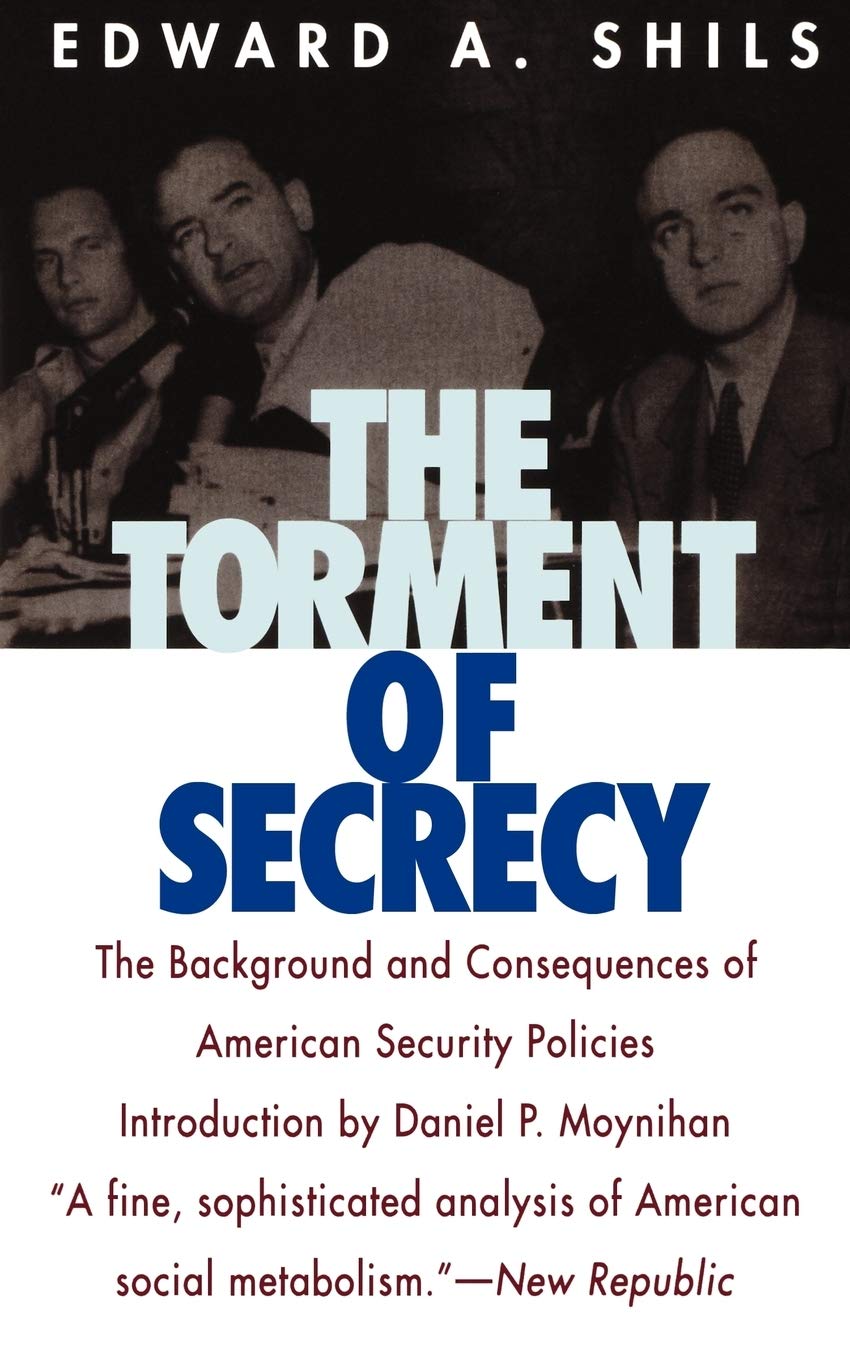
The Torment of Secrecy: The Background and Consequences of American Secruity Policies
$17.96
by Edward Shils



Edward Shils's The Torment of Secrecy is one of the few minor classics to emerge from the cold war years of anticommunism and McCarthyism in the United States. Mr. Shils's "torment" is not only that of the individual caught up in loyalty and security procedures; it is also the torment of the accuser and judge. This essay in sociological analysis and political philosophy considers the cold war preoccupation with espionage, sabotage, and subversion at home, assessing the magnitude of such threats and contrasting it to the agitation? by lawmakers, investigators, and administrators? so wildly directed against the "enemy." Mr. Shils's examination of a recurring American characteristic is as timely as ever. "Brief. . . lucid. . . brilliant."? American Political Science Review . "A fine, sophisticated analysis of American social metabolism."? New Republic . "An excitingly lucid and intelligent work on a subject of staggering importance. . . the social preconditions of political democracy."? Social Forces . “The book shows remarkable insight into the psychology of politician, scientist, official, and others concerned...it ought to be read by thoughtful citizens who realize how fundamental to our free society is the problem here presented.” ― Library Journal “An excitingly lucid and intelligent work on a subject of staggering importance.” ― Social Forces “Brief...lucid...brilliant.” ― American Political Science Review “A fine, sophisticated analysis of American social metabolism.” ― New Republic Edward Shils's The Torment of Secrecy is one of the few minor classics to emerge from the cold war years of anticommunism and McCarthyism in the United States. Mr. Shils's "torment" is not only that of the individual caught up in loyalty and security procedures; it is also the torment of the accuser and judge. This essay in sociological analysis and political philosophy considers the cold war preoccupation with espionage, sabotage, and subversion at home, assessing the magnitude of such threats and contrasting it to the agitation - by lawmakers, investigators, and administrators - so wildly directed against the "enemy". Mr. Shils, widely regarded as one of the world's most influential social thinkers, has written an examination of a recurring American characteristic that is as timely as ever. Edward A. Shils was distinguished service professor of sociology at the University of Chicago until his death in 1995. He founded the journal Minerva and co-founded the Bulletin of the Atomic Scientists , and was widely regarded as one of the world's most influential social thinkers. Used Book in Good Condition