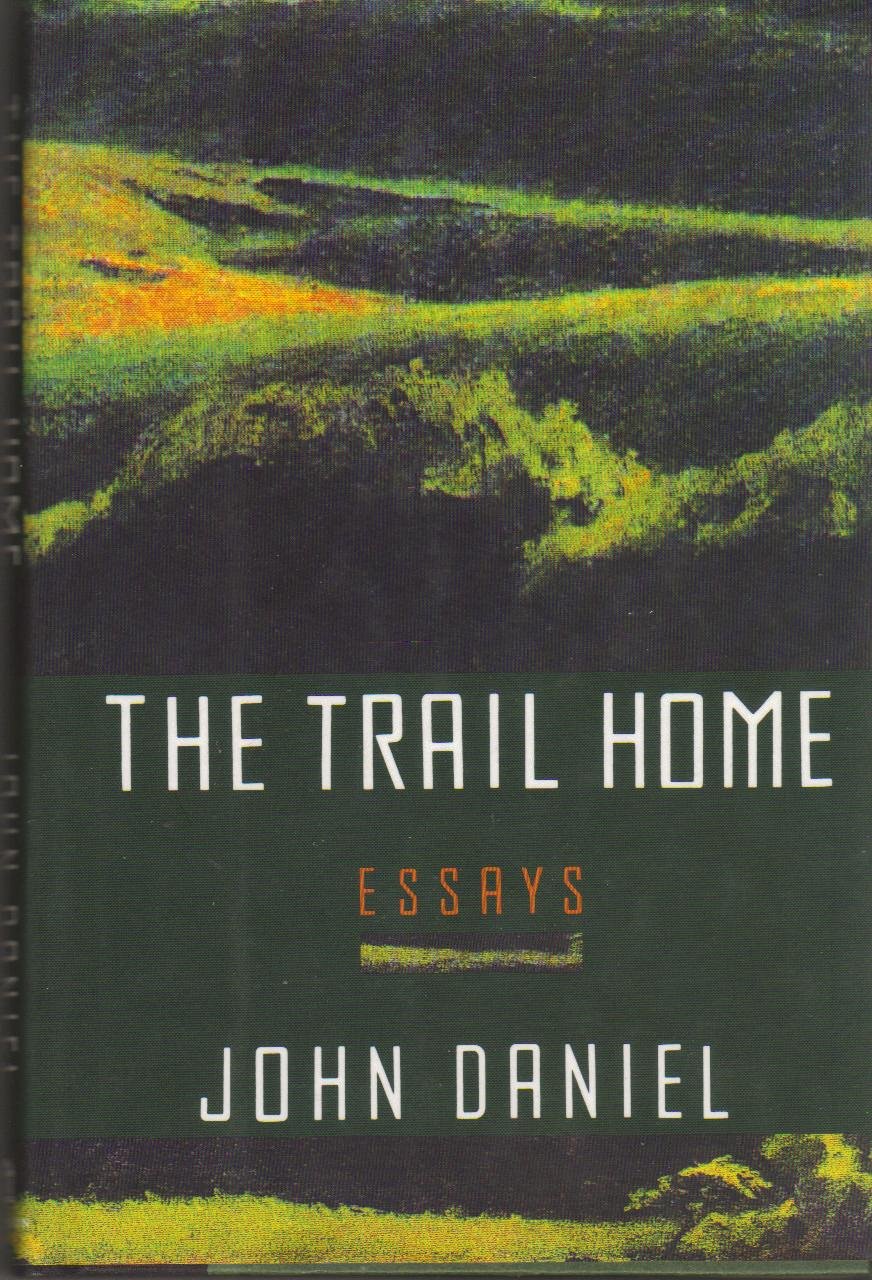



An examination of the issues of land use and ecological responsibility argues against industrial and consumer profligacy, celebrates the natural mysteries of the world, and describes how humans have withdrawn from nature From the 19th-century writings of Henry David Thoreau and John Muir to the contemporary prose of Rick Bass and Annie Dillard, there is a rich literary tradition of American nature essays. This book is entirely from that tradition, but it could very well become lost amid the current glut of nature writings. Most of these essays, several of which have been previously published, are set in northern California and throughout Oregon. The strongest pieces are those that deal with some of the dilemmas of environmental activism, such as the ethics of radical tactics used by Earth First! or the often antagonistic demands of preservation and economic Copyright 1992 Reed Business Information, Inc. Thoughtful, plain-spoken nature essays, mostly about the Pacific Northwest. Poet Daniel introduces his prose with a slew of short and amiable, although unremarkable, essays on such subjects as planting a garden, hiking the High Sierra, battling a pack rat in the house, and writing poetry about nature. In several outings, however, Daniel shows considerable originality, force, and descriptive art. In ``The Impoverishment of Sightseeing,'' he tours Yosemite in a bus with his mother, contrasting the static images passing by the window with his compelling view when climbing a rock face--the cracks and tiny nubbins in front of his face and the bright granite valley always flaring in the periphery. Moving from bus excursions to TV as a way of seeing nature, Daniel points out that ``we give up the active moments of awareness--glancing around, comparing, looking long or only briefly--to the autocratic screen.'' The reality of nature-- without images preselected and framed for visual impact--can appear lifeless and disappointing, he says, when one's consciousness has been trained by TV. ``The Long Dance of the Trees'' eloquently evokes old-growth forests, particularly in the Northwest. Thousand-year-old Douglas firs tower over smaller trees, giants in themselves--western hemlock, red cedar--the canopy diffusing a soft radiance of light down to the earlier tree generations rotting on the forest floor, covered with mosses, lichens, truffles, and mushrooms. The timber companies, having clear-cut their own lands, have every year pressed for higher cuts of these forests on public lands, until only 15% of original old-growth forest is left in Douglas fir country. To Daniel, the economic ``growth we hold practically sacred is in fact a self-centered adolescence we'd do well to put behind us.'' A voice that's fresh, self-reflective, and free of cant: a welcome debut. -- Copyright ©1992, Kirkus Associates, LP. All rights reserved. Used Book in Good Condition