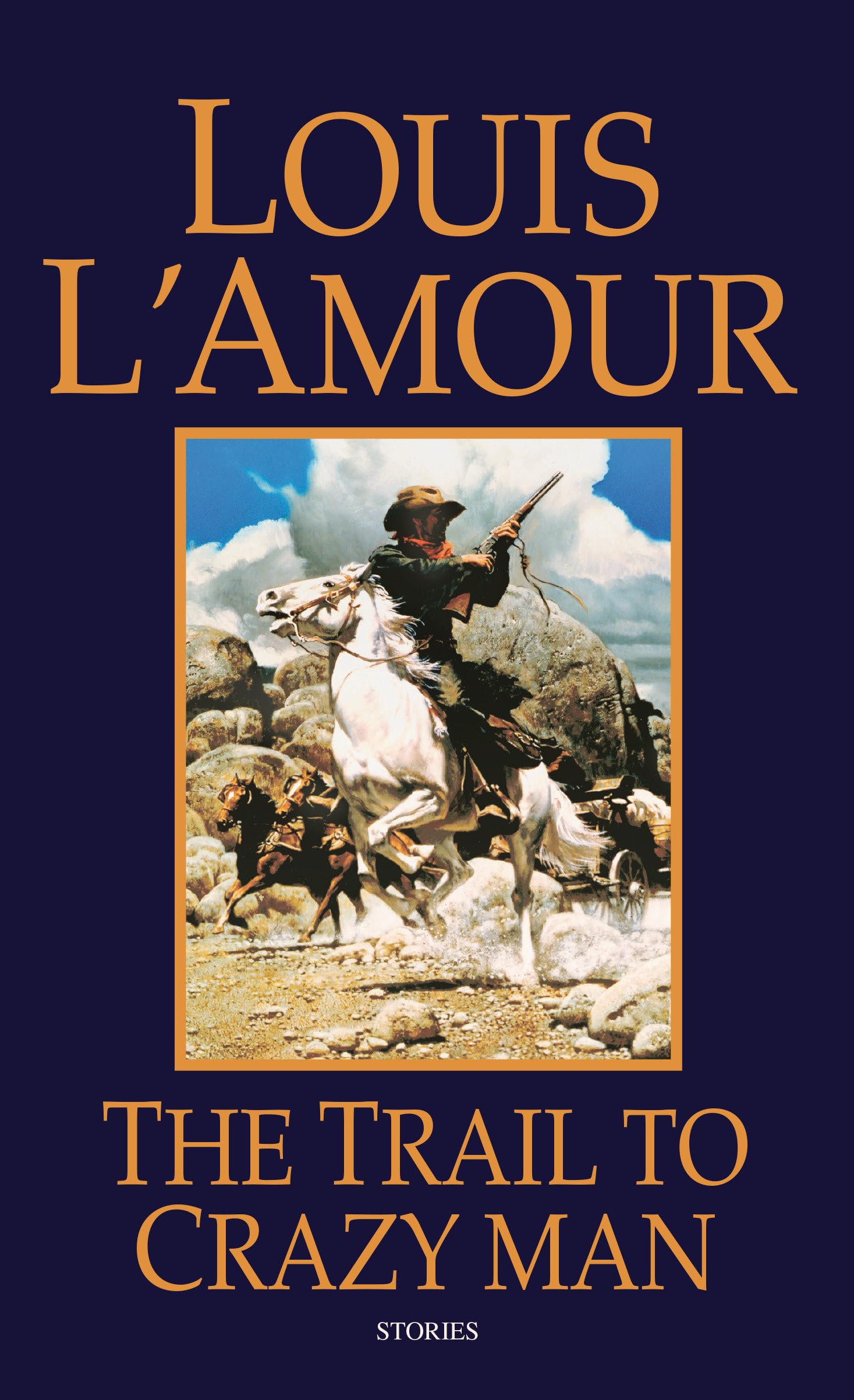



A WORD FROM LOUIS L’AMOUR “Almost forty years ago, when my fiction was being published exclusively in ‘pulp’ western magazines, I wrote several novel-length stories, which my editors called ‘magazine novels.’ In creating them, I became so involved with my characters that their lives were still as much a part of me as I was of them long after the issues in which they appeared became collector’s items. Pleased as I was about how I brought the characters and their adventures to life in the pages of the magazines, I still wanted the reader to know more about my people and why they did what they did. So, over the years, I revised and expanded these magazine works into fuller-length novels that I published in paperback under other titles. “These particular early magazine versions of my books have long been a source of great speculation and curiosity among many of my readers, so much so of late, that I’m now pleased to collect three of them in book form for the first time. “I hope you enjoy them.” A word from Louis L'Amour: "Almost forty years ago, when my fiction was being published exclusively in 'pulp' western magazines, I wrote several novel-length stories, which my editors called 'magazine novels'. In creating them, I became so involved with my characters that their lives were still as much a part of me as I was of them long after the issues in which they appeared became collector's items. Pleased as I was about how I brought the characters and their adventures to life in the pages of the magazines, I still wanted the reader to know more about my people and why they did what they did. So, over the years, I revised and expanded these magazine works into fuller-length novels that I published in paperback under other titles. "These particular early magazine versions of my books have long been a source of great speculation and curiosity among many of my readers, so much so of late, that I'm now pleased to collect three of them into book form for the first time. "I hope you enjoy them." A word from Louis L'Amour: "Almost forty years ago, when my fiction was being published exclusively in 'pulp' western magazines, I wrote several novel-length stories, which my editors called 'magazine novels'. In creating them, I became so involved with my characters that their lives were still as much a part of me as I was of them long after the issues in which they appeared became collector's items. Pleased as I was about how I brought the characters and their adventures to life in the pages of the magazines, I still wanted the reader to know more about my people and why they did what they did. So, over the years, I revised and expanded these magazine works into fuller-length novels that I published in paperback under other titles. "These particular early magazine versions of my books have long been a source of great speculation and curiosity among many of my readers, so much so of late, that I'm now pleased to collect three of them into book form for the first time. "I hope you enjoy them." Our foremost storyteller of the American West, Louis L’Amour has thrilled a nation by chronicling the adventures of the brave men and woman who settled the frontier. There are more than three hundred million copies of his books in print around the world. THE TRAIL TO CRAZY MAN CHAPTER I Shanghaied IN THE DANK, odorous forecastle, a big man with wide shoulders sat at a scarred mess table, his feet spread to brace himself against the roll of the ship. A brass hurricane lantern, its light turned low, swung from a beam overhead, and in the vague light the big man studied a worn and sweat-stained chart. There was no sound in the forecastle but the distant rustle of the bow wash about the hull, the lazy creak of the square-rigger’s timbers, a few snores from sleeping men, and the hoarse, rasping breath of a man who was dying in the lower bunk. The big man who bent over the chart wore a slipover jersey with alternate red and white stripes, a broad leather belt and a brass buckle, and coarse jeans. On his feet were woven leather sandals of soft, much-oiled leather. His hair was shaggy and uncut, but he was clean-shaven except for a mustache and burnsides. The chart he studied showed the coast of northern California. He marked a point on it with the tip of his knife and then checked the time with a heavy gold watch. After a swift calculation, he folded the chart and replaced it in an oilskin packet with other papers and tucked the packet under his jersey, above his belt. Rising, he stood for an instant, canting to the roll of the ship, staring down at the white-haired man in the lower bunk. There was that about the big man to make him stand out in any crowd. He was a man born to command, not only because of his splendid physique and the strength of his character, but because of his personality. He knelt beside the bunk and touched the dying man’s wrist. The pulse was feeble. Rafe Caradec crouched t