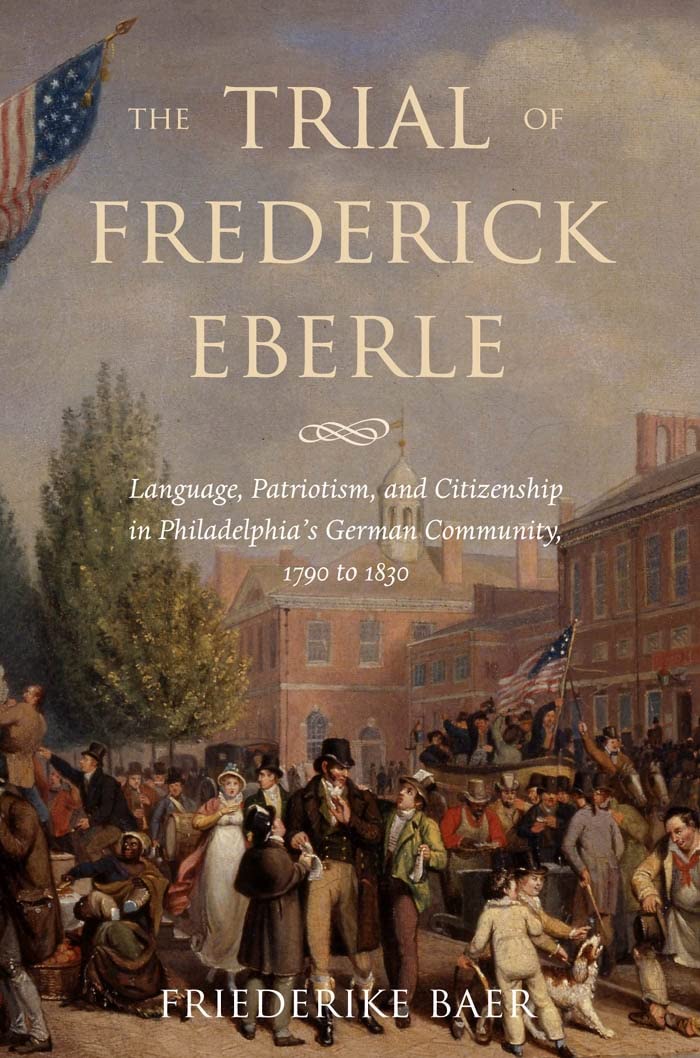
The Trial of Frederick Eberle: Language, Patriotism and Citizenship in Philadelphia's German Community, 1790 to 1830
$55.97
by Friederike Baer



Winner of the 2011 St. Paul, Biglerville Prize from the Lutheran Historical Society of the Mid-Atlantic In the summer of 1816, the state of Pennsylvania tried fifty-nine German-Americans on charges of conspiracy and rioting. The accused had, according to the indictment, conspired to prevent with physical force the introduction of the English language into the largest German church in North America, Philadelphia’s Lutheran congregation of St. Michael’s and Zion. The trial marked the climax of an increasingly violent conflict over language choice in Philadelphia’s German community, with members bitterly divided into those who favored the exclusive use of German in their church, and those who preferred occasional services in English. At trial, witnesses, lawyers, defendants, and the judge explicitly linked language to class, citizenship, patriotism, religion, and violence. Mining many previously unexamined sources, including German-language writings, witness testimonies, and the opinions of prominent legal professionals, Friederike Baer uses legal conflict as a prism through which to explore the significance of language in the early American republic. The Trial of Frederick Eberle reminds us that debates over language have always been about far more than just language. Baer demonstrates that the 1816 trial was not a battle between Americans and immigrants, or German-speakers and English-speakers. Instead, the individuals involved in the case seized and exploited English and German as powerful symbols of competing cultural, economic, and social interests. "This case study is fascinating in part because of the richness of its sources." ― The Journal of American History "This is microhistory at its best. Baer has selected a single event and brilliantly used it to explore the larger culture and society of the time. With great clarity and insight Baer has investigated multicultural issues of language and the assimilation of immigrants that are as relevant for us today as they were to Americans two centuries ago. This is a very important and timely book." -- Gordon S. Wood,Brown University "Vividly recreates this fascinating inter-ethnic group controversy about the meaning of language for culture and citizenship in the early republic." ― American Historical Review "Baer presents the larger history of the congregational conflict, which began long before the trial and continued long afterwards. She also exposes the thick complexity of the conflict, which involved competing understandings of citizenship in the new American republic. Hers is at once a social, cultural, and religious history." ― Lutheran Quarterly “This is microhistory at its best. Friederike Baer has selected a single event and brilliantly used it to explore the larger culture and society of the time. With great clarity and insight Baer has investigated multicultural issues of language and the assimilation of immigrants that are as relevant for us today as they were to Americans two centuries ago. This is a very important and timely book.”Gordon S. Wood, Brown UniversityIn the summer of 1816, the state of Pennsylvania tried 59 German-Americans on charges of conspiracy and rioting. The accused had, according to the indictment, conspired to prevent with physical force the introduction of the English language into the largest German church in North America, Philadelphia’s Lutheran congregation of St. Michael’s and Zion. The trial marked the climax of an increasingly violent conflict over language choice in Philadelphia’s German community, with members bitterly divided into those who favored the exclusive use of German in their church, and those who preferred occasional services in English. At trial, witnesses, lawyers, defendants, and the judge explicitly linked language to class, citizenship, patriotism, religion, and violence. Mining many previously unexamined sources, including German-language writings, witness testimonies, and the opinions of prominent legal professionals, Friederike Baer uses legal conflict as a prism through which to explore the significance of language in the early American republic. The Trial of Frederick Eberle reminds us that debates over language have always been about far more than just language. Baer demonstrates that the 1816 trial was not a battle between Americans and immigrants, or German-speakers and English-speakers. Instead, the individuals involved in the case seized and exploited English and German as powerful symbols of competing cultural, economic, and social interests. Friederike Baer is a professor of history at the Pennsylvania State University, Abington College. She holds a Ph.D. In History from Brown University. Her publications include the award-winning books The Trial of Frederick Eberle : Language, Patriotism and Citizenship in Philadelphia's German Community, 1790-1830 (2008) , and Hessians: German Soldiers in the American Revolutionary War (2022). Used Book in Good Condition