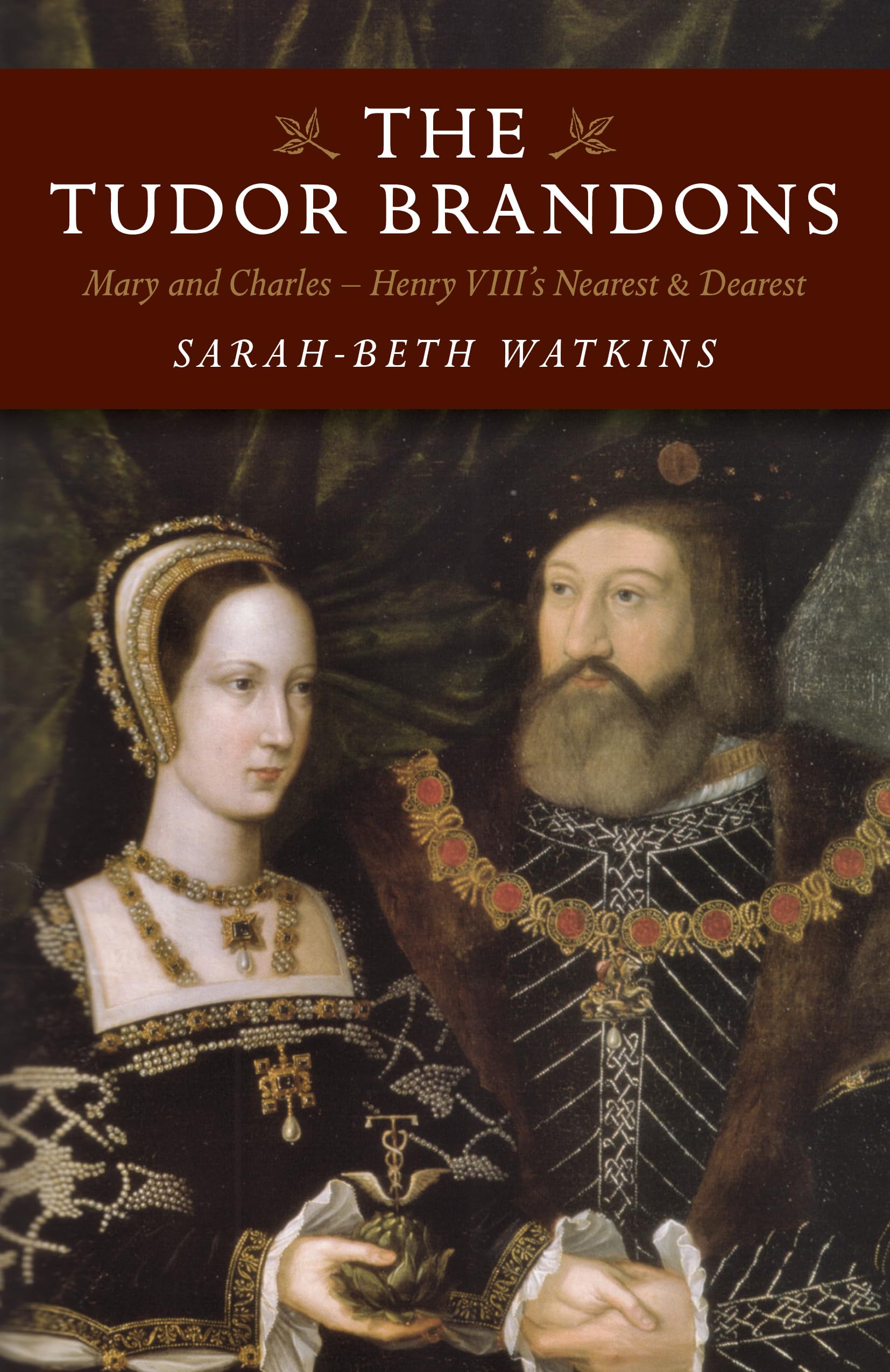
The Tudor Brandons: Mary And Charles - Henry VIII's Nearest & Dearest
$16.95
by Sarah-Beth Watkins



This fascinating book studies the life and times of Mary Tudor and Charles Brandon, Henry VIII's dearest sister and his closest companion. Charles rose from being Henry's childhood friend to becoming the Duke of Suffolk; a consummate courtier and diplomat. Mary was always royalty. At first married to the King of France, Mary quickly wed Charles after Louis XII's death in 1515, against her brother's wishes. Their actions could have been construed as treason yet Henry chose to spare their lives. They returned to court and despite their ongoing disagreements throughout the years, especially over the king's marriage to Anne Boleyn, the Tudor Brandons remained Henry's most loyal subjects and perhaps more importantly, his beloved family. Sarah-Beth Watkins works in publishing and has a BA in Social Policy. She grew up in Richmond, Surrey and began soaking up history from an early age. Her love of writing has seen her articles published in various publications over the past twenty years. Her history works are Ireland's Suffragettes, Lady Katherine Knollys: The Unacknowledged Daughter of King Henry VIII and The Tudor Brandons. The Tudor Brandons Mary and Charles – Henry VIII's Nearest and Dearest By Sarah-Beth Watkins John Hunt Publishing Ltd. Copyright © 2015 Sarah-Beth Watkins All rights reserved. ISBN: 978-1-78535-332-1 Contents Chapter One: The Brandon Ancestors, Chapter Two: The Princess and the Knight, Chapter Three: Henry VIII's Court, Chapter Four: The French Marriage, Chapter Five: Mary & Charles, Chapter Six: Married Life, Chapter Seven: A Hostile World, Chapter Eight: The Trouble with Boleyn, Chapter Nine: After Mary, Chapter Ten: Family Matters, References, Select Bibliography, CHAPTER 1 1443–1494 The Brandon Ancestors As Charles Brandon lay in his cradle, his father took to the field as standard-bearer for Henry Tudor at the Battle of Bosworth, on 22 August 1485. This defining moment in history, when the Plantagenet dynasty ended and the Tudor began, was also to be a defining moment in this small child's life. Both Charles' father and his grandfather were soldiers in the Wars of the Roses and the events leading up to this momentous day. Coming from mercantile beginnings, the men of the Brandon family all rose to positions of importance, but Charles would rise higher than them all to become King Henry VIII's most favoured companion, and husband to his sister, Mary Tudor. Whilst Charles' loyalties would always remain with his king, his forebears were caught up in the tumultuous years leading up to the beginning of the Tudor era. In Old Southwark and Its People, the author claims that the Brandon's 'low in their origin, became great lords in Southwark. They were ready to fight, and were not very scrupulous ...'. Charles' grandfather, William Brandon, certainly fits this description. Born around 1425, he was in service to the 3rd Duke of Norfolk by 1443 when the duke decided to reclaim Hoo Manor which had been granted to Sir Robert Wingfield by the 2nd Duke of Norfolk. William, along with the duke's men, attacked Wingfield's home in Letheringham, plundering and looting his house. Wingfield was understandably furious, and William was indicted for assaulting his family in the dispute, but, in a strange twist, he was forgiven and defected to Wingfield's side. In December 1447 and January 1448, William Brandon had gone as far as going against the 3rd Duke of Norfolk to align himself with Wingfield and carry out his orders. He was indicted at the King's Bench for a series of offences including assault, theft, and threatening behaviour alongside Wingfield senior and his son Robert. It was alleged that on 6 December 1447 that the 3rd Duke of Norfolk's chaplain, Richard Hadilsay had complained that Robert the younger had threatened him. The duke, as a Justice of the Peace, asked Robert to desist but he refused and was incarcerated in Melton gaol. William Brandon, in a daring escapade with a small band of men, rescued Robert from prison on Wingfield's command. The Duke of Norfolk secured letters patent from King Henry VI ordering William Brandon and Robert Wingfield not to come within seven miles of him, but they spent Christmas at Wingfield's home in Letheringham, not far from the duke's house at Framlingham. In another complete turnaround, by July 1455, William was back in favour with the duke who granted him, for good service, the custody and marriage of the heir of John Clippesby. Charles' grandfather was willing to change sides if it furthered his career and status but he cemented his relationship with the Wingfields by marrying Sir Robert's daughter Elizabeth around this time. Although we don't know the exact date, William the younger, Charles' father, was born around 1448 so it must have been around the time Brandon was acting on Wingfield's orders. William Brandon the elder was appointed Marshal of the Kings Bench in 1457 and continued his service until 1460. Th