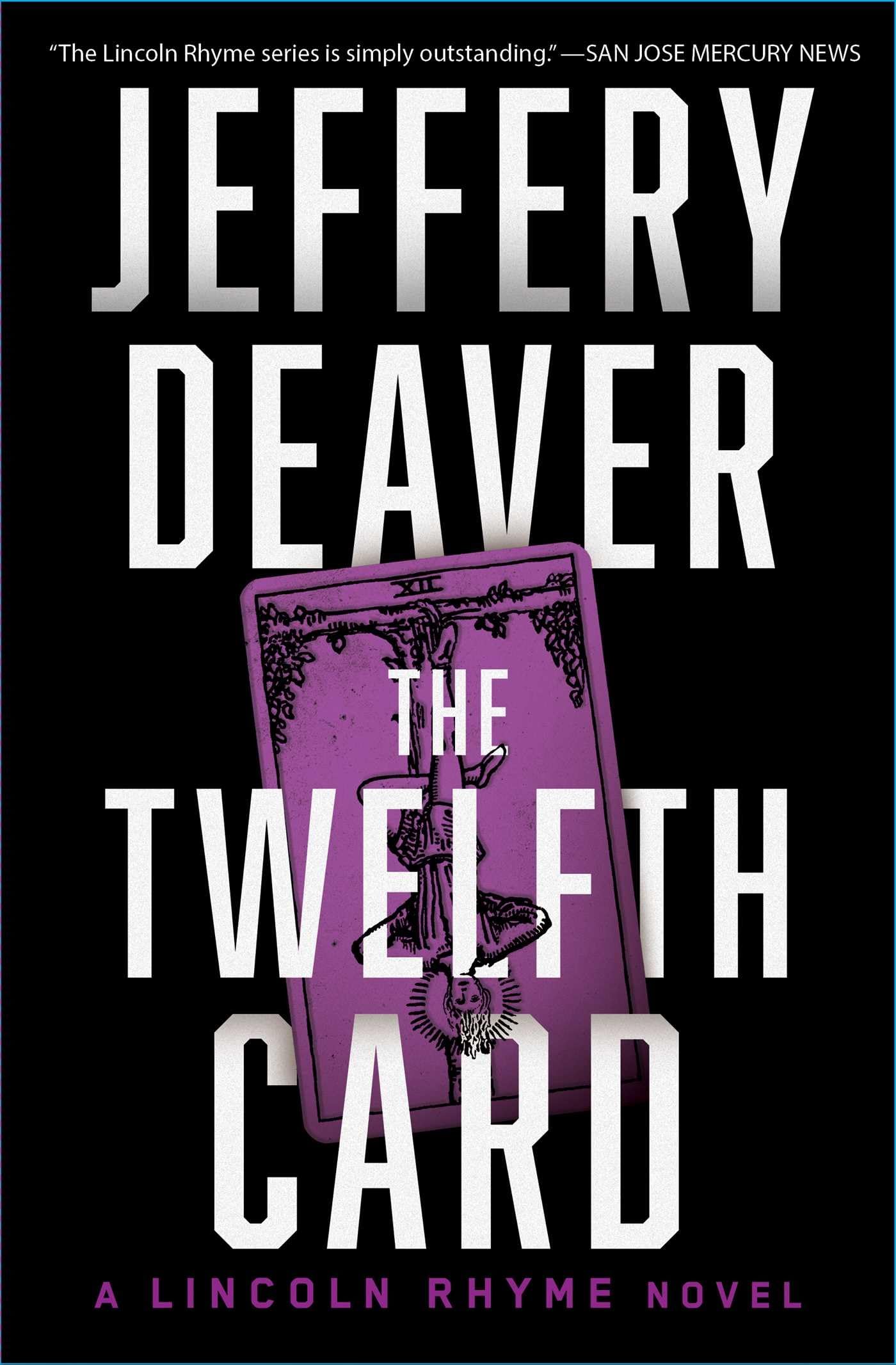



NOW A MAJOR TELEVISION EVENT FROM NBC, STARRING RUSSELL HORNSBY, ARIELLE KEBBEL, AND MICHAEL IMPERIOLI. “Deaver’s labyrinthine plots are astonishing”( The New York Times Book Review ) in this bestselling thriller featuring a hitman who is out to kill a young girl in Harlem and in order to save her, Lincoln Rhyme has to solve a cold case that’s over 150 years old. Unlocking a cold case with explosive implications for the future of civil rights, forensics expert Lincoln Rhyme and his protégé, Amelia Sachs, must outguess a killer who has targeted a high school girl from Harlem who is digging into the past of one of her ancestors, a former slave. What buried secrets from 140 years ago could have an assassin out for innocent blood? And what chilling message is hidden in his calling card, the hanged man of the tarot deck? Rhyme must anticipate the next strike or become history—in the New York Times bestseller that proves “there is no thriller writer today like Jeffery Deaver” ( San Jose Mercury News ). "A master of ticking-bomb suspense." -- People "Deaver's labyrinthine plots are astonishing." -- The New York Times Book Review "Deaver's Lincoln Rhyme novels . . . are masterpieces of modern criminology." -- Philadelphia Daily News Jeffery Deaver is the #1 internationally bestselling author of forty-four novels, three collections of short stories, and a nonfiction law book. His books are sold in 150 countries and translated into twenty-five languages. His first novel featuring Lincoln Rhyme, The Bone Collector , was made into a major motion picture starring Denzel Washington and Angelina Jolie and a hit television series on NBC. He’s received or been shortlisted for a number of awards around the world, including Novel of the Year by the International Thriller Writers and the Steel Dagger from the Crime Writers’ Association in the United Kingdom. In 2014, he was the recipient of three lifetime achievement awards. He has been named a Grand Master by Mystery Writers of America. The Twelfth Card Chapter One His face wet with sweat and with tears, the man runs for freedom, he runs for his life. “There! There he goes!” The former slave does not know exactly where the voice comes from. Behind him? To the right or left? From atop one of the decrepit tenements lining the filthy cobblestoned streets here? Amid July air hot and thick as liquid paraffin, the lean man leaps over a pile of horse dung. The street sweepers don’t come here, to this part of the city. Charles Singleton pauses beside a pallet stacked high with barrels, trying to catch his breath. A crack of a pistol. The bullet goes wide. The sharp report of the gun takes him back instantly to the war: the impossible, mad hours as he stood his ground in a dusty blue uniform, steadying a heavy musket, facing men wearing dusty gray, aiming their own weapons his way. Running faster now. The men fire again. These bullets also miss. “Somebody stop him! Five dollars’ gold if you catch him.” But the few people out on the streets this early—mostly Irish ragpickers and laborers trooping to work with hods or picks on their shoulders—have no inclination to stop the Negro, who has fierce eyes and large muscles and such frightening determination. As for the reward, the shouted offer came from a city constable, which means there’s no coin behind the promise. At the Twenty-third Street paintworks, Charles veers west. He slips on the slick cobblestones and falls hard. A mounted policeman rounds the corner and, raising his nightstick, bears down on the fallen man. And then— And? the girl thought. And? What happened to him? Sixteen-year-old Geneva Settle twisted the knob on the microfiche reader again but it would move no farther; she’d come to the last page on this carriage. She lifted out the metal rectangle containing the lead article in the July 23, 1868, edition of Coloreds’ Weekly Illustrated. Riffling through the other frames in the dusty box, she worried that the remaining pages of the article were missing and she’d never find out what happened to her ancestor Charles Singleton. She’d learned that historical archives regarding black history were often incomplete, if not forever misplaced. Where was the rest of the story? Ah . . . Finally she found it and mounted the carriage carefully into the battered gray reader, moving the knob impatiently to locate the continuation of the story of Charles’s flight. Geneva’s lush imagination—and years of immersing herself in books—had given her the wherewithal to embellish the bare-bones magazine account of the former slave’s pursuit through the hot, foul streets of nineteenth-century New York. She almost felt she was back there, rather than where she really was at the moment: nearly 140 years later in the deserted fifth-floor library of the Museum of African-American Culture and History on Fifty-fifth Street in Midtown Manhattan. As she twisted the dial, the pages streamed past on the grain