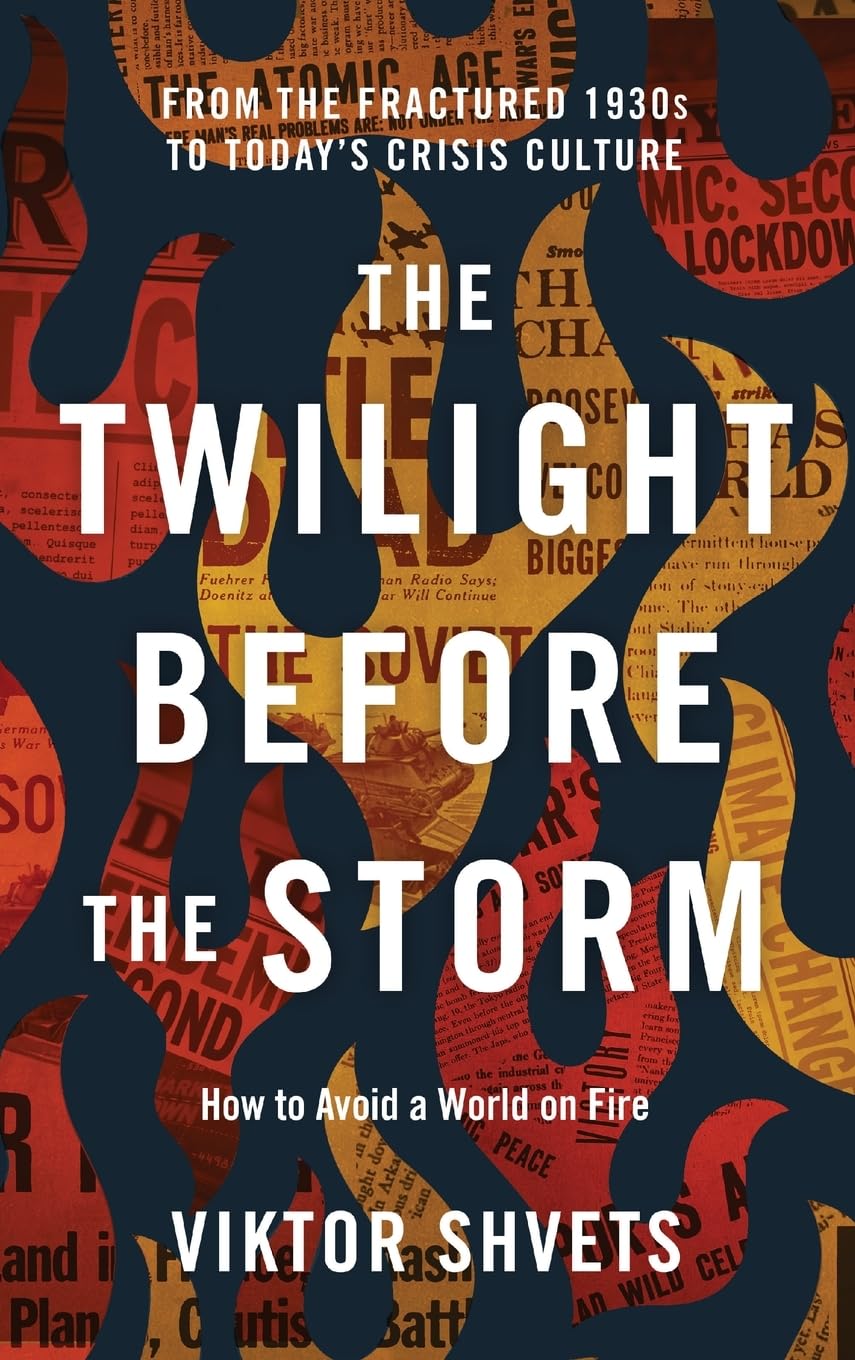
The Twilight Before the Storm: From the Fractured 1930s to Today's Crisis Culture
$29.99
by Viktor Shvets



THE TWILIGHT BEFORE THE STORM EXAMINES WHAT IS ARGUABLY THE MOST IMPORTANT ISSUE FACING HUMANITY: HOW CAN WE AVOID A WORLD ON FIRE? The next decade promises to be the most critical period in the transition from today's capitalism toward a yet-to-be defined alternative system. Viktor Shvets, global strategist, asks: Will it be capitalism or communism, feudalism or despotism? The fusion of the disruptive Information Age and deep Financialization (aggravated by generational change and climate) is destabilizing every aspect of our lives-from the role and functioning of labor and capital to political systems, from the private sphere to morality, from education to entertainment. The world faced similar disorientation in the 1930s. At this time the choice was not between freedom or slavery, but how much freedom needed to be sacrificed to avoid the worst outcomes. There were three choices on the menu: communism, fascism, or constrained democracy. With free market liberalism discredited, the question was not whether to plan economies and societies, but how far state's control should spread, and how much free space should be left for the private sector and markets. Today, we are in a place not so different, with the "neo" version of the free-market liberalism once again discredited, causing 1930s-style fractures. With the new consensus on the "right" model not yet formed, alternatives are proliferating. Tensions are on the rise. Are we bound to relive a world on fire of the 1940s, or transit toward a more placid but constrained 1950s-60s? The Twilight Before the Storm examines how and where conflicts might arise-from cold and hot to civil and hungry wars-and suggests policies that might lower tensions and defang extremes. We have options. Will we exercise them in time to avoid the worst? How will future generations judge us? Viktor Shvets's new book is a must read for those trying to understand the rapidly developing change in the relationship between labor, capital, and the state. What role for markets in this new world of state activism? What are the consequences for politics, societies and economies? Viktor asks all the right questions in this book, and he provides answers based upon a deep understanding of financial and economic history that enlighten, educate, and frighten in perhaps equal measure. Russell Napier, Independent Investment Strategist and author of "Anatomy of The Bear: Lessons From Wall Street's Four Great Bottoms" and "The Asian Financial Crisis 1995-1998: Birth of the Age of Debt."