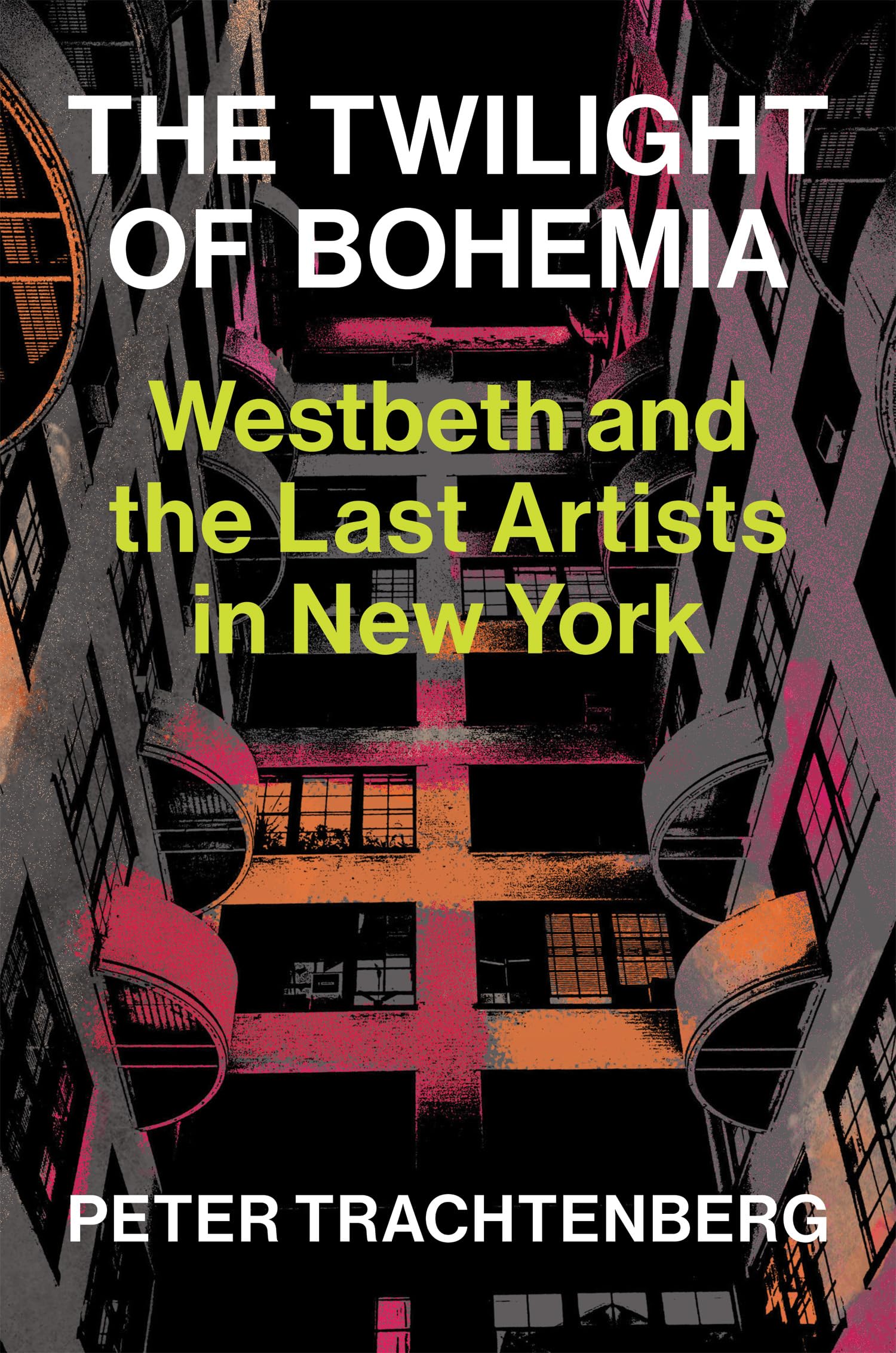
The Twilight of Bohemia: Westbeth and the Last Artists of New York
$26.51
by Peter Trachtenberg



An intimate history of America’s first publicly funded artists’ housing project and its residents that casts light on the precarious place of art-makers in a changing New York. Westbeth Artists Housing was founded in 1970 to provide affordable housing for artists and their families. It occupies a full city block in what back then was one of New York’s less desirable neighborhoods, the desolate far-West Village. Over the next fifty years, the building complex served as a Great Society for bohemians, home at any one time to more than three hundred and eighty creators, who included the pioneering video artist Nam June Paik, jazz great Gil Evans, and the photographer Diane Arbus, who took her life in her apartment in 1971, barely a year after she’d moved in. To its tenants Westbeth offered the possibility of a middle-class life at affordable rents that freed them to walk along the cliff-edge of their art. Barton Lidicé Beneš filled unlikely vessels (a water-gun, a squirting flower) with his HIV-positive blood in a series called “Lethal Weapons.” The actor Black-Eyed Susan played two dozen roles—including the empress of China and the queen of Saturn-- in the legendary Ridiculous Theatrical Company. After her basement studio was flooded during Superstorm Sandy, Karen Santry dove into the noxious water in rented scuba gear to check the condition of her paintings. With the passing of time, Westbeth’s artists watched their neighborhood gentrify and rebrand as the glitzy Meatpacking District, where the average apartment rents for more than $6000 a month. And while some of those artists achieved fame, obscurity drove others to bitterness and despair. The Twilight of Bohemia frames its story with that of the life and tragic death of Gay Milius, a gifted and flamboyantly eccentric painter, flea-market picker, and novelist who moved into the building in 1970 and took his life there in 2006. Sociologists describe Westbeth as a Naturally-Occurring Retirement Community, or NORC; today, a majority of its residents are over 60. But is Westbeth just an arty senior center holding out against the ruthless market forces of late-capitalist New York? Is artmaking a relic of a past way of life or a good that merits our society’s continuing support? The Twilight of Bohemia explores the changing notions of what it means to be a successful artist and the heartbreaking difficulty of surviving as one at our present cultural moment. It’s a book for anyone who loves brilliantly written stories of passion, idealism, ambition and community, for any reader interested in urban social history or the history of art, and for all who still believe in the old bohemian ethos: of living for art. “An intimate oral history of New York City’s Westbeth Artist Housing complex that speaks to the challenges of creative life in the city....A vivid slice of lesser-known New York City history.” — Publishers Weekly “With skillful writing and a fascinating story, this book is a great example of using local history as a preview of what the world can be.” — Library Journal “A page-turner. The force and beauty and clarity of Peter Trachtenberg’s writing make The Twilight of Bohemia impossible to put down.” — Francine Prose , author of 1974 “A melancholy love story about a completely original enclave for artists.” — Eileen Myles , author of Afterglow “Magnificently researched and written with verve, wit and compassion. It represents a standard for how urban history should be done.” — Phillip Lopate , author of A Year and a Day “How often have you read a great book and thought, ‘Why can’t I live there? Why can’t I live that story?’. . . Trachtenberg has artfully, tenderly, and wisely recreated New York City’s legendary Westbeth artists’ community.” — Mary Gabriel , author of Ninth Street Women “Raw, beautiful . . . . a celebration of the spirit that makes the City a global arts hub and, crucially, what it takes to support and sustain that spirit.” — Will Hermes , author of Lou Reed “With tenderness and mischievous humor, The Twilight of Bohemia spins through a carousel of the grimy, effulgent high notes and heartbreaks of New York City’s glorious weirdos.” — Tracy O’Neill , author of Woman of Interest “Deeply moving and unlike anything I have read before. An uncanny blend of elegy for a lost friend, and history of New York at what might well be its peak of cultural relevance and vitality.” — Scott Spencer , author of An Ocean Without a Shore “Reading The Twilight of Bohemia , I had the feeling that its subject—a complex of buildings—had been condensed into book form through some Borgesian literary-alchemical process. . . . a true historical document, detailed and precise. And completely crucial.” – Nelly Reifler , author of Elect H. Mouse State Judge “Peter Trachtenberg is a brilliant observer of humanity. . I was completely transfixed and transported and in awe of the trip.” — Jill McCorkle , author of