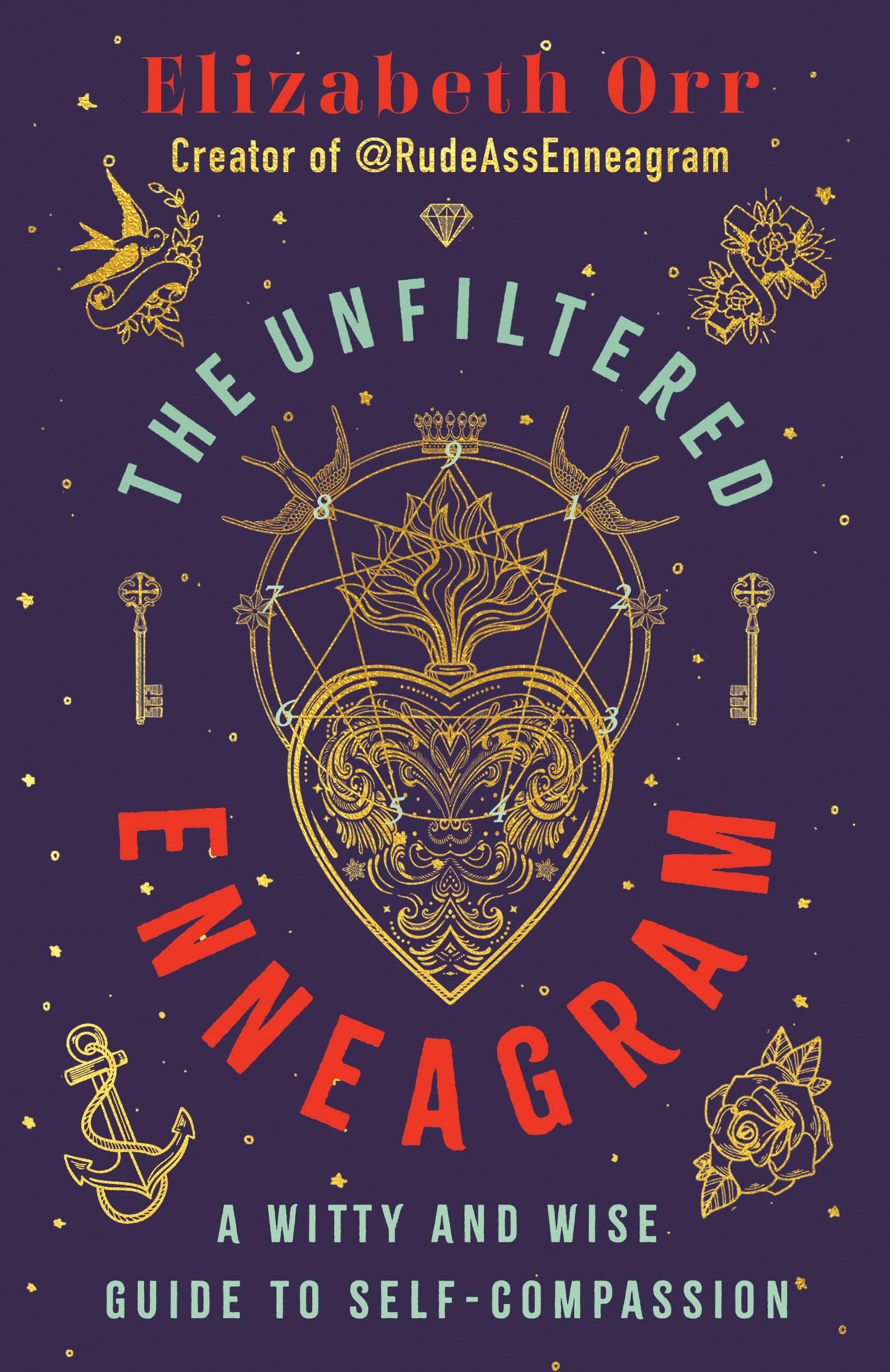
The Unfiltered Enneagram: A Witty and Wise Guide to Self-Compassion
$15.03
by Elizabeth Orr



From Instagram’s snarkiest Enneagram expert comes a hilarious and insightful book that shows how embracing our shadow side is our best path toward greater self-awareness and compassion. Most Enneagram books focus on stroking ego rather than challenging it. Elizabeth Orr’s The Unfiltered Enneagram offers practical strategies for liberating yourself from your own garbage. It’s a humorous, no-frills reckoning with our shadow side—the ways we cope with stress or fear—that unlocks the life-changing wisdom of this popular personality typology system. Readers will discover that courageously and comically acknowledging the worst attributes of their Enneagram Type can bring out the best in themselves. Filled with laugh-out-loud descriptions, sobering truths, and inspiring prompts, each chapter is an under-the-rug look at the nine Enneagram Personality Types: • Type One— R Is for Reformer (and Resentment ) • Type Two— Self-Sacrifice with Some Serious Strings Attached • Type Three— Hall of Mirrors in a House of Cards • Type Four— Feelin’ Misunderstood (and I’m Going to Make It Your Problem) • Type Five— When Intellectual Maximalism Meets Emotional Minimalism • Type Six— Who Needs Trust When I’ve Got Projection? • Type Seven— The Paradoxical Paralysis of Making Too Many Awesome Plans • Type Eight— Large, in Charge, and Just This Side of Belligerent • Type Nine —Comfortably Numb (and Impressively Stubborn) Insightful for long-time Enneagram enthusiasts, pragmatic for newer fans, and hilarious and accessible for everyone, The Unfiltered Enneagram shines a generous light on the good, the bad, and the ugly sides of us all—inviting us to see that the only way to find self-compassion is to embrace wholeness. “This is a singular and honest view of the Enneagram that plays the necessary devil’s advocate for readers wanting to better themselves.” — Library Journal (starred review) Elizabeth Orr serves as the associate chaplain for spiritual formation at Wake Forest and is the creator of the popular Rude Ass Enneagram Instagram account. She holds a bachelor’s degree in history from Stonehill College, a master’s degree in pastoral ministry, and a certificate in spiritual formation and direction from Boston College School of Theology and Ministry. Enneagram History and Overview of the Types Look, let’s level with each other, all right? I know it’s more likely than not that you aren’t reading this chapter in the order that I intended it to be read; you’re coming back to it after having skipped ahead to the chapter about your Type or the Type of the person who finally convinced you (or wore you down enough) to read a book about the Enneagram. I’d love to think that my writing about the Enneagram is like me and needs no introduction, but I can’t go asking the Twos to practice humility if I’m not willing to give those muscles a lil stretch myself every once in a while. So, each Type’s chapter is going to make a lot more sense and land in a more practical way when you have the bird’s-eye view as a point of reference. Now that you’ve made your way back here, the real fun can begin. It’s hard to swing a cat around these days without hitting the Enneagram. From corporate team building workshops to dating app profiles, it feels like it’s everywhere, and there’s a good chance that someone in your life is a full-fledged member of the Enneagram cult. If you’ve somehow managed to escape the grip of the Enneagram-enthused to this point, well . . . welcome to the top of the rabbit hole. A Very Brief History of the Enneagram One of the first things that most of us hear about the Enneagram is a big ole myth. I doubt there was any intentional deception happening with the propagation of the notion that the Enneagram is ancient, but sometime during the telephone game of oral tradition, the Enneagram being as old as the mountains became canon in the narrative, and it’s been next to impossible to update the script. I’m here to tell you today, though, dear reader, that the Enneagram is only as ancient as Pyrex bakeware: old enough to be at home (and a killer find if you stumble across it!) in a charming antique shop. But to claim that the Enneagram is some ancient, primordial secret that has been passed down from generation to generation is . . . a stretch, y’all. In reality, the first public reference to the Enneagram dates back to 1915, when George Gurdjieff, a teacher, philosopher, and spiritually curious cat, referenced the symbol in his work in psychology, spirituality, self-awareness, and a whole host of other areas. At no point did Gurdjieff ever talk about nine distinct personality Types. Instead, he used the Enneagram symbol to illustrate the dynamism of our world, nature, daily life, and art—showing that the world around us has something to teach us about ourselves and that enlightenment is less of a static destination or goal and more of a moving target, available to us in every moment. The most