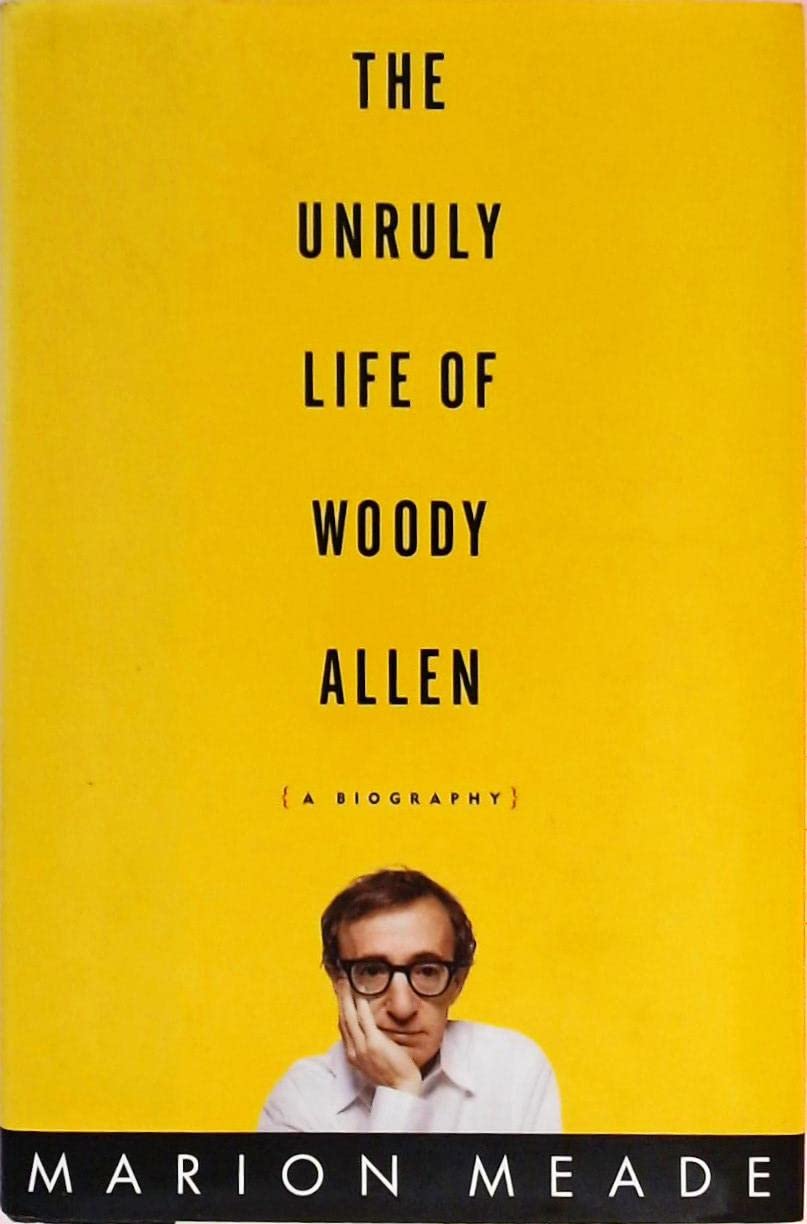



The first independent investigation of Woody Allen, our era's most celebrated, distinctive, and confounding filmmaker, reveals the controversial private life behind the icon. Until now, there has been little scrutiny of that life. The reason: Woody viewed biographers as the Ebola plague, dangerous, uncontrollable contagions that might squish his public persona into mousse. Allen's prolific achievements are all but unparalleled in cinematic history. To fans, his films have always represented an ongoing autobiography, through which he has bared his self-deprecating overanalytical soul to the world. It was not until 1992, when his stormy private life turned into sensational headlines, that the cracks in the familiar persona appeared. The lines separating art and fact, myth and reality, public and private life, became increasingly blurred. Marion Meade has tracked down scores of people in Allen's life who have never before spoken to an Allen biographer: boyhood pals; Brooklyn neighbors and teachers; colleagues Buddy Hackett and Mel Brooks from his early career as a television writer and stand-up comic; actors Maureen Stapleton, Max von Sydow, and Bob Hope; director Sydney Pollack; and the film reviewers who have followed his career for decades -- Vincent Canby, Roger Ebert, Stanley Kauffmann, Andrew Sarris, and John Simon. She also details the numerous examples of art imitating life in Allen's films, particularly the extraordinary saga behind his marriage to the adopted daughter of his long-time lover, Mia Farrow. In reconstructing Allen's life, Meade explores the cult of celebrity in America -- how it is our own infatuation with the rich and famous that has made it possible for this supremely talented man to shrewdly manipulate both the media and the moviegoing public. Woody Allen once controlled the press like his actors--and as critic Andrew Sarris observed, Woody "is almost a ventriloquist and all his actors are marionettes. It's his nature. He has to be on top." The Soon-Yi scandal cost him $7 million and his protected reputation, and now we've got Marion Meade's unblinking look at his blighted life (superior to John Baxter's Woody Allen , not quite as good as Meade's Dorothy Parker: What Fresh Hell Is This? ). The son of a loveless dad and mom who respectively ignored and beat him daily, Woody grew up mean, scarred, and scared: he slept with a night-light until his early 40s and considered suicide daily until at least age 51. His uncanny gift for comedy gave him no comfort, but movies did. His most autobiographical character is Cecilia in The Purple Rose of Cairo , who took refuge in theaters from "the ugly light" of real life. Boy, does Meade cast ugly light on Woody and his work. His best role for a woman, Annie Hall, is "basically stupid," as Diane Keaton said. In life and art, Woody sought leading ladies he could dominate. He stalled Mia forever before granting her the right to keep her shampoo at his apartment "alongside toiletries belonging to Diane Keaton, preserved there like so many fossilized relics in King Tut's tomb for more than a decade." Mia was horrified that he spilled her family's nasty secrets in Hannah and Her Sisters , and fretted over his obsession with Keaton and her sisters, Mariel Hemingway's sister, and Mia's own sister Steffi--whose photos she discovered (shades of Soon-Yi!) in his apartment. Woody's lovable persona was as fake as his transplanted, dyed hair. And Mia's no sweetheart herself: having caught her scuzzy dad with Ava Gardner one night as a child, she married Ava's squeeze Frank Sinatra at 19, and then stole her friend Dory Previn's husband, André, saying, "You don't fight what feels good." If Meade's sour, thorough tome is true, nobody in Hollywood fights what feels good, and they all come out looking pretty bad. --Tim Appelo Throughout his career, Allen has maintained a hectic pace: writing screenplays, directing films, making occasional appearances in others' works, writing humor pieces and plays, and playing in a Manhattan Dixieland band. That he has time for a life, let alone an "unruly" one, is amazing. Meade, a novelist and biographer of Dorothy Parker and Buster Keaton, among others, unearths little that is new here. Instead, she paints a portrait quite similar to the one in John Baxter's recent Woody Allen: A Biography (LJ 10/15/99): Allen is obsessively private, aloof, and self-absorbed. Meade recounts the well-known facts of Allen's life, digresses with too many characters marginal to Allen's story, and, while she devotes a great deal of space to rehashing the Allen/Soon-Yi Previn fiasco, dedicates little space to some important individual films, such as Bananas and Sleeper. Though Allen emerges as far from likable, some readers may feel a grudging admiration for his refusal to play by Hollywood's rules. An optional choice for readers more interested in Allen's personal foibles than his professional achievements. -Stephen Rees, Levittown Regional Li