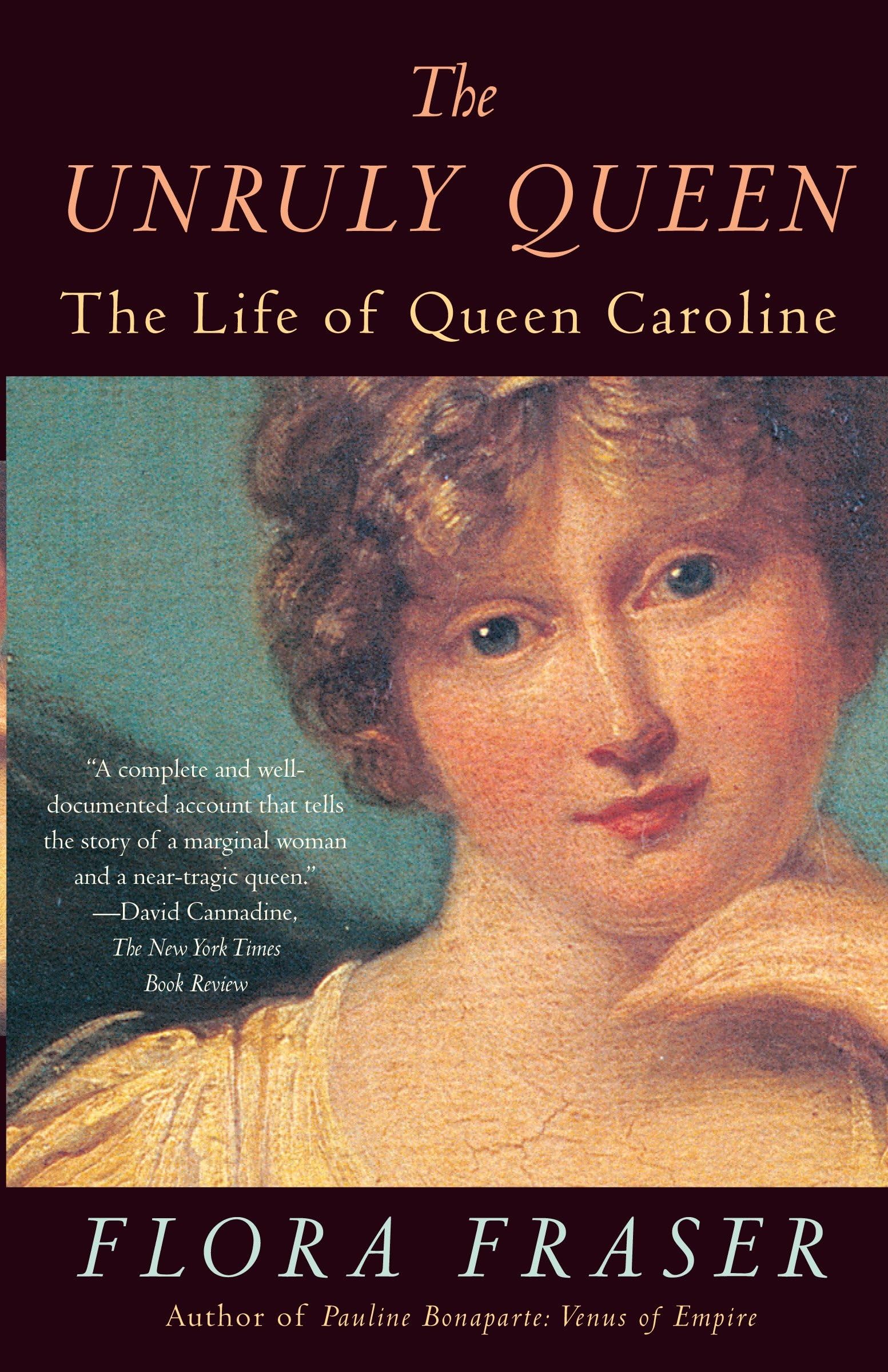



When the Prince Regent (who would later become King George IV) separated privately from Princess Caroline in 1796, they had been together for less than a year. Their disastrous marriage, ridiculed by the satirists of the day, led to profound political consequences and the eventual trial of Queen Caroline for adultery. After her exile, Caroline traveled through Europe with her own court, with catastrophic results, eventually returning to England but still lacking the dignity of her station. With careful research and an eye to the parallels in the modern era, acclaimed biographer Flora Fraser crafts in The Unruly Queen a riveting portrait of a woman who, despite her persecution, refused to be victimized. “A complete and well-documented account [that] tells the story of a marginal woman and a near-tragic queen.” —David Cannadine , The New York Times Book Review “Magnificent. . . . What a saga Caroline's life was.” — New York Post “A squalid tale superbly told.” — Sunday Times (London) Flora Fraser, daughter of bestselling biographer Lady Antonia Fraser, is the author of Princesses: The Six Daughters of George III , Beloved Emma: The Life of Emma , Lady Hamilton and the forthcoming Pauline Bonaparte: Venus of Empire . She lives in London with her husband and three children. CHAPTER ONE PRINCESS CAROLINE 1768--1794 'She will he unhappy for all her life' PRINCESS CAROLINE Amelia Elizabeth of Brunswick-Wolfenbittel was born on 17 May 1768 in the small duchy of Brunswick, a vassal state of Prussia in northern Germany. The birth of this little princess, granddaughter to the reigning Duke, was unimportant in itself. Her grandmother Duchess Charlotte had remarked after the birth of Caroline's elder sister Augusta in 1765, 'It's only a girl.... it was hardly worth waiting so long, as there are quite enough princesses in the world, and we are often most useless beings.'1 But then the Duchess was a sister to Frederick the Great of Prussia and had high standards. The birth of a Brunswicker prince, which happened to take place in England the following year, placated Charlotte, although on first seeing him she declared that he was quite a little English savage. However, Princess Caroline's father, Charles William Ferdinand, was a man of consequence in European affairs. As Hereditary Prince--this was the German style for an heir apparent--he would inherit his father's duchy. A flurry of imposing addresses from emperors, kings and other sovereign princes of Europe duly greeted Princess Caroline's birth.2 But Charles was eminent for more than his ducal pedigree. Indeed, he came from a long line of warriors. 'Nature destined him for a hero,' wrote his maternal uncle, Frederick the Great.3 At Hastenbeck in 1757, during the Seven Years' War, Charles showed Brunswicker courage in recapturing, sword in hand, a central battery. In the course of this war, which devastated Europe from 1756 to 1763, the Hereditary Prince was attached to the staff of his paternal uncle, Duke Ferdinand of Brunswick-Oels, who was given the British command abroad. After the war's close in 1763 he rejoined the Prussian service and modelled himself on his distinguished uncle, like him clothing his slim and elegant figure on all possible occasions in the Prussian uniform and boots. Duke Ferdinand was also something of a military hero, as the victor of Minden in 1759. William Pitt the Elder had Ferdinand in mind when he wrote in 1760 of 'the most sincere, but unimportant homage, which my heart pays to the virtues and genius of the Hereditary Prince. Admiration, and devoted attachment, to the two great Princes, uncle and nephew, are terms synonymous with zeal for the common cause of Europe, of which they are the glorious instrument. Charles's mother, Duchess Charlotte, was a tiny woman whose ethereal looks belied a steely ambition on behalf of her children. She encouraged her eldest son in his reverence for her brother Frederick. Like him a dedicated child of the Enlightenment, she had arranged for Charles a prodigious course of instruction in the humanities under tutors who included the Abbe Jerusalem, before sending him on a Grand Tour of Europe with the archaeologist Winckelmann as bearleader. The Hereditary Prince more than met her expectations. He was equally happy at his uncle's palace at Potsdam, near Berlin, drilling with Frederick at the camp, listening to him play the flute or discourse on European literature. At home in Brunswick life was more fractious. His father the Duke had nearly bankrupted the country through incompetence and prodigality. In the year of Princess Caroline's birth, the Hereditary Prince was forced to negotiate on behalf of his unpopular father with the Provincial Diet, or parliament. Caroline's mother Augusta, Hereditary Princess of Brunswick, was the elder sister of George III, King of England and Elector of Hanover. Despite being wholly German by blood, she was a foolish English patriot in her hostili