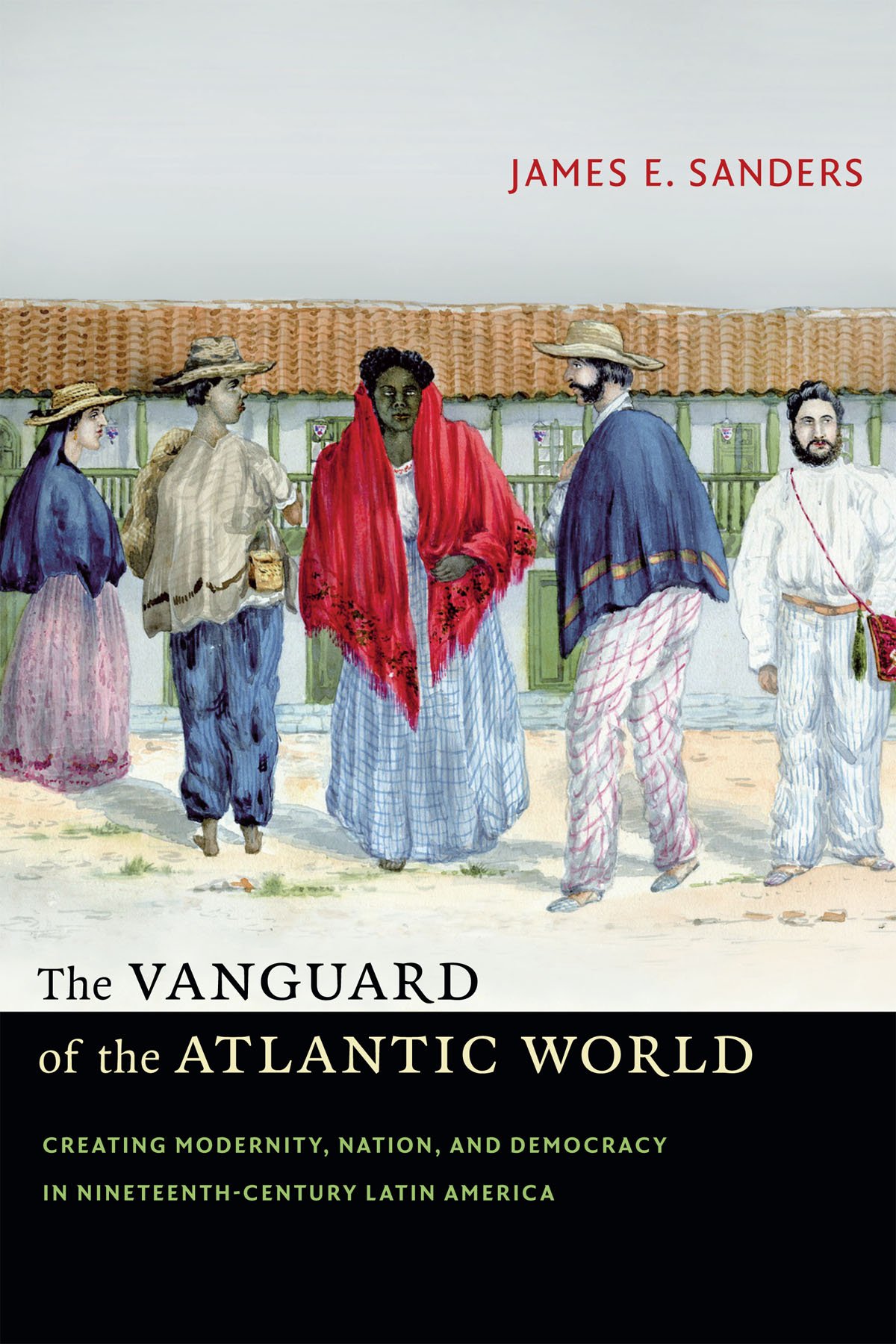
The Vanguard of the Atlantic World: Creating Modernity, Nation, and Democracy in Nineteenth-Century Latin America
$29.95
by James E. Sanders



In the nineteenth century, Latin America was home to the majority of the world's democratic republics. Many historians have dismissed these political experiments as corrupt pantomimes of governments of Western Europe and the United States. Challenging that perspective, James E. Sanders contends that Latin America in this period was a site of genuine political innovation and popular debate reflecting Latin Americans' visions of modernity. Drawing on archival sources in Mexico, Colombia, and Uruguay, Sanders traces the circulation of political discourse and democratic practice among urban elites, rural peasants, European immigrants, slaves, and freed blacks to show how and why ideas of liberty, democracy, and universalism gained widespread purchase across the region, mobilizing political consciousness and solidarity among diverse constituencies. In doing so, Sanders reframes the locus and meaning of political and cultural modernity. “The book focuses mainly on the midcentury period, roughly 1840-80, and covers important encounters between transatlantic republicans in the process of nation building...An important book.” -- K. L. Racine ― Choice "While The Vanguard of the Atlantic World speaks most directly to scholars of intellectual and political history, students interested in racial relations would benefit greatly from this book. Throughout, Sanders writes in a lucid and engaging style. Without a doubt, Sanders successfully demonstrates the importance of Latin American political thought for the nineteenth century and beyond." -- Rachael L. Pasierowska ― History "Insightful, profusely documented, creatively organized, and clearly written,... The Vanguard of the Atlantic World shall become indispensable to those interested in the history of political culture, democracy, and republicanism not only in Latin America but across the globe." -- Victor M. Uribe-Uran ― Ethnohistory "[T]his is an enormously thought-provoking book, one that should spark productive debate and dialogue, within Latin Americanist circles and beyond." -- Karen D. Caplan ― The Americas "Ambitious and important. . . . James E. Sanders must be praised for his perseverance in stubbornly maintaining his focus on popular engagement with the egalitarian, democratic, and republican ideas that pervaded the nineteenth-century Atlantic world." -- Guy Thomson ― Hispanic American Historical Review "The Vanguard of the Atlantic World is a fundamental contribution not only to our understanding of nineteenth-century Latin America, but also to the broader scholarly debate about the origins of modern democratic republicanism. James E. Sanders argues that in the nineteenth century Spanish America was the most democratic region of the world. In so doing, he rejects claims that Latin America has always stood on the margins of democratic culture and modernity, and he speaks directly to current debates about the relationship between capitalism, modernity, and democracy." -- Rebecca Earle, author of ― The Return of the Native: Indians and Myth-making in Spanish America, 1810–1930 James E. Sanders is Professor of History at Utah State University. He is the author of Contentious Republicans: Popular Politics, Race, and Class in Nineteenth-Century Colombia , also published by Duke University Press. The Vanguard of the Atlantic World Creating Modernity, Nation, and Democracy in Nineteenth-Century Latin America By James E. Sanders Duke University Press Copyright © 2014 Duke University Press All rights reserved. ISBN: 978-0-8223-5780-3 Contents ACKNOWLEDGMENTS, PROLOGUE, INTRODUCTION - American Republican Modernity, CHAPTER 1 - Garibaldi, the Garibaldinos, and the Guerra Grande, CHAPTER 2 - "A Pueblo Unfit to Live among Civilized Nations": Conceptions of Modernity after Independence, CHAPTER 3 - The San Patricio Battalion, CHAPTER 4 - Eagles of American Democracy: The Flowering of American Republican Modernity, CHAPTER 5 - Francisco Bilbao and the Atlantic Imagination, CHAPTER 6 - David Peña and Black Liberalism, CHAPTER 7 - The Collapse of American Republican Modernity, CONCLUSION - A "Gift That the New World Has Sent Us", NOTES, BIBLIOGRAPHY, INDEX, CHAPTER 1 Garibaldi, the Garibaldinos, and the Guerra Grande
Uruguay, 1842–48
Giuseppe Garibaldi, "the Hero of Two Worlds," has become the preeminent symbol of the nineteenth-century Atlantic world's struggle for liberty against the old regime. Across the Americas, there are Garibaldi Plazas, Garibaldi Streets, and Garibaldi statues, commemorating a man who nineteenth-century progressives thought best represented their struggles for modernity against an ultramontane Church, kings, aristocrats, and imperial oppression. We will return to Garibaldi the symbol later, but in this chapter we will explore Garibaldi's adventures in the New World, especially in the Banda Oriental, where he fought in Uruguay's international and civil war (the Guerra Grande) of 18
Uruguay, 1842–48
Giuseppe Garibaldi, "the Hero of Two Worlds," has become the preeminent symbol of the nineteenth-century Atlantic world's struggle for liberty against the old regime. Across the Americas, there are Garibaldi Plazas, Garibaldi Streets, and Garibaldi statues, commemorating a man who nineteenth-century progressives thought best represented their struggles for modernity against an ultramontane Church, kings, aristocrats, and imperial oppression. We will return to Garibaldi the symbol later, but in this chapter we will explore Garibaldi's adventures in the New World, especially in the Banda Oriental, where he fought in Uruguay's international and civil war (the Guerra Grande) of 18