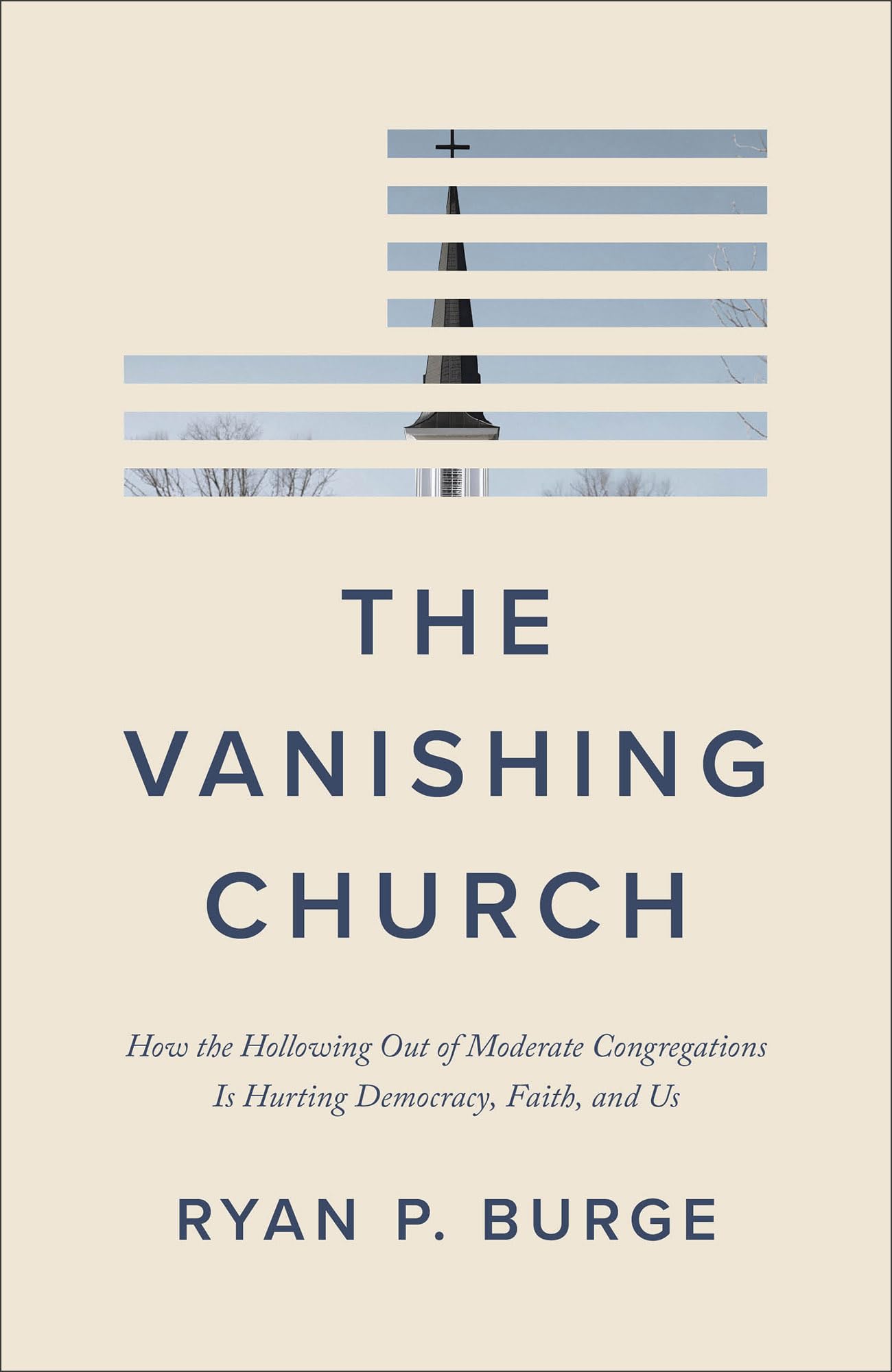
The Vanishing Church: How the Hollowing Out of Moderate Congregations Is Hurting Democracy, Faith, and Us (Why the Culture Wars Led to Polarization
$21.18
by Ryan P. Burge



The moderate American church is disappearing--and it's taking democracy with it. Many people assume evangelicals are Republican, Democrats aren't religious, and moderate Christians no longer exist. But that wasn't always true. In the 1980s, evangelicals were just as likely sit beside a Democrat as a Republican at church. What changed? In this groundbreaking book, data scientist Ryan Burge reveals ● how religious polarization reshaped America and caused many to leave church, ● why faith became an identity in the culture wars, ● the hidden truth that Americans are more moderate than the media suggests, ● why polarization in our churches affects all aspects of social connection and community, and ● a path forward for churches to bridge political divides. This book reveals how political polarization transformed American Christianity over the past fifty years and why this divide impacts every aspect of society. Drawing on extensive data, Burge shows how churches that embraced conservative politics during the culture wars drove away millions of moderate and liberal Christians, hollowing out congregations that once bridged political divides. Burge makes a compelling case that America needs churches now more than ever--not as political battlegrounds but as spaces where people of different backgrounds and beliefs can come together. Blending personal stories with rigorous, up-to-date research, The Vanishing Church offers hope that faith communities can help heal our divisions and restore the common ground essential for democracy to thrive. "Burge delivers exemplary and balanced research that confirms some of our deepest hunches about the state of churches today while also upending assumptions we didn't realize we held. With clarity and compassion, he invites us into a more honest understanding of faith in America today. Most powerfully, Burge encourages Jesus followers to resist the pull of extremes and to authentically pursue the flourishing of both the church and our nation." -- Kara Powell , chief of leadership formation, Fuller Seminary; coauthor of Future-Focused Church Many people take it for granted: Evangelicals are Republican, Democrats aren't religious, and moderate Christians simply don't exist. But it wasn't always this way. Those who grew up evangelical in the 1980s were just as likely to sit next to a Democrat as a Republican at church. What happened in the decades that followed? In The Vanishing Church , Ryan Burge demystifies the polarization of American pews, helping us understand why the religious landscape has changed so dramatically in the last fifty years--and how this divide impacts every aspect of society. Burge argues that many churches embraced conservative politics amid the culture wars, leading moderate and liberal Christians to leave the church in droves. Yet Burge shows that returning to church may be exactly what America needs. Many Americans still want to practice faith and believe deeply in the principles of religion. Burge reminds us that the average American is a lot more moderate than they are given credit for, and that at their best, churches can unify people from different economic backgrounds and political affiliations. Blending personal stories with rigorous, up-to-date research, Burge urges us to rebuild faith communities that can reach across the aisle, helping to restore democracy and unite rather than divide us. The moderate American church is disappearing--and it's taking democracy with it. For decades, moderate Christian congregations fostered dialogue and community across political divides. But as the culture wars intensified, churches chose sides, driving away millions of believers. In The Vanishing Church , data scientist Ryan Burge shows how much America's religious landscape has changed over the past fifty years, and why polarization is destroying faith and community and putting democracy at risk. "Ryan brings years of research to bear on sketching out the contours of a church broken in half by polarization. The questions he raises about political extremes and the fortunes of faith in America are some of the most critical questions of our time, and the answers he provides, though bracing, offer some room for hope." -- Elizabeth Bruenig , staff writer for The Atlantic "Burge recognizes how the dramatic shifts in beliefs and congregations over the last thirty years have spilled over into every part of our culture, including politics, and this book will help those without much religious literacy understand the importance of these often-overlooked trends." -- Skye Jethani , cofounder and editor in chief of Holy Post Media "When it comes to forecasting and analyzing demographic trends in American religion, there's no one I trust more than Burge. Even those who don't share all his theological conclusions will find indispensable this book's insights into polarization, pastoral fatigue, civic loss, and what the future of the American churc