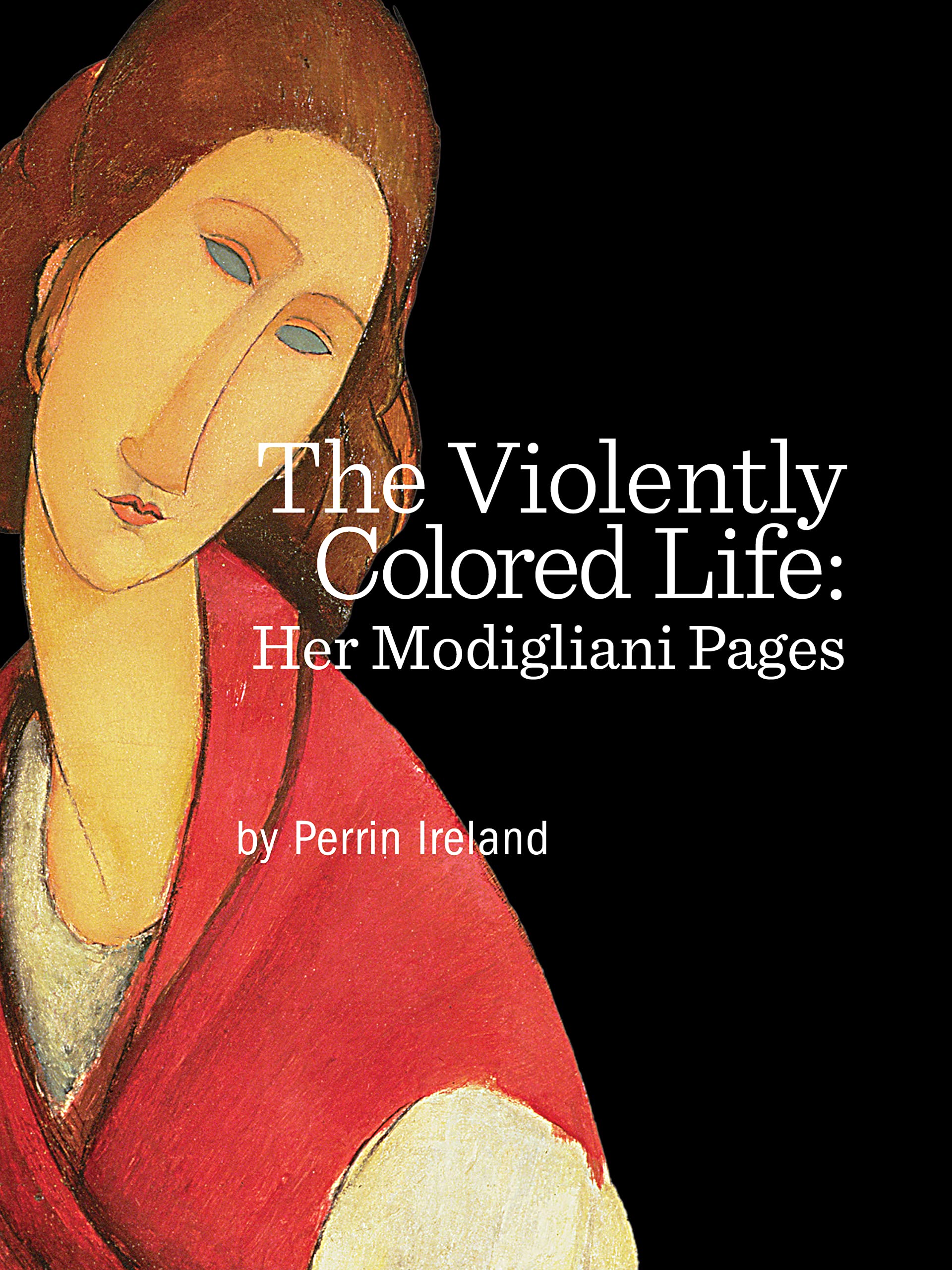



Presented as the journal of Amedeo Modigliani’s common law wife, Jeanne Hébuterne, who was also an artist, The Violently Colored Life paints an intimate portrait of their milieu in Paris in the early years of the Twentieth Century. Through scenes interspersed with reflections on love, sex, motherhood, and art, Modi, Jeanne, and their friends in Montparnasse come to life as living creatures that transcend their status as icons of a bygone era. They engage in the ceaseless struggle to create in the face of impending death, which comes in many tuberculosis, the Spanish flu, war, suicide, and, just beyond the end of their own story, the second World War and the Holocaust. In addition to Jeanne Hébuterne and Amedeo Modigliani, the book touches on artists Picasso, Toulouse-Lautrec, Vincent van Gogh, Mary Cassatt, Suzanne Valadon, Juan Gris, Berthe Morisot, Renoir, Camille Claudel, Rodin, and even Leonardo da Vinci. —Betsy Seifter, Ph.D. English Literature, coauthor with Julian Seifter, M.D. of After the Transcending Chronic Illness Praise for The Violently Colored Life: Her Modigliani Pages Ireland's historical novel imagines a fictional diary written by Jeanne Hébuterne, Amedeo Modigliani's common-law wife, chronicling their tempestuous relationship in Paris. Hébuterne is only 19 when she meets the famed painter, who is a much more mature 33. She falls deeply in love and refuses to leave him despite her conservative, petit-bourgeois Catholic family's strenuous objections: They are not keen on the fact that he is a Jewish artist, not to mention an ostentatiously heavy drinker. Jeanne's father had hoped she would become a nun—the often dissolute life she leads with Modi, as she calls him, couldn't be further from the quietude of religious devotion. Their life together isn't easy—they are perpetually broke, and his struggle with tuberculosis (he contracted it when he was only 16) only intensifies his already erratic behavior. And his infamous love of drink is often merely a way to disguise the TB symptoms in order to avoid becoming a social outcast if word got out he was infected by such a deadly, contagious disease. Ireland poignantly depicts the tragically conflicted Jeanne. On the one hand she is desperately hopeful that the birth of her second child with Modi will finally give her stability (she pines to officially marry him and even fantasizes about her wedding dress), but on the other hand, she realizes that Modi's health is rapidly declining and that his days are numbered. She also worries about her own fate: "I place my hand on my belly, and watch Modi, who is doubled over, coughing, and gasping for breath, and see my future. I'm happy that little Jeanne isn't here with us to share this fate. She must not. Above all, she must not." Ireland pulls off a difficult literary trick here: She manages to build a suspenseful atmosphere despite the forgone conclusion of this historical tale. One can't help but sympathize with Jeanne, who surrenders so much of herself for a doomed love. A lively portrait of Modigliani emerges, too—he's both a rakishly irresponsible artist as well as a bookish intellectual who "often carries a copy of Dante's 'Divine Comedy' in his pocket." The author adeptly captures the remarkable artistic spirit of the early 20th century, particularly in Montparnasse, which was the stomping ground of so many notable artists like Picasso, Soutine, Utrillo, Apollinaire, and scores of others. The book includes gorgeous reproductions of not only Modigliani's artwork, but also that of his contemporaries, including the haunting work (in a style similar to her lover's) of Hébuterne, a gifted artist whose formidable legacy was entirely lost in Modigliani's shadow. In fact, this is the central strength of the book: Hébuterne is rescued from being merely a bit player in Modigliani's life. The author depicts her as a tragic figure (her saturnine end is all but foreordained) but fascinating in her own right—intellectually sharp if sometimes childishly naïve. A thoughtful, original historical novel sure to thrill any serious art lover. — Kirkus Reviews The Violently Colored Life (Charles Square Press) by Perrin Ireland recounts the bittersweet love story of painter and sculptor Modigliani and his common-law wife and fellow artist Hébuterne, alongside their complex relationships with a veritable who's who of modernist icons: Jean Cocteau, Blaise Cendrars, Apollinaire, Constantin Brâncuși, Picasso, Akhmatova, Rivera, Stein — it's enough to leave you breathless with awe. Between late-night drinking sessions, a revolving door of shared flats and studios, affairs of every orientation, and cross-pollination of art disciplines, styles and subject matters, we get an insider's view of an incredibly fertile and fleeting period of art history and the people who flourished there, flaws and all. The novel is broken down into five parts, each consisting of very short chapters, making this the kind of