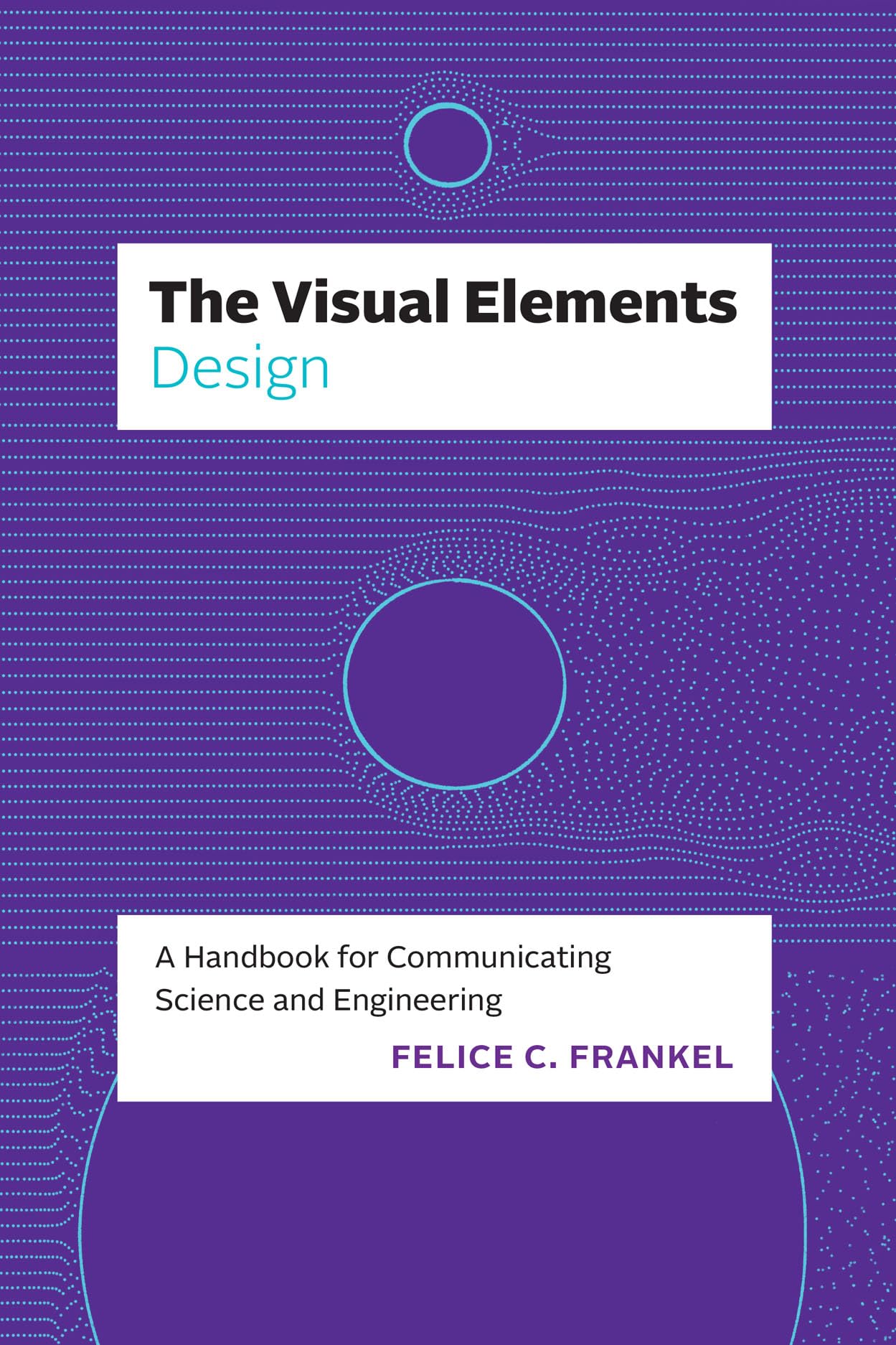
The Visual Elements―Design: A Handbook for Communicating Science and Engineering
$16.05
by Felice C. Frankel



With insights and examples from designers at publications from Nature to the New York Times , an essential guide to creating figures and presentations. In this short handbook, award-winning science communicator Felice C. Frankel offers a quick guide for scientists and engineers who want to share—and better understand—their research by designing compelling graphics for journal submissions, grant applications, presentations, and posters. Like all the books in the Visual Elements series, this handbook is also a training tool for researchers. Distilling her celebrated books and courses to the essentials, Frankel shows scientists and engineers, from students to primary investigators, the importance of thinking visually. This crucial volume in the Visual Elements series offers a wealth of engaging design examples. Case studies and advice from designers at prestigious publications and researchers’ own before-and-after examples show how even the smallest changes—to color, type, composition, and layering—can greatly improve communication. Ideal for researchers who want a foothold for presenting and preparing their work for everything from conferences to publications, the book explains the steps for creating a concise and communicative graphic to highlight the most important aspects of research—and to clarify researchers’ own thinking. The resulting book is an essential element of any scientist’s, engineer’s, or designer’s library. "Frankel’s newest book, The Visual Elements—Design , is an accessible guide for scientists and engineers to learn how to create graphics to illustrate their work. She delves into the importance of thinking visually and what that really means, as well as provides case studies and advice from working designers." ― American Scientist "A research scientist in the Massachusetts Institute of Technology’s Department of Chemical Engineering, Frankel has made a name for herself by helping scientists augment their work with pictures that capture, represent, and communicate science, including many journals’ cover photos. . . . Besides taking a variety of cover photos, she also helps scientists improve the graphs and images inside the articles, which she says researchers often assemble hastily, at the last minute, and without the same care they put into their words. And yet the images can be the most important part of the article. . . . 'It’s not about pretty pictures,' she says. 'It’s really about communication. And pushing the researcher to think beyond the good enough. That’s my whole shtick.'" -- Adam Ruben ― Science " The Visual Elements–Design is an outstanding resource with thoughtful analysis of the best practices intended for anyone interested in improving their communication through information visualization." ― Technical Communication "The principle of ‘don’t tell: show’, is what makes this book such an interesting, easy read; and as we would expect, the illustrations are rich and colourful . . . . I give this book a five-star rating and would recommend it to all scientists and illustrators of science." ― The Marine Biologist "This is a short and copiously illustrated volume, making it and its advice easily and quickly digestible. And its advice is eminently sensible. . . . The fact that The Visual Elements—Design: A Handbook for Communicating Science and Engineering is short, accessibly written and presented, amply illustrated, and, above all, cheap , makes it a valuable addition to the aspiring scientist’s bookshelf. And for the rest of us, there is certainly no harm in peeking behind the scientific curtain to be reminded of those same lessons." ― Metascience "The book has two primary agendas; it is both a list of best practices for creating visual components of your research, especially for journals or presentations, and a showcase of the importance of iteration in the design process. The latter is made clear through before-and-after images of designs. I do not think you need to consider yourself artistic to want to improve your figures, posters, or presentations. As many of Frankel's examples come from the sciences, I could see a mathematical biologist, chemist, or physicist utilizing these tips. However, I think people in all areas of mathematics could benefit, from knot theory to game theory to sports analytics to . . . your area of expertise! If you want to challenge your assumptions about what is good design, consider implementing the tips in this book." ― Notices of the American Mathematical Society "In this practical and instructive handbook, Frankel provides principles for how to approach the visual design of graphics to improve scientific communication. . . . Frankel highlights the value of design and leverages case studies from various disciplines to demonstrate techniques for thoughtful and concise visuals. Frankel makes the case for greater consideration of visuals, underscoring that they are often an afterthought yet draw significant attenti