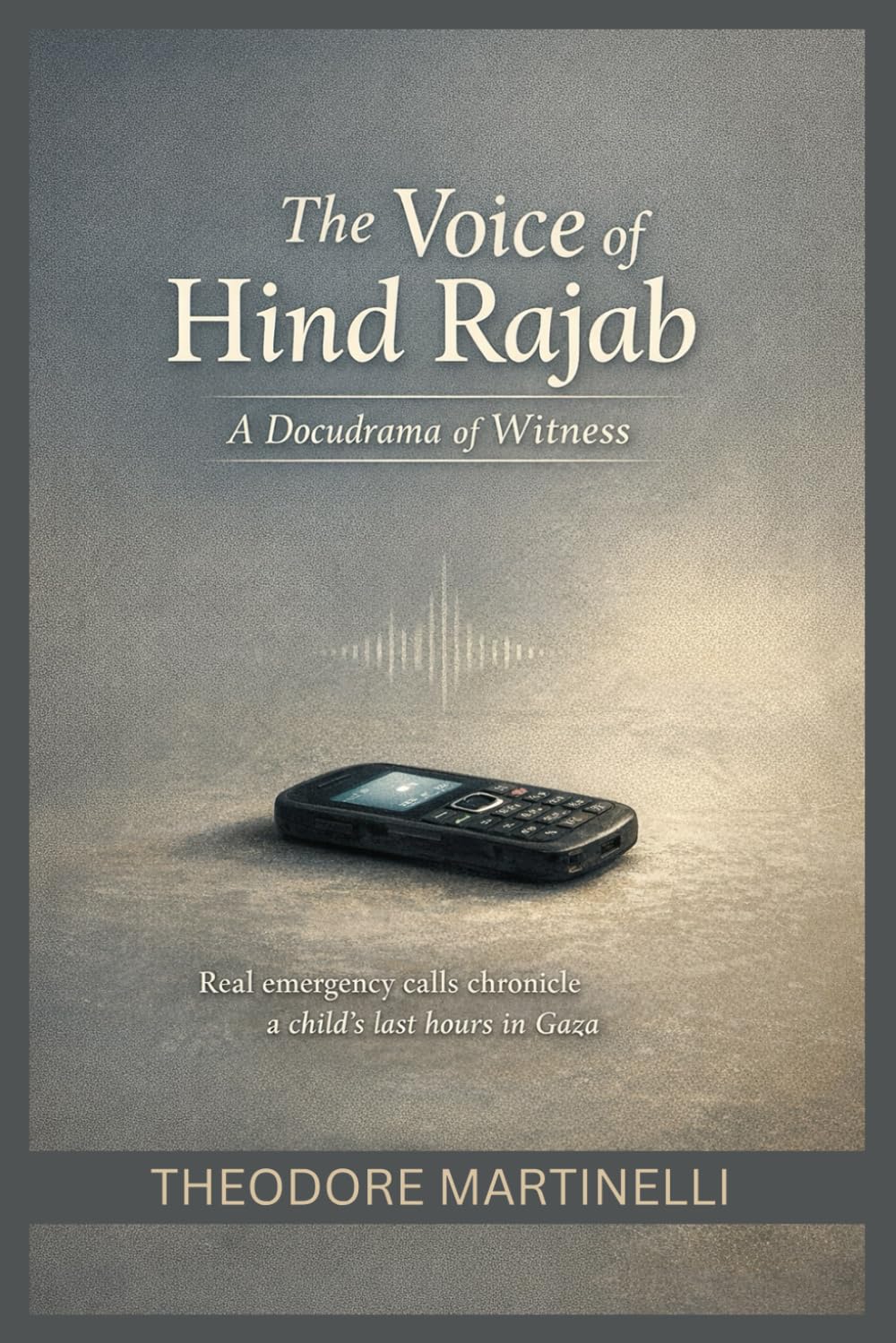
The Voice of Hind Rajab: A Docudrama of Witness: Real emergency calls chronicle a child's last hours in Gaza
$15.99
by Theodore Martinelli



A single voice. A broken phone line. A story that refuses to fade into silence. If The Voice of Hind Rajab stayed with you long after the credits rolled, this book is for you. Written as a thoughtful companion to the 2025 docudrama, this book invites readers to step back into the film with clearer eyes and deeper understanding. It is designed for viewers who were moved, unsettled, or left with questions — and who want to explore what the film is really doing beneath its restrained surface. Rather than retelling the plot, this book examines how the story is told. It looks closely at the film’s use of real emergency call audio, its confined structure, and its refusal to show violence directly. It explores how director Kaouther Ben Hania blends documentary truth with dramatized performance, creating a form of cinematic witness that feels intimate, tense, and morally urgent. You’ll also find careful context around the real events that inspired the film, the role of the Palestine Red Crescent responders, and the ethical choices behind using an actual child’s recorded voice. The performances, sound design, and pacing are discussed not as technical tricks, but as emotional tools — each one shaping how the audience listens, waits, and feels. This book is for readers who want more than a reaction. It offers space to reflect, to understand the film’s intentions, and to sit with its questions rather than rush past them. By the end, you won’t just remember the film — you’ll understand why it was made the way it was. Inside this companion book, you’ll discover: How real audio reshapes the boundary between documentary and drama - The director’s visual and narrative restraint, and why it matters - The emotional weight carried by sound, silence, and off-screen action - Key themes of innocence, bureaucracy, and moral responsibility - Context that deepens the film without distorting its truth If you’re looking to engage with The Voice of Hind Rajab on a deeper, more thoughtful level, this book offers a steady, informed guide. When you’re ready to return to the film — with clearer insight and a fuller perspective — this is a meaningful place to begin. Disclaimer: This publication is an independent review and commentary. It is not affiliated with, authorized, endorsed, or sponsored by the filmmakers, studios, or rights holders.