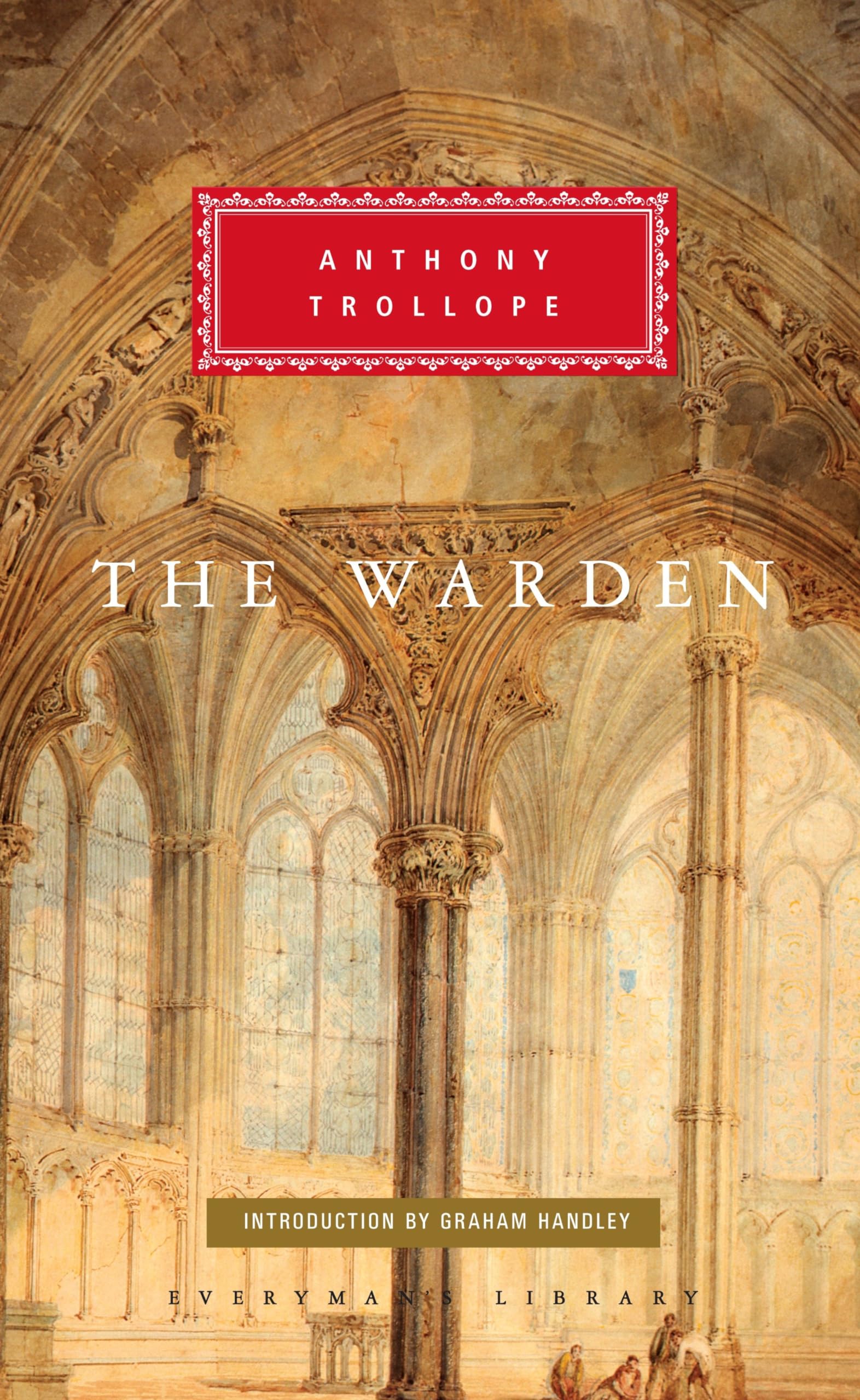
The Warden: Introduction by Graham Handley (Chronicles of Barsetshire)
$16.10
by Anthony Trollope



When John Bold decides to challenge corruption in the Church of England he sets the whole town of Barchester by the ears with consequences both comic and sad. Trollope's first masterpiece is the study of conflicting loyalties and principles in a cathedral city where the gentle warden becomes an unwilling focus of national controversy. The resulting story is both a fine comedy of manners and a magnificent group portrait. THE WARDEN is the first novel of the Barsetshire series. “Trollope will remain one of the most trustworthy . . . of the writers who have helped the heart of man to know itself.” —Henry James by Graham Handley This book centres on Mr. Harding, a clergyman of great personal integrity who is nevertheless in possession of an income from a charity far in excess of the sum devoted to the purposes of the foundation. On discovering this, young John Bold turns his reforming zeal to exposing what he regards as an abuse of privilege, despite the fact that he is in love with Mr. Harding's daughter Eleanor. Anthony Trollope (1815-1882) was born in London to a bankrupt barrister father and a mother who, as a well-known writer, supported the family. Trollope enjoyed considerable acclaim both as a novelist and as a senior civil servant in the Post Office. He published more than forty novels and many short stories that are regarded by some as among the greatest of nineteenth-century fiction. CHAPTER I Hiram’s Hospital The Rev. Septimus Harding was, a few years since, a beneficed clergyman residing in the cathedral town of ———; let us call it Barchester. Were we to name Wells or Salisbury, Exeter, Hereford, or Gloucester, it might be presumed that something personal was intended; and as this tale will refer mainly to the cathedral dignitaries of the town in question, we are anxious that no personality may be suspected. Let us presume that Barchester is a quiet town in the West of England, more remarkable for the beauty of its cathedral and the antiquity of its monuments, than for any commercial prosperity; that the west end of Barchester is the cathedral close, and that the aristocracy of Barchester are the bishop, dean, and canons, with their respective wives and daughters. Early in life Mr. Harding found himself located at Barchester. A fine voice and a taste for sacred music had decided the position in which he was to exercise his calling, and for many years he performed the easy but not highly paid duties of a minor canon. At the age of forty a small living in the close vicinity of the town increased both his work and his income, and at the age of fifty he became precentor of the cathedral. Mr. Harding had married early in life, and was the father of two daughters. The eldest, Susan, was born soon after his marriage; the other, Eleanor, not till ten years later. At the time at which we introduce him to our readers he was living as precentor at Barchester with his youngest daughter, then twenty-four years of age; having been many years a widower, and having married his eldest daughter to a son of the bishop, a very short time before his installation to the office of precentor. Scandal at Barchester affirmed that had it not been for the beauty of his daughter, Mr. Harding would have remained a minor canon; but here probably Scandal lied, as she so often does; for even as a minor canon no one had been more popular among his rever- end brethren in the close, than Mr. Harding; and Scandal, before she had reprobated Mr. Harding for being made precentor by his friend the bishop, had loudly blamed the bishop for having so long omitted to do something for his friend Mr. Harding. Be this as it may, Susan Harding, some twelve years since, had married the Rev. Dr. Theophilus Grantly, son of the bishop, archdeacon of Barchester, and rector of Plumstead Episcopi, and her father became, a few months later, precentor of Barchester Cathedral, that office being, as is not usual, in the bishop’s gift. Now there are peculiar circumstances connected with the precentorship which must be explained. In the year 1434 there died at Barchester one John Hiram, who had made money in the town as a wool-stapler, and in his will he left the house in which he died and certain meadows and closes near the town, still called Hiram’s Butts, and Hiram’s Patch, for the support of twelve superannuated wool-carders, all of whom should have been born and bred and spent their days in Barchester; he also appointed that an alms-house should be built for their abode, with a fitting residence for a warden, which warden was also to receive a certain sum annually out of the rents of the said butts and patches. He, moreover, willed, having had a soul alive to harmony, that the precentor of the cathedral should have the option of being also warden of the almshouses, if the bishop in each case approved. From that day to this the charity had gone on and prospered—at least, the charity had gone on, and the estates had prospered. Wool-carding in Barc