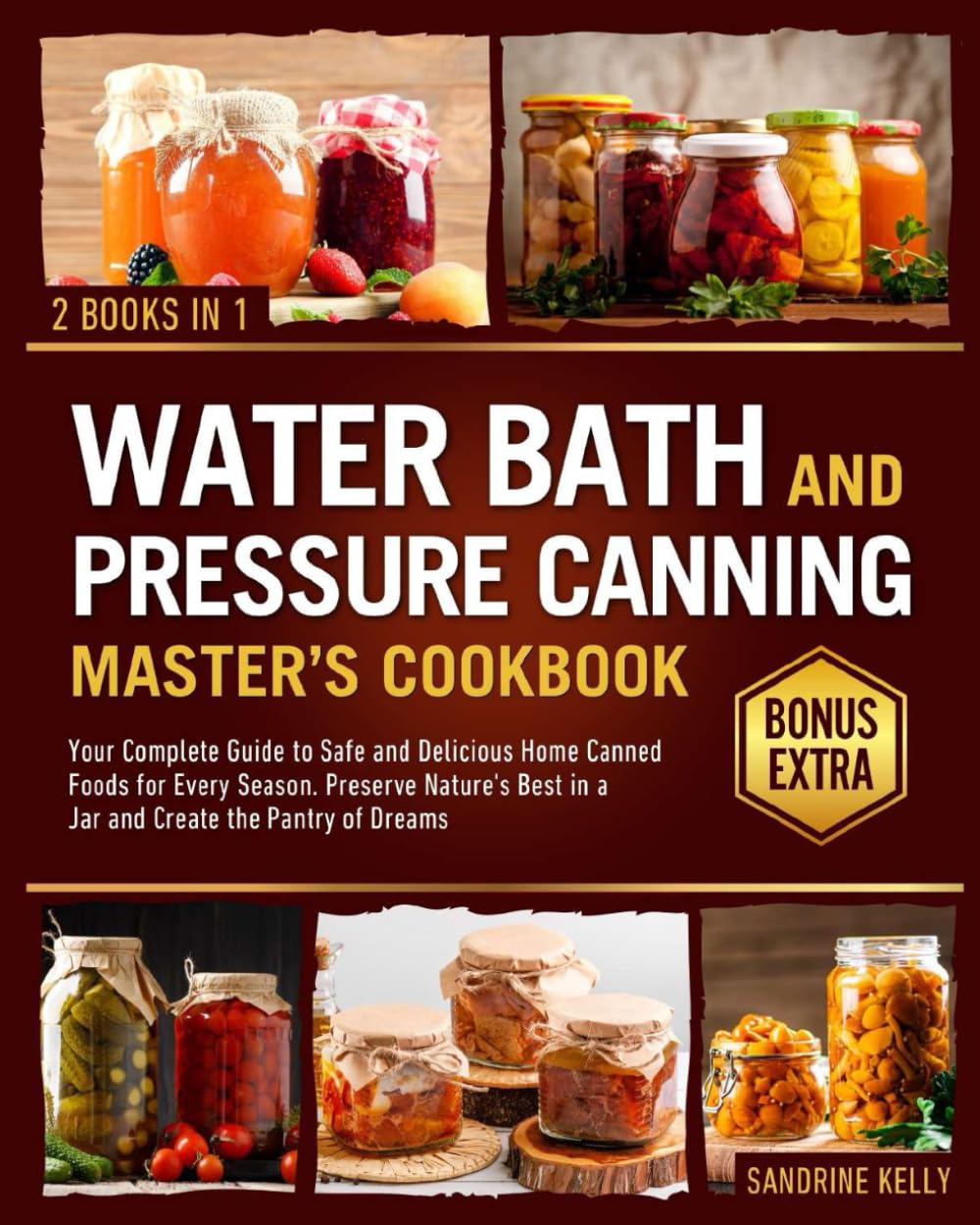
The Water Bath & Pressure Canning Master's Cookbook: Your Complete Guide to Safe and Delicious Home Canned Foods for Every Season. Preserve Nature's
$24.90
by Sandrine Kelly



Master Water Bath and Pressure Canning—Safely Preserve Food for Years Here's the thing about grocery store shelves: you read the labels and find preservatives, additives, and ingredients you can't pronounce. You want better for your family, but buying organic and preservative-free gets expensive fast. And it still doesn't solve the problem of fresh produce going bad before you can use it. Canning changes that equation. When you preserve food yourself, you control exactly what goes in the jar. No mystery ingredients. No compromises. Just real food that lasts for years. The catch? Canning has a reputation for being complicated and—let's be honest—a little scary. Botulism. Spoilage. Jars that don't seal. Pressure canners that seem intimidating. Most people want to try it but don't know where to start safely. That's what this book fixes. Two methods, clearly explained . Water bath canning for high-acid foods like fruits, jams, pickles, and tomatoes. Pressure canning for low-acid foods like vegetables, meats, beans, and soups. You'll learn when to use each method, why it matters, and how to do it safely every time. Safety isn't optional—it's built in . The book covers pH levels, sterilization, temperature control, and how to avoid botulism. You'll understand the science behind why certain foods need pressure canning while others don't. Common beginner mistakes are explained so you can skip them entirely. Troubleshooting guidance for when something doesn't look right. Over 100 tested recipes covering everything you'd want to preserve: fruits and vegetables, jams and jellies, pickles and relishes, salsas and sauces, meats and seafood, beans and legumes, soups and stews. Each recipe includes processing times, jar sizes, and step-by-step instructions. Equipment guidance that makes sense . What you actually need versus what's nice to have. How to choose between different canner types. Proper use of jars, lids, and bands. Tools that make the process easier and safer. Start simple, build confidence . Your first project might be strawberry jam or dill pickles—something straightforward with clear results. From there, you work up to pressure canning vegetables, then meats, then complete meals in jars. Each chapter builds skills progressively. Bonus: Seasonal Canning Calendar . Know what to preserve when. The calendar shows you what's at peak freshness each month, so you're canning food when it's most abundant and affordable. Think about opening your pantry to rows of jars you filled yourself. Peach preserves in January. Homemade chicken stock ready for soup. Green beans that taste like summer in the middle of winter. Salsa made from your garden tomatoes. All preserved safely, all free of additives, all ready when you need them. This isn't about becoming a homesteading purist or going off-grid. It's about having better food, wasting less, and knowing exactly what your family eats. Whether you have a garden producing more than you can use fresh, or you just want to take advantage of farmers market abundance, canning lets you preserve quality when it's available. The book works for complete beginners (never canned anything before) and experienced canners looking to expand what they preserve. The instructions assume you're starting from zero, but the techniques go deep enough to level up your skills if you've been doing this a while. One thing to know: this book takes safety seriously. Canning isn't difficult, but it requires following proper procedures. The instructions are detailed and specific for a reason—so your food stays safe for years. If you're ready to fill your pantry with food you preserved yourself, this book will show you how to do it right. Scroll up and grab your copy.