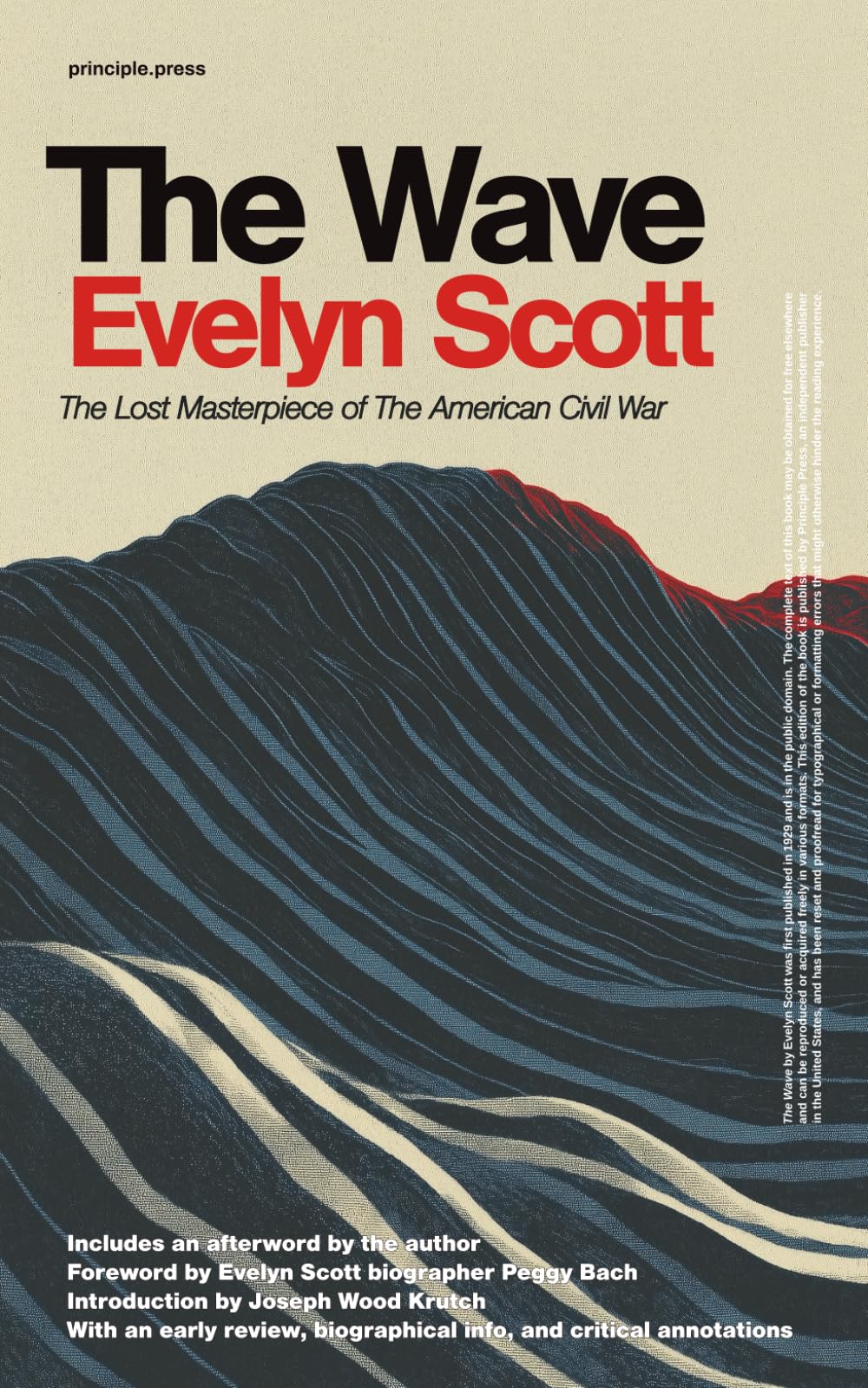



The Wave – Evelyn Scott’s visionary Civil War novel . Originally published in 1929, The Wave is a forgotten classic of American literature that shatters the conventions of historical fiction. Scott, a leading voice of American modernism, forsakes any single hero or linear plot. Instead, she delivers a sweeping, poetic panorama of the American Civil War with a bold stream of consciousness style and cinematic structure. Critics in its day hailed The Wave as “the greatest novel on the American Civil War.” Nearly a century later, this literary classic still astonishes with its emotional depth and experimental form. Without nostalgia or sentimentality, Scott’s narrative shifts fluidly through widely different perspectives, from generals and politicians to foot soldiers, nurses, freed slaves, and civilians north and south. Each character – northern or southern, black or white, male or female – is portrayed with empathy and vivid detail. Like drops of water in a wave, their stories rise and fall together, swept up by the overwhelming force of war. In lyrical, impressionistic scenes, Scott’s experimental novel captures the chaos and humanity of an entire nation in turmoil. The war itself becomes the protagonist, a relentless tide that shapes and tests every soul in its path. The result is a haunting historical fiction tapestry that is as heart-rending as it is boldly innovative. Readers witness intimate moments of courage, fear, love, and loss that cumulatively portray the Civil War’s vast human impact. Scott’s prose may be dreamlike and unconventional, but it remains gripping and accessible – a poetic journey that draws readers into the era’s passions and tragedies. The Wave broke new ground in 1929 with its avant-garde approach, and its influence echoes through American literature. At the time of publication, Evelyn Scott was celebrated as one of America’s premier modernist writers, mentioned in the same breath as William Faulkner. Critics credited The Wave with “marking a new advance in the technique of historical fiction” and later scholars have called it “the standard against which all Civil War novels were tested” Though it fell into obscurity for decades, this forgotten classic is now restored for contemporary readers to appreciate its artistry. Scott’s masterpiece remains “unique in American fiction” – a literary mosaic of the Civil War that anticipated later epics yet stands alone in vision and scope. This reintroduced edition invites a new generation of readers to rediscover Scott’s genius and the novel’s enduring power. To enrich your reading, this edition is reset from the first printing 1929 Introduction by Joseph Wood Krutch: The original introduction by J. W. Krutch offers contemporary insight into The Wave ’s impact and context. - “Adventures and Incidents in Writing The Wave” Afterword (1929): Evelyn Scott’s own reflective afterword, providing her commentary on the novel’s creation and themes. - Foreword by Peggy Bach: Peggy Bach – a literary scholar and Evelyn Scott biographer who helped revive interest in The Wave – illuminates the novel’s significance in American modernism and its relevance today. - Early Review (1929): An original review gives readers a glimpse of how The Wave was received in its time. - Author Biography: A concise biographical note on Evelyn Scott, detailing her stature in American literature and the trajectory of her remarkable career.