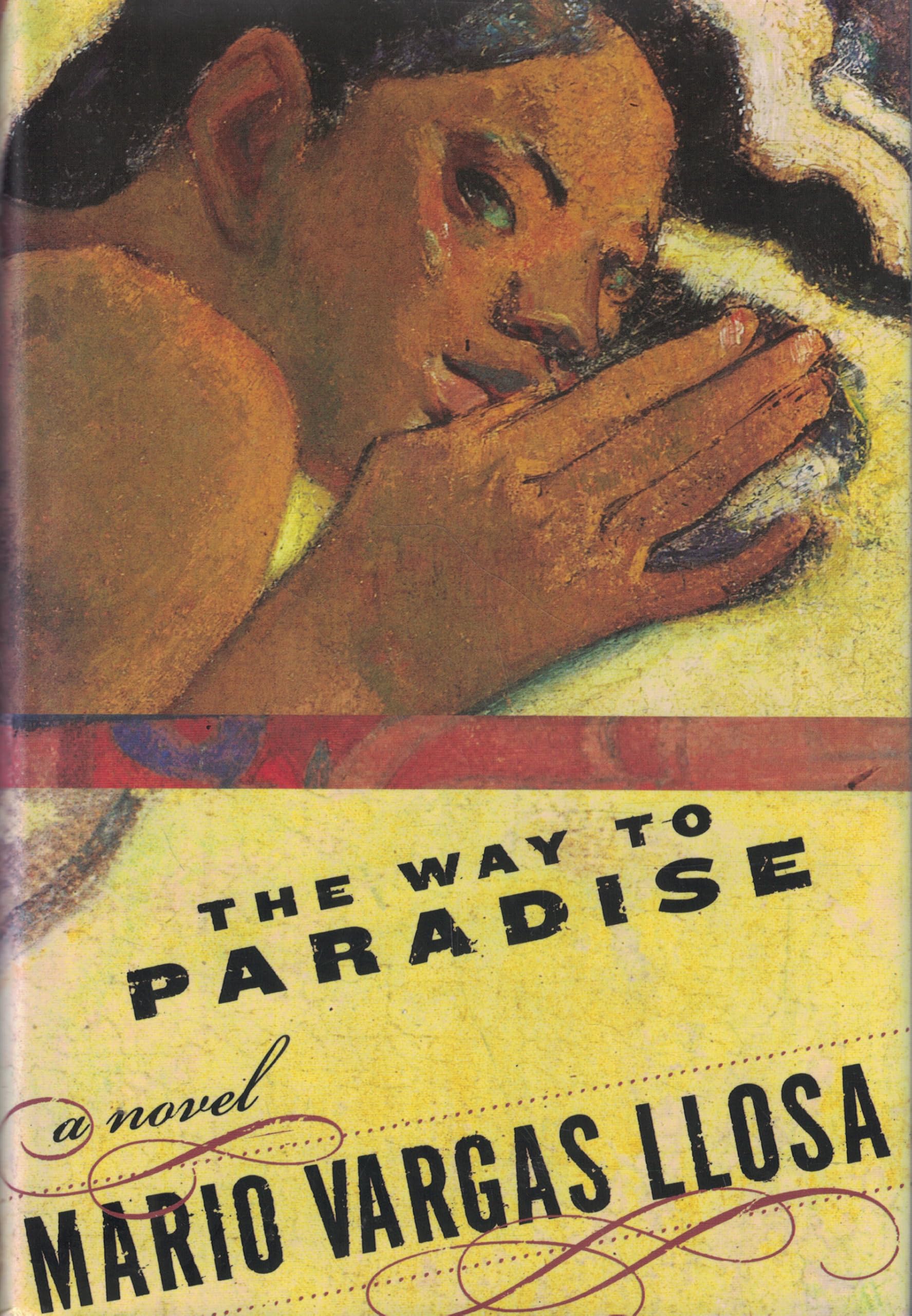



The dramatic lives of two bold, independent adventurers--Paul Gaugin and his grandmother Flora Tristan, a trail-blazing women's suffragist--as imagined by "one of the master storytellers of our time" (Chicago Tribune Book World) In 1844, Flora Tristán embarked on a tour of France to campaign for workers' and women's rights. In 1891, her grandson Paul Gauguin set sail for Tahiti, determined to escape civilization and paint primitive masterpieces. Flora died before her grandson was born, but their travels and obsessions unfold side by side in this deft, utterly absorbing novel. Flora, the illegitimate child of a wealthy Peruvian father and French mother, grows up in poverty, and after fleeing a brutal husband, journeys to Peru to demand her inheritance. On her return, she makes her name as a popular writer and a champion of the downtrodden, setting herself the arduous task of touring the French countryside to recruit members for her Workers' Union. Paul, struggling painter and stubborn visionary, abandons his wife and five children for life in the South Seas, where his dreams of paradise are poisoned by syphilis, the stifling forces of French colonialism, and a chronic lack of funds, though he has his pick of teenage Tahitian lovers and paints some of his greatest works. Affectionate, astute, and quietly caustic, this double portrait is a rare study in passion and ambition, as well as the obstinate pursuit of greatness in the face of illness and death, from Mario Vargas Llosa, whose previous novels, The Feast of the Goat , "pushed the boundaries of the traditional historic novel [in] a book of harrowing power and lasting resonance" ( The New York Times ). The great Peruvian man of letters is truly at home in the world at large. He knows the world as only a true cosmopolite does, writing knowledgeably about places far from his native Andean land. Following the staggering historical novel Feast of the Goat (2001), about dictator Rafael Trujillo of the Dominican Republic, Vargas Llosa now offers another prodigious novel rather in the same vein. It is also a fictional biography--a dual fictional biography, in this case--of the early-nineteenth-century French-Peruvian workers'-rights activist Flora Tristan and her grandson, famous painter Paul Gauguin. In alternating chapters, the author meticulously fashions portraits of these two vibrant individuals as he follows Flora in touring France to carry out her campaign to promote labor organization and equality in marriage, and Paul in awakening to his innate sexuality, to say nothing of tapping into his formidable artistic talent, by abandoning France for the South Pacific. The necessity of personal freedom to express oneself and accomplish one's life's work is at the heart of this novel, which is ripe with detail but never sinks under the plentitude. His avid readership will stand even firmer in their conviction that the truth of Vargas Llosa's genius lies in his ability to deliver vastly intelligent novels that nevertheless pulse with sensuality. Brad Hooper Copyright © American Library Association. All rights reserved "A fierce, edgy and enthralling book...Mr. Vargas Llosa has pushed the boundaries of the traditional historical novel, and in doing so has written a book of harrowing power and lasting resonance." -- The New York Times "[Vargas Llosa] is one of our greatest and most influential novelists. His new novel confirms his importance. In the world of fiction his continued exploration of the often-perilous intersection of politics and life has enriched 20th century literature . . . In The Feast of the Goat , Vargas Llosa paints a portrait that is darkly comic, poignant, admirable and horrifying all at once." -- Los Angeles Times "The book brings readers to the precipice of terror and lets us look into the abyss of cruelty as it poses and answers the question: Why do people not oppose dictators? . . . He has by his body of work already secured a place as one of the monumental writers of our time."-- The Boston Globe "With the publication of The Feast of the Goat , Vargas Llosa reassumes his place as one of the world's most important contemporary novelists." -- USA Today Mario Vargas Llosa 's novels include Aunt Julia and the Scriptwriter , In Praise of the Stepmother , The Notebooks of Don Rigoberto, and The Feast of the Goat . He lives in London.