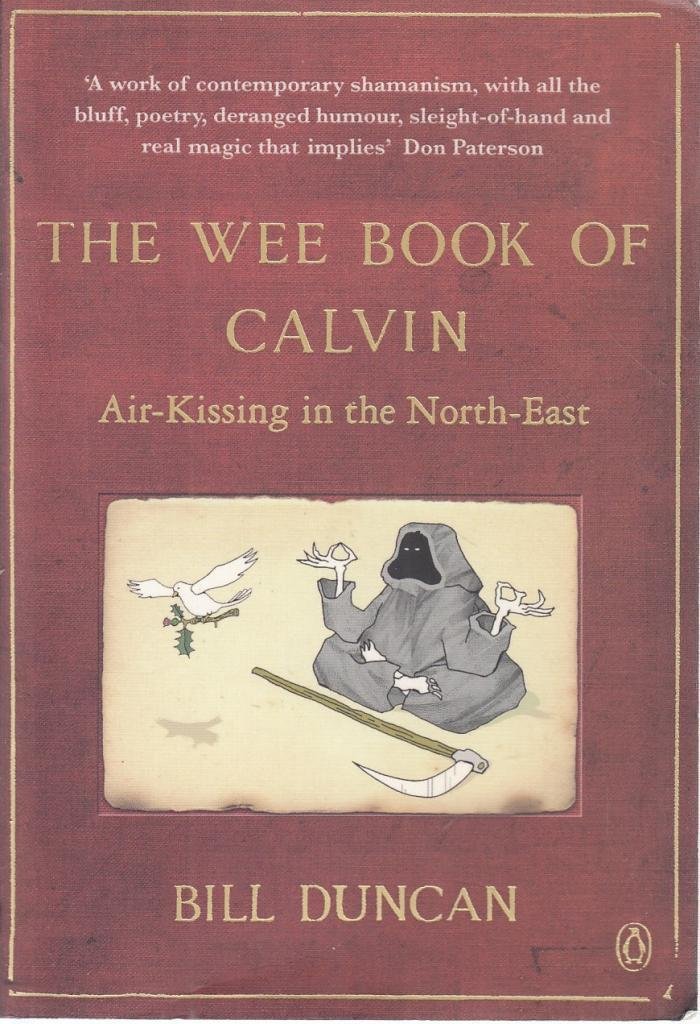



A collection of essays and aphorisms about Scottish Calvinism. This is Scottish literary humour at its finest. 'A work of contemporary shamanism, with all the bluff, poetry, deranged humour, sleight-of-hand and real magic that implies.' Don Paterson. This is the first (and maybe the last) self-help guide that promises to make you feel a lot worse after you read it. A hilarious satire on freeze-dried mysticism and off-the-shelf enlightenment, it is also a haunting and lyrical reflection on places, voices and memories -- a literary journey into the heart of North-East darkness. 'A perfect evocation of Scotland's mysterious love affair with loss and sorrow. A powerful dram of Zen Calvinism.' Richard Holloway Fear and self-loathing in the North-East This project started life as a mischievous, ironic take on the plague of 'Little Book' publications: you know, the sort of irritatingly positive-looking things that infest the ever-expanding 'Mind and Body' section of your local bookstore. Those bland, emotionally glib 'New Age', touchy-feely self-help guides, usually with a yin-yang symbol or a lotus flower or a heart or a soaring dove or a sky on the front, offering an instant path to inner peace, the child within and off-the-shelf spiritual enlightenment. And all this, without anything as painful as thought, hard ideas or intellectual effort. Meanwhile, the philosophy section of the same bookstore will now, shamefully, be virtually non-existent, its demise assured as this fiendish mutation of a sub-genre, virus-like, sweeps through its shelves. If you're old enough, you'll recall the quiet pangs of trepidation when a well-meaning 'friend' reverently placed her treasured copy of Jonathan Livingston Seagull into your reluctant palm in the late 1970s. Maybe, like me at the time, you were discovering the attractions of punk, nihilism, Camus, alienation and the Ramones and felt a profound sense of inner panic at your first reluctant glimpse of the fearful cover images of gliding seagull and blue sky. Instinctively recoiling and shifting the book to arm's length, then cautiously turning to the back cover, an internal hazard light started to flash at the sight of the dread words 'vibes', 'peace', 'enlightenment' and 'free'. Then when you actually started reading it, the inexorable rush of homicidal, existential, misanthropic rage that this infernal work aroused in you. And that was before your ex-friend breathlessly informed you that there were plans for releasing a double 'concept' album based on the book, complete with rock band, string quartet and full classical orchestra ... Maybe, of course, you're lucky enough to be far too young to remember any of this, but you've nevertheless winced in silent agony in a restaurant at the evanescent, cloying, faux-Celtic blur of an Enya track or writhed at the subtly exquisite torture of a soundtrack involving the maddening vibrato of pan-pipes, the trilling chuckle of dolphins, or the gurgle of whale sounds that make your harpoon finger twitch unconsciously and murderously. Or may be you have simply nodded in silent empathy at the passing stranger, your unknown soul mate in the 'Kill All Hippies' t-shirt. Initially, the need for our Wee Book asserted itself as I looked with mounting incredulity and dismay at the promiscuous glut of Little Books the opposition was now producing. Faced with this loathsome onslaught, I was convinced the world needed to hear a different kind of voice: our voice. The fight was on. Marshalling my forces against the Powers of Blandness, the first idea was simply to gather a collection of sayings from everyday usage in the North-East and from memories of my grandmother and grandfather's generation, making some more up, as appropriate. North-East aphorisms seemed particularly appropriate, as their essential characteristics are a stinging tone of merciless laceration combined with pared-to-the-bone linguistic terseness; two virtues conspicuously absent, alas, from the conventional Little Books. The more I thought about these aphorisms, the more I was attracted to the idea of using them as the ammunition in a small but deadly weapon: a subversive form of the Little Book that would search and destroy the enemy from within. After all, these books are simply collections of sayings, snippets of advice, observations on the world. I liked the idea of a bleak, gloomy, guilt- ridden Northern version of all of this, conveying the attractions of an outlook that's a lot closer to my own and many of those dear to me. The more I considered those aphorisms, the more I was struck by their status as an un-acknowledged but intensely distinctive literary form, and I was increasingly impressed by the extent to which they conveyed a peculiarly Northern weltanschauung encapsulated in, say, half a dozen words: 'God made the back for burden.' Just pause for a moment to consider the power of the image at work here, and the austerity of the world-view that informs it. And further,