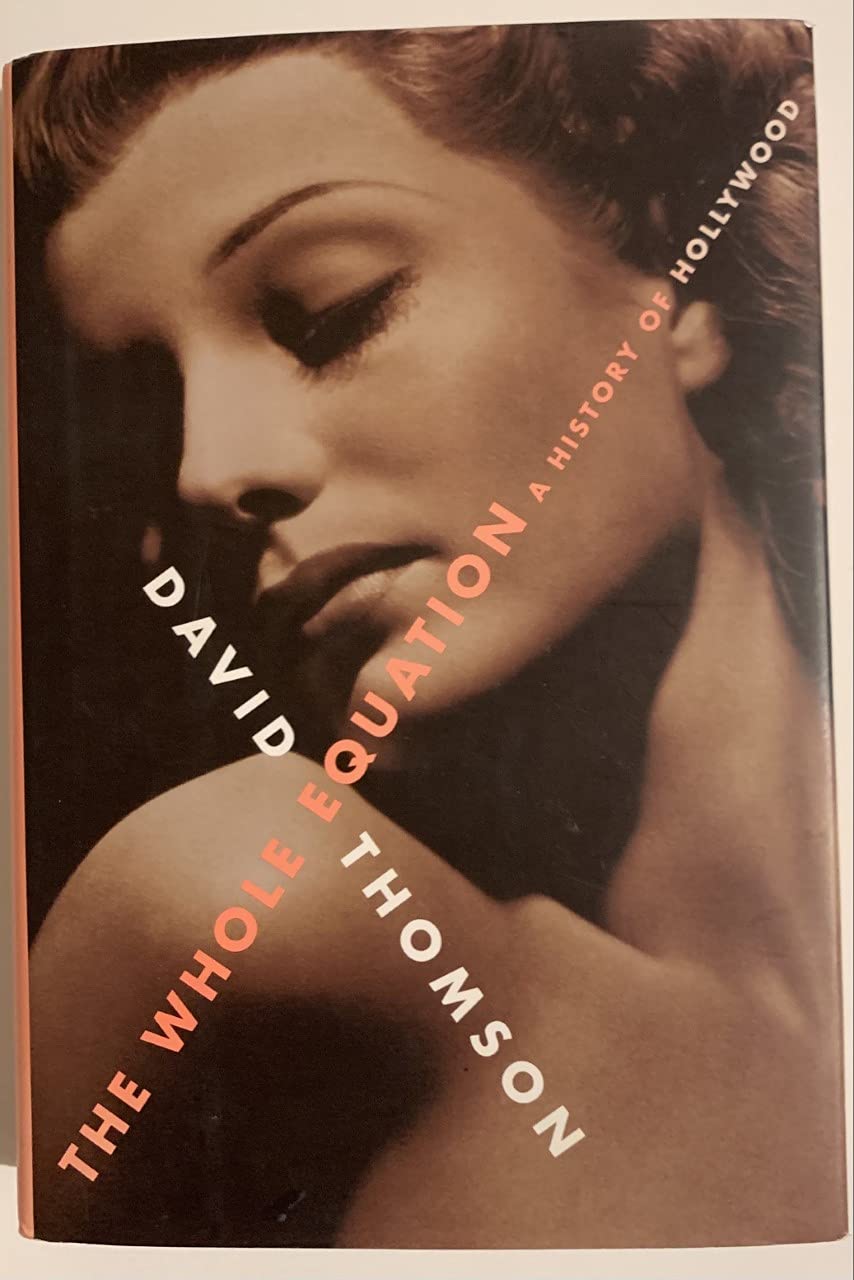



A magnificent history of Hollywood from the invention of film to the present day, by the everywhere acclaimed David Thomson, who has established himself as the “greatest living film critic and historian” (The Atlantic Monthly), “irreplaceable” (The New York Times), and simply “the best writer about the movies” (San Francisco Chronicle). Now we have his master work, The Whole Equation, which, in his own words, embraces “the murder and the majesty, the business statistics and millions of us being moved, the art and the awfulness.” It accommodates “the artistic careers, the lives of the pirates, the ebb and flow if business, the sociological impact–in short, the wonder in the dark, the calculation in the offices, and the staggering impact on America of moving pictures. Which is also the thunderous artillery of America unleashed on the world.” Thomson tells us how D. W. Griffith and Charlie Chaplin created the first movies of mass appeal. He writes about Louis B. Mayer, who understood the whole equation and reaped the profits. He shows us how David O. Selznick exemplified the vanity and passion that gets memorable movies made; how the movies, offering a sense of common experience, helped Americans through the difficult years of the 1930s and ’40s; how and why the quest for the blockbuster changed the industry. He examines the films of Capra, Wilder, Hitchcock, Spielberg; of Gable, Cagney, Monroe, Crawford, Brando, Bogart, Nicholson, Kidman; of Irving Thalberg, Lew Wasserman, Harvey Weinstein–and scores more. He considers noir films, the blacklist, agents, method acting. He tells us the stories behind The Godfather, Chinatown, and Jaws. And he follows the money–a trip essential to understanding Hollywood at its most thrilling and most disappointing. David Thomson has given us a one-volume history of Hollywood that is as well one of the most brilliant, most insightful, entertaining, and illuminating books ever written on American film. Reading David Thomson's new book, The Whole Equation: A History of Hollywood is like listening to a favorite older uncle reminisce about his Hollywood career; it's full of interesting stories of yesteryear, lots of valuable insights, and probably good for you--even if some sections go faster than others. Thomson is an accomplished critic who has written for The New York Times and Salon (among others), and is also the author of several books on the subject of show biz, including The New Biographical Dictionary of Film . In The Whole Equation (a reference to F. Scott Fitzgerald's novel about Hollywood, The Last Tycoon ), he attempts to cover "the history of American movies," and "the history of America in the time of movies." To do so, he brings in finance, film theory, and just plain gossip. (For those who haven't heard how Jean Harlow died, prepare to watch the facade of glamour crumble as never before.) It's an ambitious project to say the least, and the movie business is probably too complex a subject to sum up in 350-plus pages. Often a reader can start a chapter, purportedly on one topic, and find themselves completely off the grid--or at least buried under a lot of words--a few pages later. Like that favorite uncle, Thomson isn't necessarily quick to make his point, nor afraid of straying from his main subject. Nevertheless, many parts of the book are enjoyable and valuable--particularly for those who really want to learn about the history of American filmmaking, and wouldn't mind finding out what Brando got paid for Last Tango in Paris in the process. --Leah Weathersby Thomson ( The New Biographical Dictionary of Film **** Jan/Feb 2003) claims that the strange bedfellows art and money created American film, but that full understanding of this union "is too hard" to grasp. Critics agree: Thomson may have bitten off more than he can chew. His range is amazing, and so are his digressions. Known for his incisive, biting insight into film, Thomson doesnt disappoint here. His beautiful prose, impressive knowledge, and passion for film float the book. But distracting details, a perpetual crankiness, and highly subjective claims (about the advantages of the old studio system or the lack of art in silent films, for example) may stop a reader cold. For many, it may be better to pass on Whole Equation and go to the movies instead. Copyright © 2004 Phillips & Nelson Media, Inc. *Starred Review* Thomson definitely does not belong to the thumbs-up, thumbs-down school of film criticism. While others frantically push and pan the week's overhyped, soon-to-be-forgotten product, Thomson takes a longer view, peeling back the layers of reality, goring sacred cows, correcting misconceptions, and taking pains to reveal those moments when others, following John Ford's Liberty Valance dictum, have preferred to print the legend. Hence this book, characterized as a history of Hollywood but really a philosophical meditation on the myriad ways the movie industry