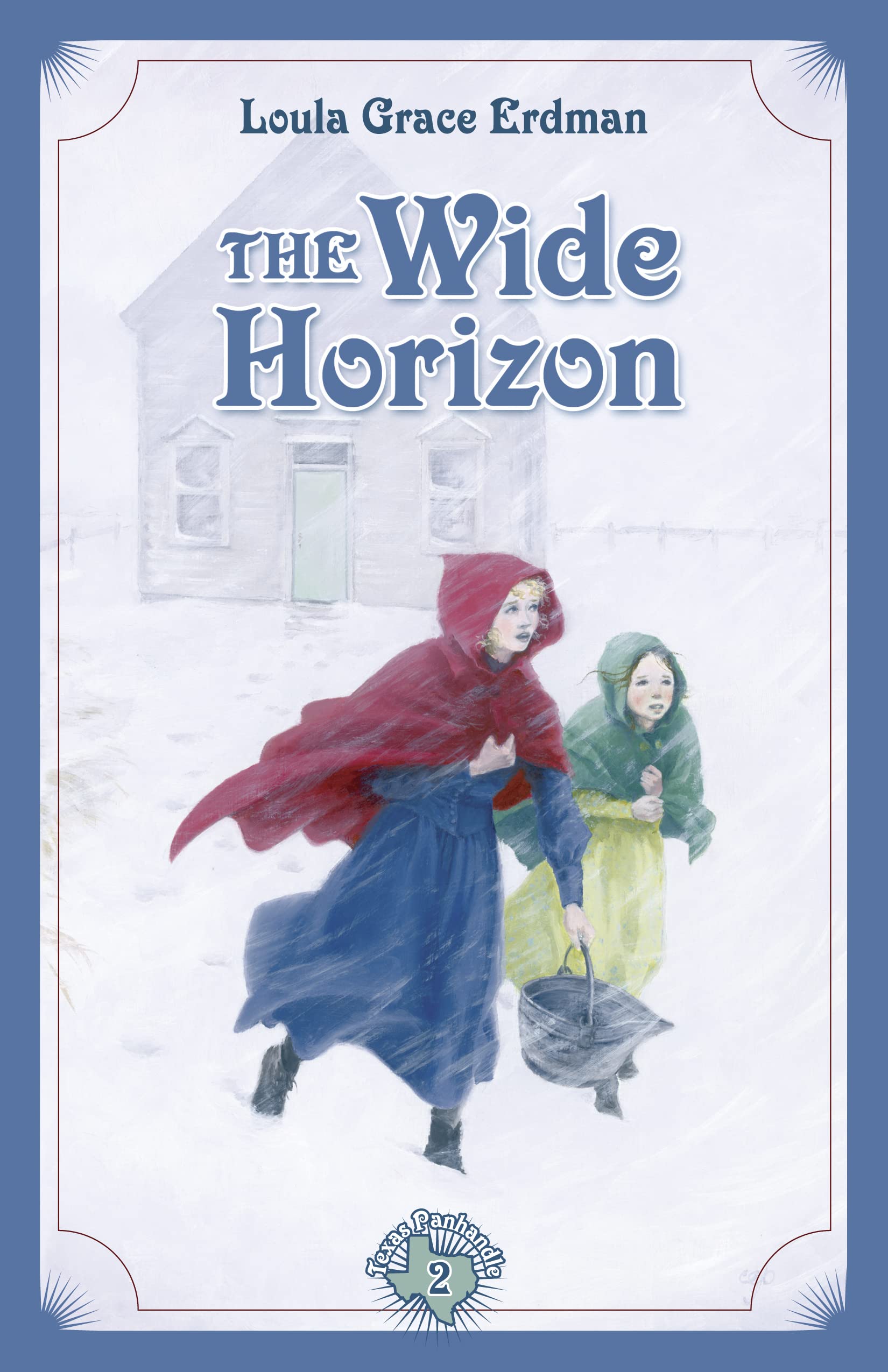



In this second book about the Pierce family, more than five years have passed since their first moving into the Texas Panhandle. They have learned to live in a primitive sod house and have overcome—and even come to love—the odds that the land with its weather and unusual neighbors presents. Even so, 15-year-old Katie, gentle and artistic, is eager to return to East Texas to be schooled in all the finer things that this pioneer country lacks. Then an accident to Grandmother reverses everything! Katie, to her own surprise, finds herself volunteering to stay home to feed and care for Papa, the boys and Carolyn on the farm, while Mama makes the eastward journey to care for her mother. During the next few months, timid Katie encounters one distressful situation after another, from humiliating cooking disasters, to tough boys at school, to a battle with a blizzard. Despite fears and setbacks, she resolves to do whatever seems needed, acts which often turn out to contain a lot of heroism. As Katie’s confidence grows, so does her interaction with family and new and old friends deepen—all against the picturesque backdrop of homesteading life in the Texas Panhandle during the late 1800’s. (See also The Wind Blows Free). Loula Grace Erdman, born in 1898 on a family farm in Missouri, was destined to pursue a lifelong career in both teaching and writing. The writing came early. Her first story sent to a publisher, at age fourteen, received a rejection, but with encouragement to continue. It would become Miss Erdman’s practice to learn from her mistakes, to find out what readers looked for, and to continually improve her skills. Although Miss Erdman eventually became an award-winning author with 17 novels, nonfiction, and many short stories, articles and essays to her credit, she “saw herself first as a teacher and then as a writer.” Even before she had received a college education, she taught in elementary schools. Later, in college, she made friends with a young woman from Texas. Her friend’s mother, impressed with Loula Grace, found her a teaching position in Amarillo. Miss Erdman accepted the offer “providing that her younger sister could have a teaching job as well.” The young teacher-writer, just like some of the characters in her own books, would come to adopt the Texas Panhandle as her own home. Over the years she taught elementary, then junior high levels, and finally college classes in creative writing at West Texas State College—making time for her own writing all along. As she learned more about the early days of Texas in the Panhandle, Miss Erdman became fascinated by the untold stories of the first settlers—the “nesters”— and by the courageous role of the women. Of the homesteader she said, “The story of his stubborn courage has been overlooked.” And she thought someone should speak for the ordinary woman in her personal relationships and in the real life dilemmas she faced. Miss Erdman’s prize-winning novel, The Edge of Time, grew from extensive investigation into that era. Drawing upon this same research, she wrote The Wind Blows Free, for young people, and further traced the Pierce daughters’ stories in The Wide Horizon and The Good Land. Another junior novel, Room to Grow, tells of one of the French families who helped to settle Texas. Books like these, whether novels for adults or youth, have been much appreciated by Miss Erdman’s readers. Old-timers praised her accuracy, and new generations have felt that she understood well the every-day struggles of women and girls.