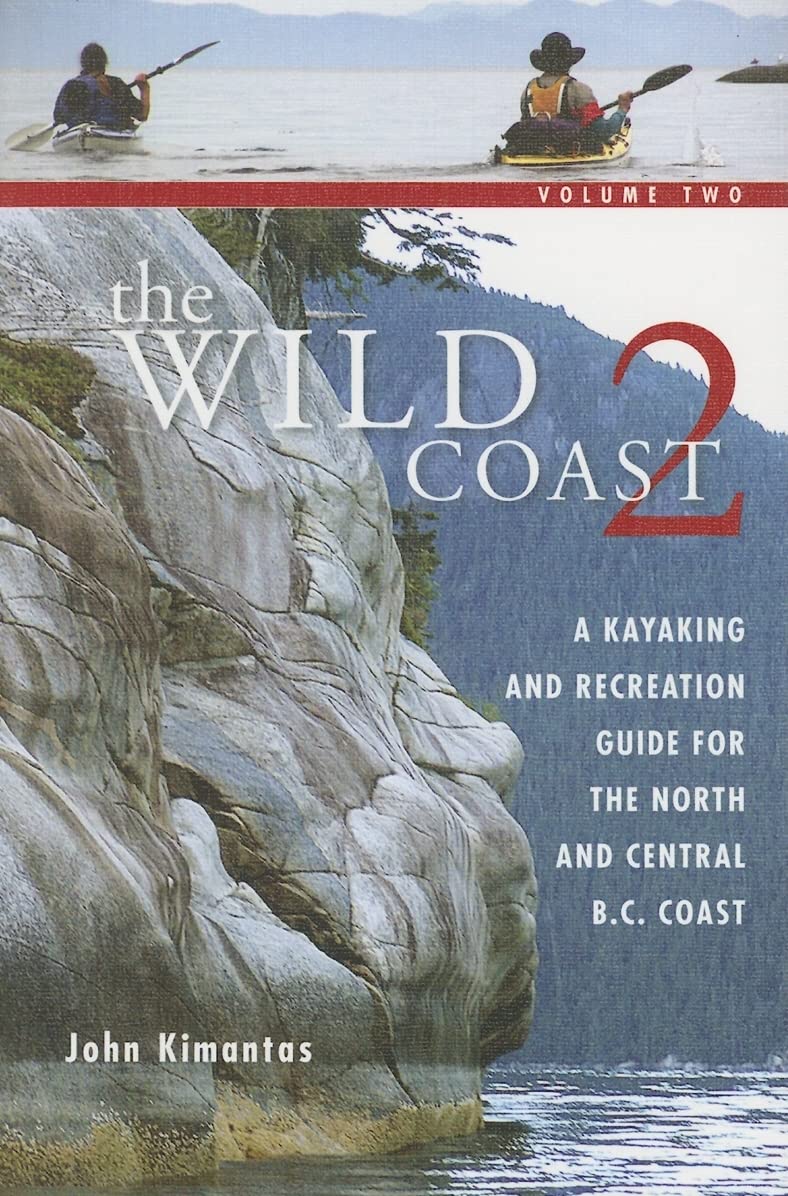
The Wild Coast: Volume 2: A Kayaking, Hiking and Recreational Guide for the North and Central B.C. Coast (The Wild Coast)
$25.31
by John Kimantas



The ultimate guide to exploring B.C.'S untamed coast. From author and kayaker John Kimantas comes the second volume of the highly successful Wild Coast series. This time, Kimantas takes readers on an exhilarating journey through the Inside and Outside Passages of BC from north Vancouver Island to the Alaska border. Each chapter in this comprehensive guidebook explores a part of B.C.'S remote and rarely visited stretch of coastline and discusses the region's Native and European history, geography, weather, ecology, attractions and services. Detailed maps show the major points of interest-from the best campgrounds to the ideal spots to view wildlife. Included are lists with the key features of each area: Amenities, - Hazards, - Launch sites, - Parks and ecological reserves, and - Hiking trails. Each book in the Wild Coast series is written from first-hand research and exploration: Kimantas has gathered the information and photographs while kayaking B.C.'S breathtaking coastline. Although The Wild Coast 2 provides specific information for kayakers, anyone interested in exploring the coast will find this guide thorough and useful. [starred recommendation] Not just for kayakers. -- Jo-Anne Mary Benson "Library Journal" (03/01/2007) An essential survival guide...Vivid photography and descriptions... Finding information [is] a breeze... Helpful for experienced and novice kayakers. -- John Burroughs "North Island Gazette (Port Hardy, BC)" (12/13/2006) [starred recommendation] Not just for kayakers. An ideal guidebook for the soon-to-be bride, this book is filled with inspiring ideas and visual references. More to say about wedding gowns than anybody but a bride would want to know... oodles of photographs. Sweeping sourcebook... abundance of useful information... comprehensive visual reference for a bride who needs to communicate her vision to others. John Kimantas has worked at several daily newspapers across Canada, beginning as a cub reporter in The Pas, Manitoba, in 1986, moving on to become a magazine editor in Ontario and then managing editor at a daily newspaper on Vancouver Island. Foreword I pulled my kayak out of the water at Port Hardy, British Columbia on September 2, 2005, 92 days after I first launched. I had paddled 3,404 km (2,115 miles)or more than 6 times the distance between Port Hardy and Alaska. I had explored B.C.'s most secluded inlets and ventured out to some of the most remote archipelagos. During the trip I encountered 9-m (30-foot) swell, a bear standing on my kayak, a sleeping humpback whale and scenery too beautiful to describe. I was rained on for 13 days straight, blown down channels despite my best efforts to go in the other direction and went days, occasionally weeks, without seeing another soul. I travelled into areas where kayaks rarely go and discovered, for possibly the first time in my life, what it is like to be a pioneer. Despite our shrinking planet, so much of the B.C. coast remains remote and unexplored. I had several goals when I set out to write this book. First I wanted to provide an overview of the north and central B.C. coast through photographs, maps and descriptions -- a shopping list, if you like, of possible destinations that others might one day like to explore. A second goal was to demystify some aspects of the coast, particularly the idea that the Inside Passage is a difficult, distant and exclusive place to journey. I also wanted to raise the profile of the outside Passage, about which very little has been written. A third goal was to compile a list of camping opportunities along the coast. A reasonable network of campsites should exist by now; sadly it was still lacking when I ventured out in late spring of 2005. This information is critical for kayakers. Never did I encounter a group without at some point huddling down over a chart and sharing what little we knew about camping locations. I hope this book will take away some of the anxiety of where to set up camp while travelling the coast. Last, wherever possible I wanted to share historical and ecological trivia to bring these regions to life. Not being a historian or an ecologist, I relied on other sources for this information. A great help was the province's coastal management plans and the various park management plans compiled by B.C. Parks. For specific navigation information I consulted Sailing Directions, published by Fisheries and Oceans Canada. The origin of place names was explained wherever possible courtesy of Land Information B.C.'s Geographical Name Information Service. Captain John T. Walbran's work British Columbia Coast Names, though now a century old, has never been superceded. It provided valuable backup. More information on these publications and other sources is provided in the bibliography. There were, of course, the many helpful people in government, tourism agents and individuals who enthusiastically passed on information and first-hand knowledge. Sharing infor