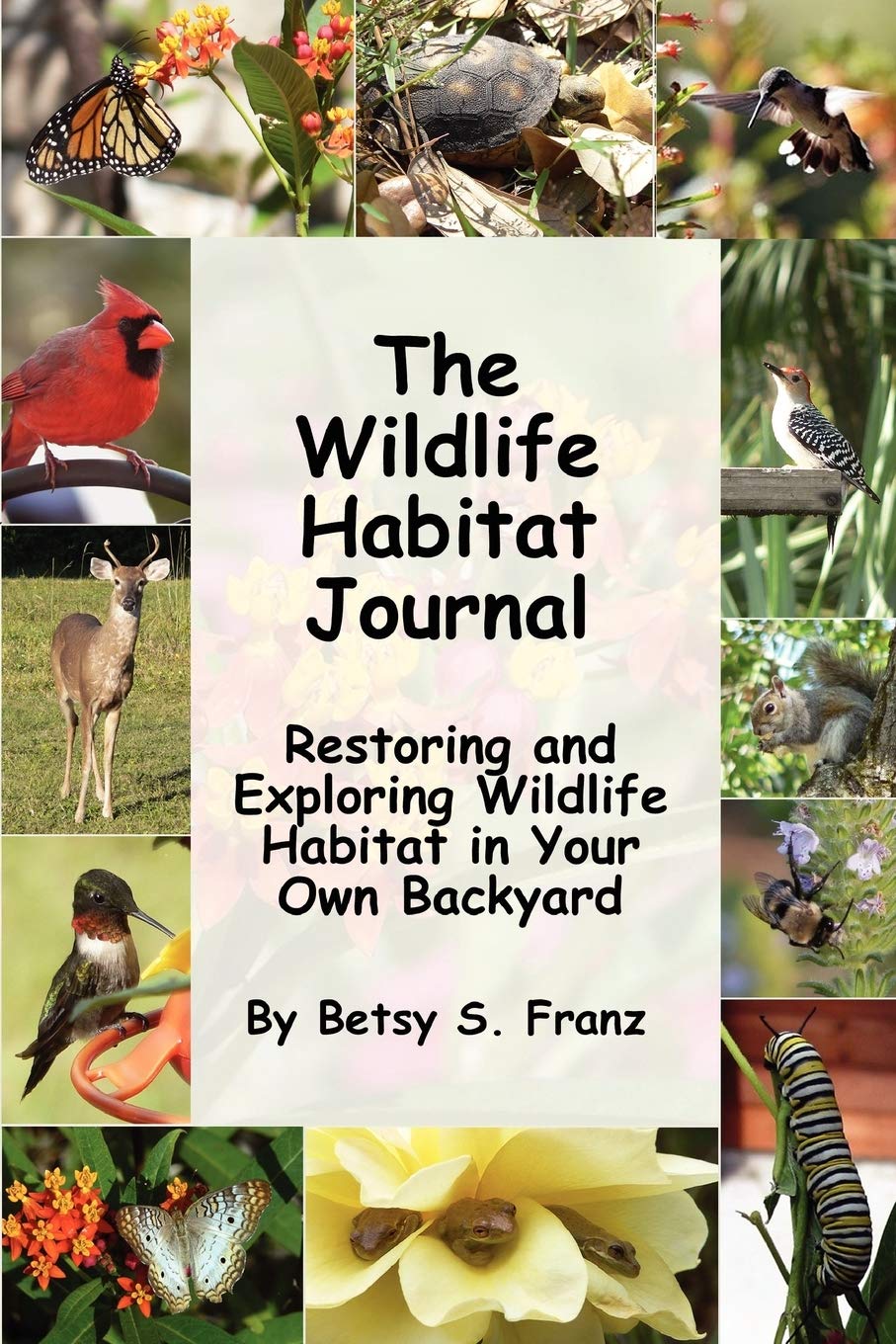
The Wildlife Habitat Journal - Restoring and Exploring Wildlife Habitat in Your Own Backyard
$9.97
by Betsy S. Franz



Hybrid automobiles and reusable shopping bags are one way to go green. But to truly benefit the environment you are trying to protect you have to start outside. Whether its the planting of a tree for local bird nesting, the creation of a butterfly garden, the elimination of chemicals or the choice to leave a small corner of native plants for wildlife, each small decision is a step in the right direction for preserving the natural beauty of the world around us. However large or small, any backyard or garden space can contain some elements that provide habitat for wildlife. And although food and water are the easiest to provide, going a step further and providing the other two necessities for wildlife -- shelter and places to raise their young – is becoming increasingly necessary to ensure the continuation of many local animal species. If you are a property owner, you own a piece of the planet. Learn to Take Care of Your Share. Owning a home has long been the American Dream. But with that dream comes a huge responsibility. Since development is seen as one of the greatest factors contributing to the extinction of wildlife on this planet, the term "home ownership" now needs to carry with it the added role of "habitat ownership." Every homeowner, whether their home was built last week or decades ago, can share in this role by focusing on their own share of the environment. All it takes is for each property owner to make a few simple changes to help in restoring wildlife habitat in their own yard. Something as simple as planting a native tree for local bird nesting, creating a butterfly garden or choosing to leave a small corner of a yard native instead of opting for 100% lawn helps to restore some of the wildlife habitat that was displaced by a home. As development continues, these preserved habitat areas will become more and more important as safe havens for displaced wildlife. As more and more people begin to accept their role in environmental stewardship, habitat areas will go from being distant oases to nearby stepping stones to connected paths for animals to traverse across an increasingly developed landscape. Can taking care of "your own share" of the environment really make a difference? Some people think it is naive to believe that creating an environmentally friendly landscape will make a difference. But the truth is it is naive to think that it won't. If each resident planted one native tree, or quit using chemicals so that they could attract birds or butterflies, or even just adjusted their sprinkler heads to quit wasting water, the environment would benefit. Keeping a Wildlife Habitat Journal helps to prove just how quickly those actions DO make a difference. Although loss of wildlife habitat is seen as one of the greatest factors contributing to the extinction of wildlife on the planet, Franz believes that getting people to really "get to know" the wildlife in their yards might just change all that. "Someone once told me that the secret to getting people to appreciate nature is to get them to get down and take an eye-to-eye look at it. From my own experience, I know that is true. I see it happen with people all the time. Once people start gardening for wildlife and begin to really LOOK at it - whether it is with a butterfly garden or planting for birds or creating a backyard pond, they seem to gain a whole new appreciation for the wildlife and a whole new sense of responsibility to the environment. They become backyard naturalists without really realizing they are doing it. As more and more people become these do-it-yourself naturalists, it is bound to help the environment." The Wildlife Habitat Journal was written to encourage people to take that eye-to-eye look. "It's easy to feel awe when you are in Yellowstone National Park or Muir Woods. But getting people to feel that same way in their own back yards - now that's a challenge." Betsy Franz is the founder of Project Backyard Brevard and the Habitat Helpdesk - environmental projects which help to encourage and educate property owners to take care of "their share" of the local environment. She is a frequent contributing writer to many popular magazines and continues to work on publications which encourage readers to take a closer look at the environment around them. Her latest publication is Wonders Never Cease: Restoring the Wonder in Your Life by Exploring the Nature Around You Used Book in Good Condition