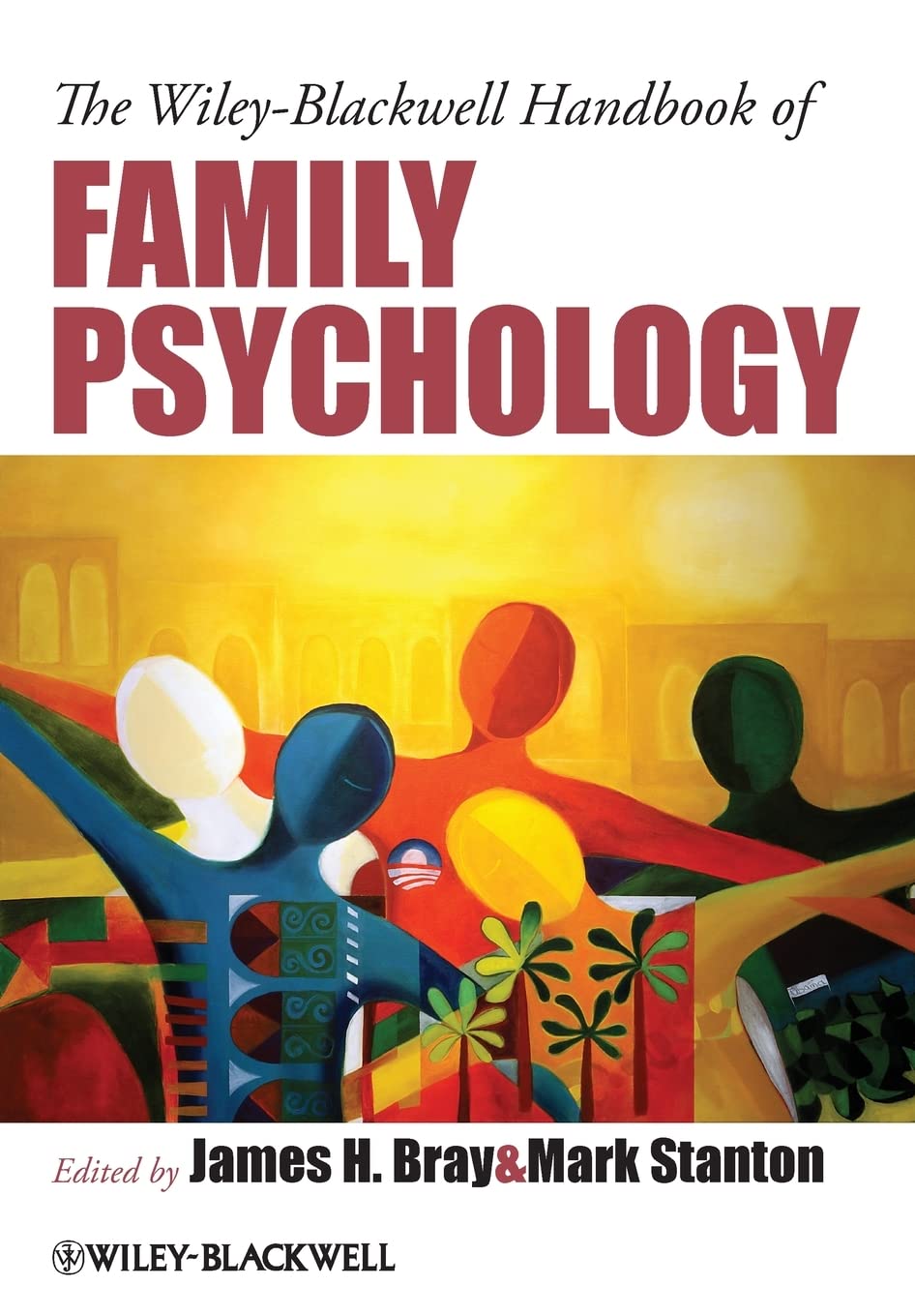



The Handbook of Family Psychology provides a comprehensive overview of the theoretical underpinnings and established practices relating to family psychology. Provides a thorough orientation to the field of family psychology for clinicians - Includes summaries of the most recent research literature and clinical interventions for specific areas of interest to family psychology clinicians - Features essays by recognized experts in a variety of specialized fields - Suitable as a required text for courses in family psychology, family therapy, theories of psychotherapy, couples therapy, systems theory, and systems therapy “ The Wiley-Blackwell Handbook of Family Psychology is unparalleled in representing an up-to-date compendium of information on families and the practice of family psychology. It will serve as a valuable textbook for undergraduate and graduate programs and an important resource for family psychologists more generally in their clinical, research, and training responsibilities.” PsyCritiques “Each chapter is a gem that is practical and based in research. This collection provides the finest overview of family psychology available today.” Jon Carlson, Governors State University “James Bray and Mark Stanton provide an essential roadmap for conceptualizing and intervening with families and for training the next generation of family psychologists.” Nadine Kaslow, Emory University The Handbook of Family Psychology provides a comprehensive overview of the range of disciplines relating to family psychology – a field that transcends the treatment of families to include psychological services to individuals, couples, and large organizations based on the tenets of systems theory and the science of family psychology. Beginning with coverage of the field's epistemological and theoretical underpinnings, the text proceeds to recount relevant scientific methods, clinical models and methods, and other significant topics. Essays by a variety of recognized experts provide in-depth analysis and fresh insights while addressing the latest developments. Chapters in the Foundations section help clinicians establish scientific basis for interventions and detail competencies. The Clinical Family Psychology section includes summaries of the most widely-recognized models for clinical practice. The Dimensions section summarizes the most recent research literature and clinical interventions for specialized areas of interest. The Handbook of Family Psychology is an invaluable resource for all mental health professionals providing psychological services. The Handbook of Family Psychology provides a comprehensive overview of the range of disciplines relating to family psychology – a field that transcends the treatment of families to include psychological services to individuals, couples, and large organizations based on the tenets of systems theory and the science of family psychology. Beginning with coverage of the field's epistemological and theoretical underpinnings, the text proceeds to recount relevant scientific methods, clinical models and methods, and other significant topics. Essays by a variety of recognized experts provide in-depth analysis and fresh insights while addressing the latest developments. Chapters in the Foundations section help clinicians establish scientific basis for interventions and detail competencies. The Clinical Family Psychology section includes summaries of the most widely-recognized models for clinical practice. The Dimensions section summarizes the most recent research literature and clinical interventions for specialized areas of interest. The Handbook of Family Psychology is an invaluable resource for all mental health professionals providing psychological services. James H. Bray is Associate Professor in the Department of Family and Community Medicine, Director of the Family Counseling Clinic at Baylor College of Medicine in Houston, Texas. He has published and presented numerous works in the areas of divorce, remarriage, adolescent substance use, intergenerational family relationships, and collaboration between physicians and psychologists. He was the principal investigator of the federally funded longitudinal study, Developmental Issues in Step Families Research Project. He is currently working on a federally funded project on alcohol and other drug abuse in families with adolescents, the Baylor Adolescent Alcohol Project. He is the 2009 President of the American Psychological Association. Mark Stanton is Professor of Psychology and Dean of the School of Behavioral and Applied Sciences at Azusa Pacific University, California. He is certified in Family Psychology by the American Board of Professional Psychology and a licensed psychologist in the state of California. He was President of the Society of Family Psychology of the American Psychological Association in 2005, Editor of The Family Psychologist from 2002 to 2007, and awarded the Family Psychologist of the Year in 200