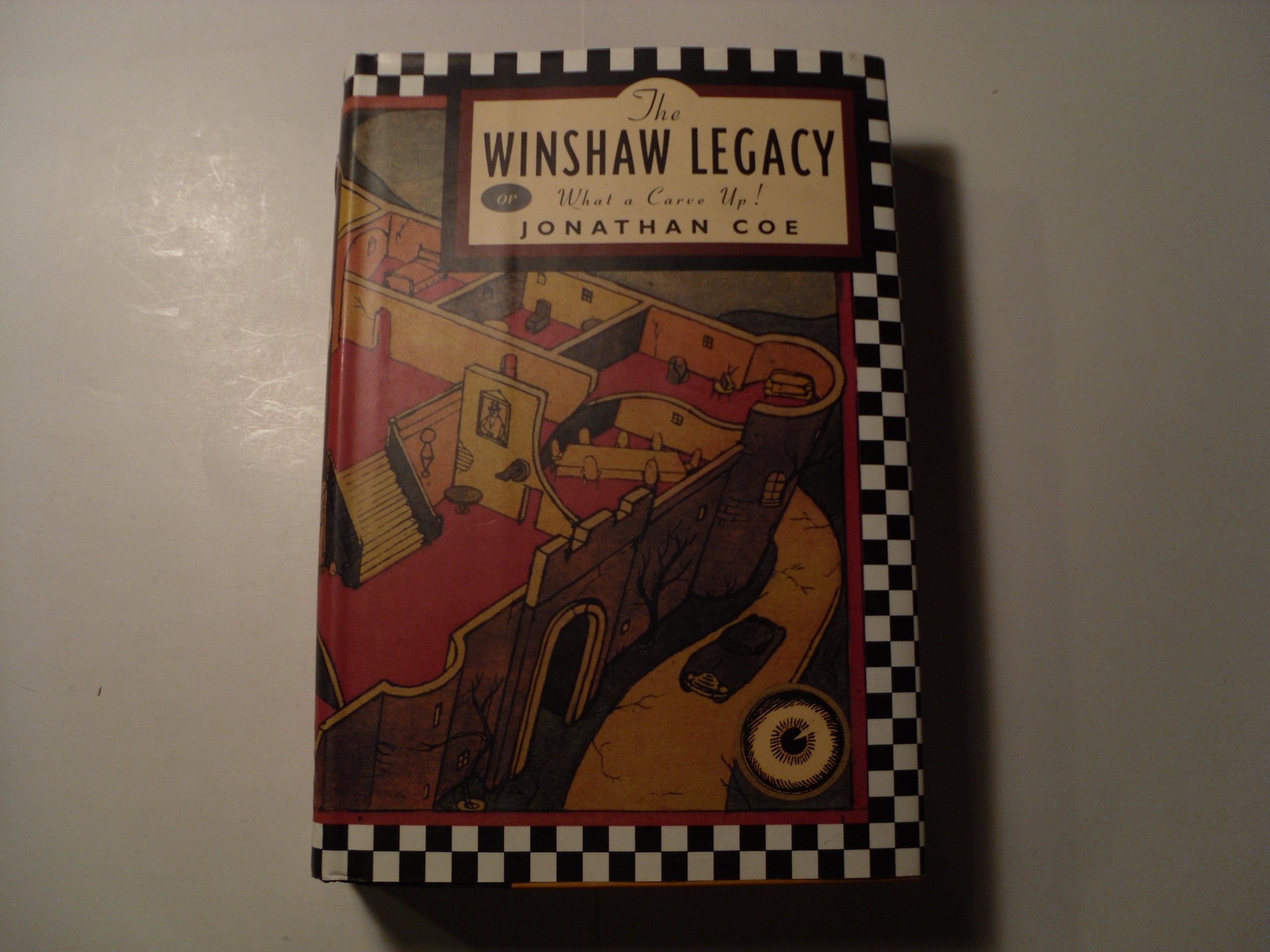



'I could recommend The Winshaw Legacy as I a superb political novel, or as a fiendishly clever meta-novel, or as a unique modern historical novel, or as a riveting family saga, but I'm afraid that would drive everyone, yawning in terror, straight out of the bookstore. So let's just say it has naked pictures of Natasha Richardson...Can't say that? Well, let's say it's a nasty farce with lots of bathroom humor and violence which reminds me at least as much of Fawlty Towers as it does of Midnight's Children.' -- Jay McInerney A postmodern detective story, a scathing send-up of the rapacious eighties, a macabre Gothic -- all rolled up in a bravura tragicomic entertainment. The Winshaw family, as their official biographer is warned by old Mortimer Winshaw himself, is the meanest, greediest, cruellest bunch of backstabbing penny-pinching bastards who ever crawled across the face of the earth.' Bankers, industrialists, politicians, arms dealers and media barons -- they rule Britannia, more or less. They also have a guilty secret in the shape of a mad aunt stashed away in a remote asylum, convinced of familial treachery during World War II and determined to effect the ruin of her entire clan. In the summer of 1990, while Saddam Hussein is provoking yet another war, the Winshaws' biographer (a severely depressed young novelist) is piecing together the truth of their sordid legacy, and discovers that it converges bizarrely with the plot of a film he's been obsessed by since childhood. Moreover, it seems that all of this, dynasty and cinema alike, has some mysterious connection with his own troubled history. Of course whether he -- or anybody else -- will be alive when this compound riddle is solved remains to be seen. Savagely funny, hugely inventive and passionately political. The Winshaw Legacy assumes Dickensian proportions as it excoriates the modern age of greed -- and heralds the American debut of an extraordinary writer. As The Economist concluded: Talented comic novelists are rare [but] that exclusive club -- Thomas Love Peacock, Evelyn Waugh and P. G. Wodehouse are among its members -- has admitted a newcomer, an Englishman called Jonathan Coe.' 'A remarkable achievement; intelligent, funny, and important.' -- The Times Literary Supplement 'An extravagant literary blockbuster...A grand and intelligent novel, so full of accomplishment and pleasure.' -- New Statesman & Society' Really, something to get excited about...his big, hilarious, intricate, furious, moving treat of a novel.' -- The Guardian In this mordant satire of 1980s greed, a seemingly chance encounter with an employee of a vanity press lands well-reviewed if little-read novelist Michael Owen a commission to write the history of a powerful British family named the Winshaws. The Winshaws have made their mark in every area of British life. Harry is a member of Parliament, Hilary writes a popular newspaper column, Dorothy runs the nation's largest slaughterhouse, Thomas is a merchant banker, Roddy is a London art dealer, and Mark is an arms dealer supplying Saddam Hussein. Yet, as Owen soons discovers, their wealth and power are matched by their shallowness and moral vacuity. Coe stirs elements of the Gothic, detective, and comic genres into a wildly funny, ultimately frightening mix. Though occasionally didactic, this work is nonetheless a tour-de-force-and a delight to read. Lawrence Rungren, Bedford Free P.L., Mass. Copyright 1994 Reed Business Information, Inc. The fall of the House of Winshaw has shades of the fall of the House of Usher in Poe's famous short story. The "wretched, lying, thieving, self-advancing Winshaws," of Winshaw Towers in Yorkshire, are plagued by violent deaths between the 1940s and the 1990s, the time span covered in this remarkably complicated yet arresting novel, Coe's first to be published in the U.S. The Winshaws are a family of eccentrics of the kind we so love in British fiction--with secrets kept in attics and members consigned to mental institutions. And no Winshaw is more eccentric than Tabitha, the grande dame of the family whose mind was shattered when her brother was shot down over Germany during World War II. It is Tabitha who, at a later point, enlists the talents of a novelist to write the history of the family. It is not only Tabitha's and the writer's voices, but also the voices of several other family members' who join in a chorus, all adding their twists to the family story. In a deliciously circuitous fashion, as we learn the family members' travails in and out of love and in pursuit of mental and financial stability, we come closer to learning the reasons behind the bloody deaths for which Winshaw Towers has become infamous. This complex, layered novel is demanding but rewarding; persistent readers will be completely engrossed. Brad Hooper ommend The Winshaw Legacy as I a superb political novel, or as a fiendishly clever meta-novel, or as a unique modern historical novel, or as a riveting fa