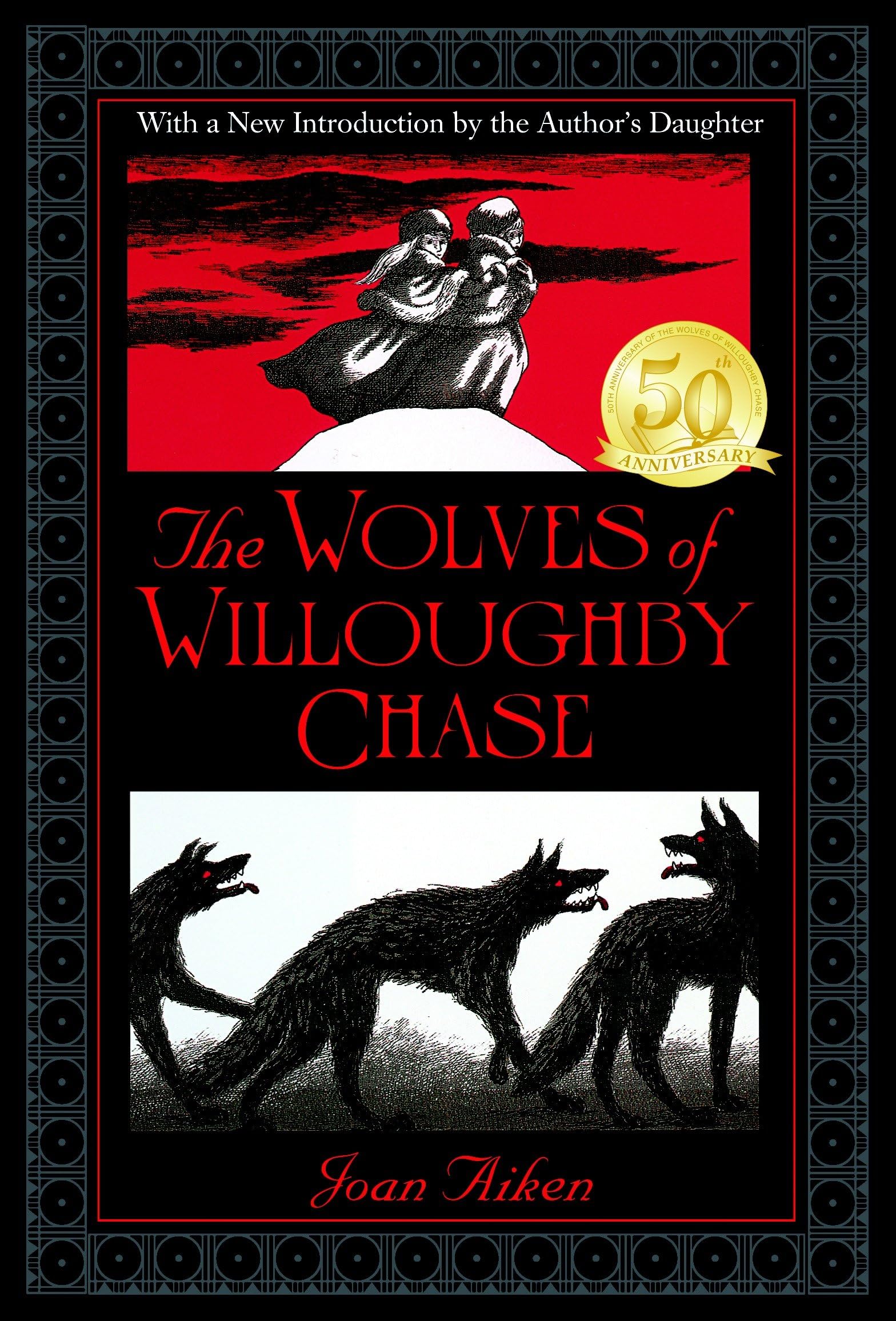



A timeless tale of courage and friendship—where two brave girls defy wolves, wickedness, and despair to reclaim their home. Wicked wolves and a grim governess threaten Bonnie and her cousin Sylvia when Bonnie's parents leave Willoughby Chase for a sea voyage. Left in the care of the cruel Miss Slighcarp, the girls can hardly believe what is happening. Their once-happy home, Willoughby Chase, is stripped bare—servants dismissed, furniture sold, and the girls banished to a grim orphan school. With the help of Simon the gooseboy and his loyal flock, they plot a daring escape. But how will they ever get Willoughby Chase free from the clutches of the evil Miss Slighcarp? This edition of Joan Aiken’s beloved classic includes an introduction by her daughter, Lizza, offering rare insight into the author’s own struggles and triumphs in completing this enduring story. "A masterpiece...a copybook lesson in those virtues that a classic children's book must possess."-- Time. In this chilling beginning to The Wolves Chronicles, two little cousins are left in the care of an evil governess. They escape and travel 400 miles to London with their friend Simon and his geese. "A masterpiece...a copybook lesson in those virtues that a classic children's book must possess."-- Time. Lewis Carroll Shelf Award. In this chilling beginning to The Wolves Chronicles, two little cousins are left in the care of an evil governess. They escape and travel 400 miles to London with their friend Simon and his geese. Lewis Carroll Shelf Award. In this chilling beginning to The Wolves Chronicles, two little cousins are left in the care of an evil governess. They escape and travel 400 miles to London with their friend Simon and his geese. Lewis Carroll Shelf Award. Joan Aiken (1924–2004) was one of the most beloved storytellers of the 20th century, author of more than 100 books for children and adults. Best known for her Wolves Chronicles—beginning with the Lewis Carroll Prize–winning The Wolves of Willoughby Chase —Aiken combined gothic adventure, wit, and imagination in stories that have captivated generations. Her work earned international acclaim, including the Edgar Allan Poe Award in the United States and the Guardian Award for Fiction in the UK. In 1999, Queen Elizabeth II honored her as a Member of the Order of the British Empire for her contributions to children’s literature. Today, Aiken’s novels remain timeless classics, treasured by readers who love daring heroines, unforgettable villains, and richly imagined worlds. It was dusk--winter dusk. Snow lay white and shining over the pleated hills, and icicles hung from the forest trees. Snow lay piled on the dark road across Willoughby Wold, but from dawn men had been clearing it with brooms and shovels. There were hundreds of them at work, wrapped in sacking because of the bitter cold, and keeping together in groups for fear of the wolves, grown savage and reckless from hunger. Snow lay thick, too, upon the roof of Willoughby Chase, the great house that stood on an open eminence in the heart of the wold. But for all that, the Chase looked an inviting home--a warm and welcoming stronghold. Its rosy herringbone brick was bright and well-cared-for, its numerous turrets and battlements stood up sharp against the sky, and the crenelated balconies, corniced with snow, each held a golden square of window. The house was all alight within, and the joyous hubbub of its activity contrasted with the somber sighing of the wind and the hideous howling of the wolves without. In the nursery a little girl was impatiently dancing up and down before the great window, fourteen feet high, which faced out over the park and commanded the long black expanse of road. "Will she be here soon, Pattern? Will she?" was her continual cry. "We shall hear soon enough, I dare say, Miss Bonnie," was the inevitable reply from her maid, who, on hands and knees in front of the fire, was folding and goffering the frills of twenty lace petticoats. The little girl turned again to her impatient vigil. She had climbed up on to the window seat, the better to survey the snowy park, and was jumping on its well-sprung cushions, covered in crimson satin. Each time she bounced, she nearly hit the ceiling. "Give over, Miss Bonnie, do," said Pattern after a while. "Look at the dust you're raising. I can hardly see my tongs. Come and sit by the fire. We shall hear soon enough when the train's due." Bonnie left her perch reluctantly enough and came to sit by the fire. She was a slender creature, small for her age, but rosy-cheeked, with a mass of tumbled black locks falling to her shoulders, and two brilliant blue eyes, equally ready to dance with laughter or flash with indignation. Her square chin also gave promise of a powerful and obstinate temper, not always perfectly controlled. But her mouth was sweet, and she could be very thoughtful on occasion--as now, when she sat gazing into the fire, piled high on its two