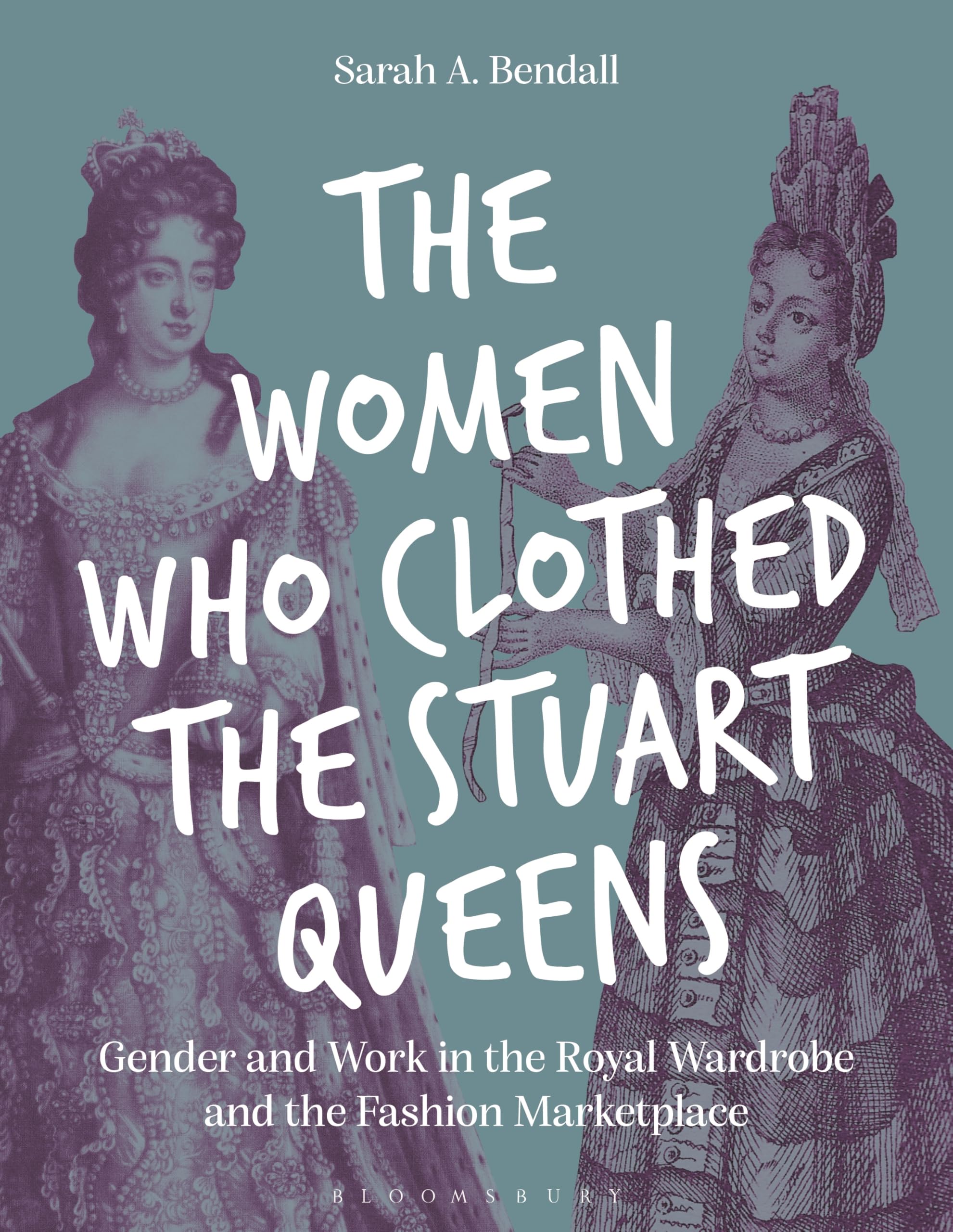
The Women Who Clothed the Stuart Queens: Gender and Work in the Royal Wardrobe and the Fashion Marketplace
$39.95
by Sarah A. Bendall



This study explores – for the first time – the changing professions and roles of the women who worked to clothe six Stuart queens between 1603–1714: Anna of Denmark, Henrietta Maria, Catherine of Braganza, Mary of Modena, Queen Mary II and Queen Anne. Beautifully illustrated in full colour throughout, and using a wide range of written, visual and material sources, this book explores how changing patterns of work and consumption saw women become key producers, retailers and consumers of fashion during the 17th century, and illuminates the strong connections between the royal courts and London's fashion marketplace. From royal wardrobes, workrooms and laundries to workshops and retail premises in London's bustling streets, Sarah A. Bendall highlights the integral role that women of multiple backgrounds played in the creation and maintenance of elite dress. The royal accounts show that this work was facilitated by migration, global trade, familial networks and changing guild structures, and that the patronage of queens and elite women was integral to supporting and promoting women's rise in the fashion trades as celebrated silkwomen, tirewoman, milliners and mantua makers. The Women Who Clothed the Stuart Queens challenges understandings of women's work in the court, the household and the fashion marketplace, and shows how clothing played a key role in women's economic participation in 17th and 18th-century England more broadly. It offers fascinating insights for all those interested in the history of women and gender, fashion, material culture and consumption, and, of course, to all those interested in Stuart history. “A beautifully written, lively, and compelling exploration of the army of female workers from stylists and budget managers to milliners, seamstresses, and laundresses who were behind the fabulous clothing of seventeenth-century queens.” ― Julie Hardwick, the University of Texas, USA “Carefully researched, deftly analysed, and a pleasure to read, Sarah's book makes a much needed and very valuable addition to work on Stuart queenship. It sheds a bright light on the previously unexplored lives of the numerous women who feature in the queens' accounts thereby revealing their skill, ingenuity and business acumen.” ― Maria Hayward, University of Southampton, UK “A wonderfully illuminating view of the women behind the Stuart throne. Dr Bendall's archival research into the tirewomen, milliners and mantua-makers who created the queenly wardrobe reveals a hidden world of female artisanal skills, fashion expertise and impressive economic competence.” ― Laura Gowing, King's College London, UK “A monumental shift in the foundations of studying royal dress. Queens and tradeswomen speak to one another, discussing silhouettes and silks, romance and revolution. The creative and labouring hands meticulously stitching, sourcing, and caring for queens' clothes are as worthy of our attention as the powerful bodies their work adorned.” ― Susannah Lyon-Whaley, University of York, UK Sarah A. Bendall is Senior Lecturer at the Gender and Women's History Research Centre, Institute for Humanities and Social Sciences, Australian Catholic University. She is the author of Shaping Femininity (Bloomsbury Visual Arts, 2021), which was shortlisted for the UK Society for Renaissance Studies biannual book prize in 2022, and co-editor of Embodied Experiences of Making in Early Modern Europe: Bodies, Gender, and Material Culture (2024).